


-
01 March 2025
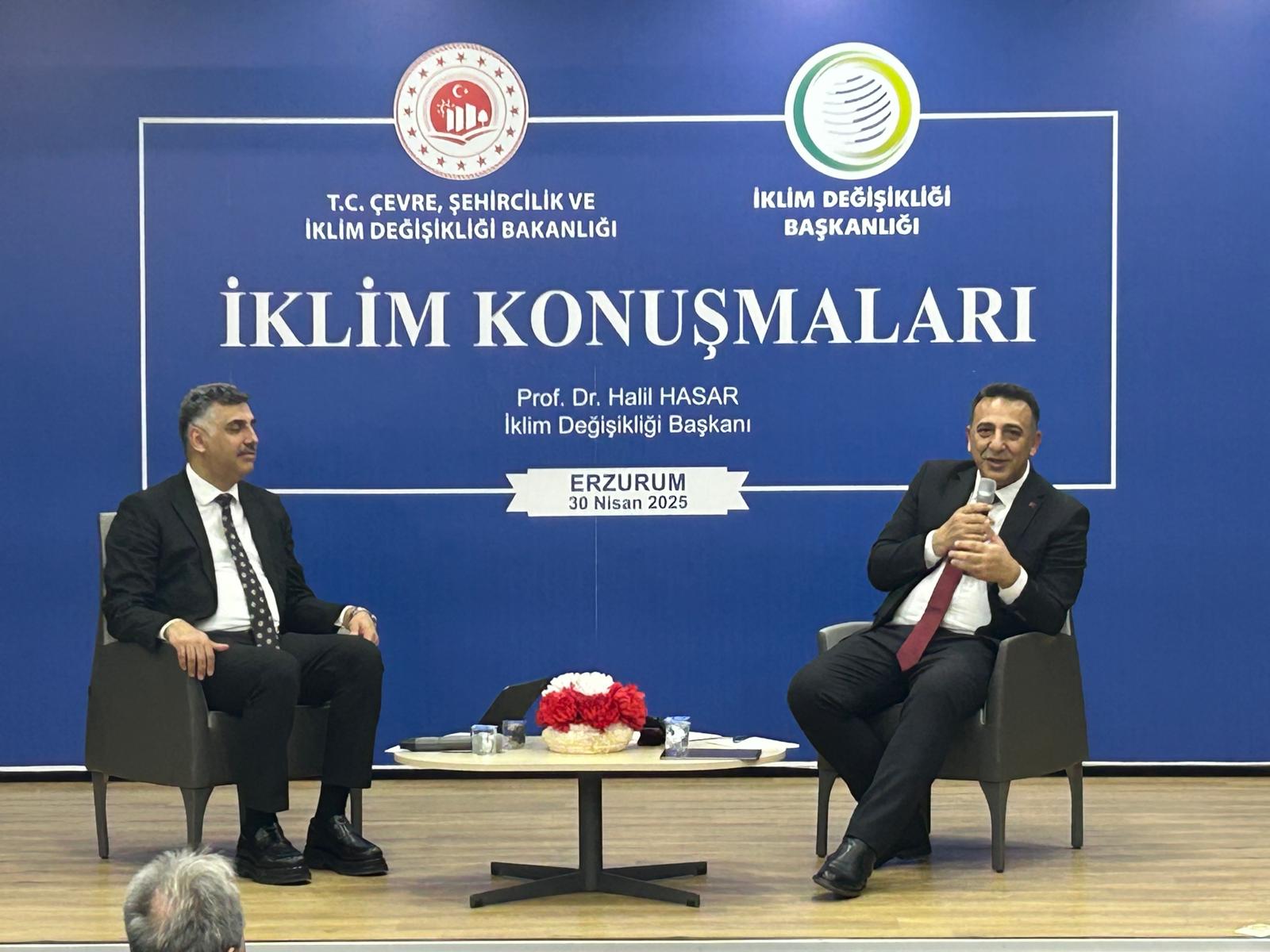
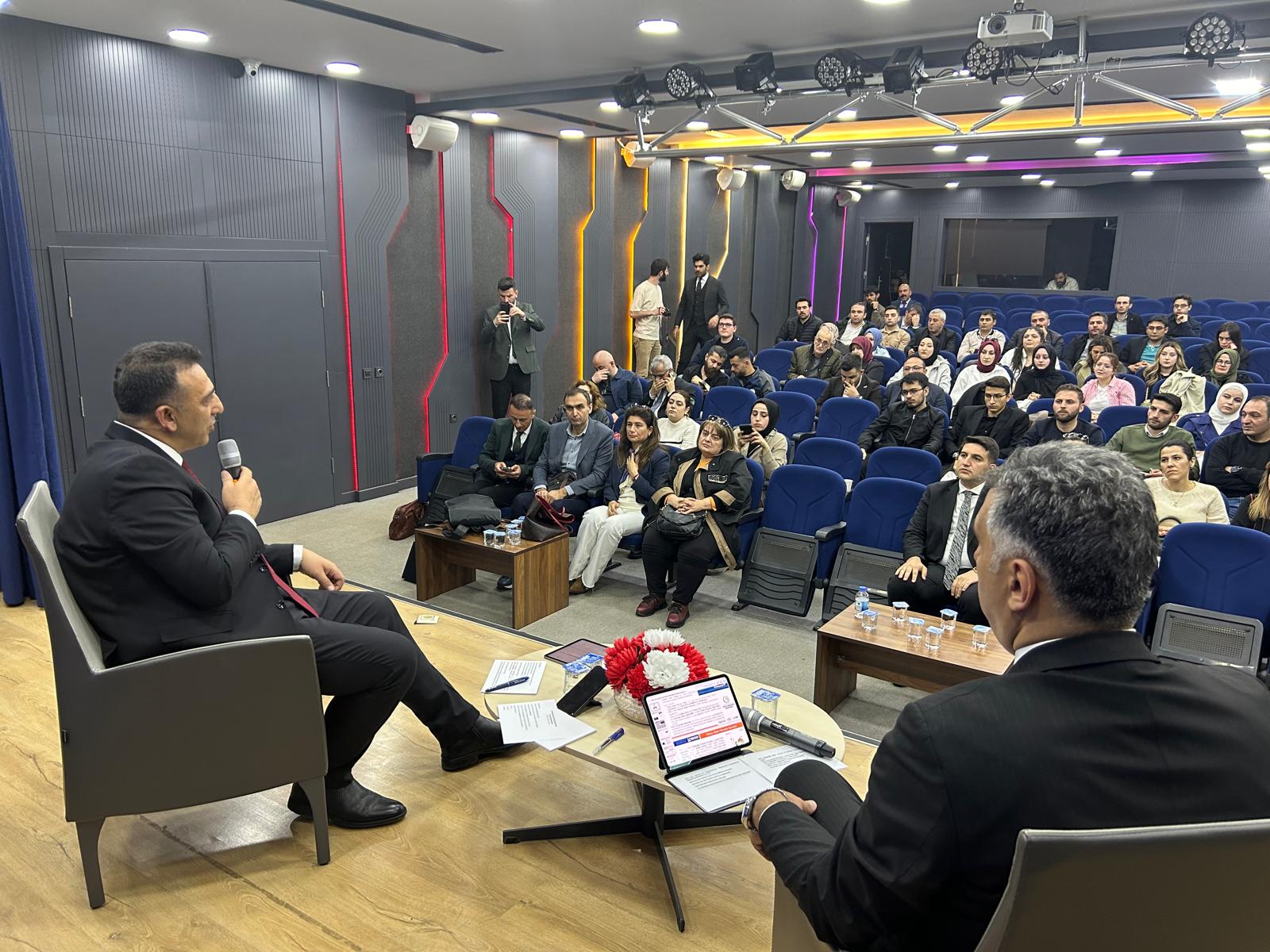
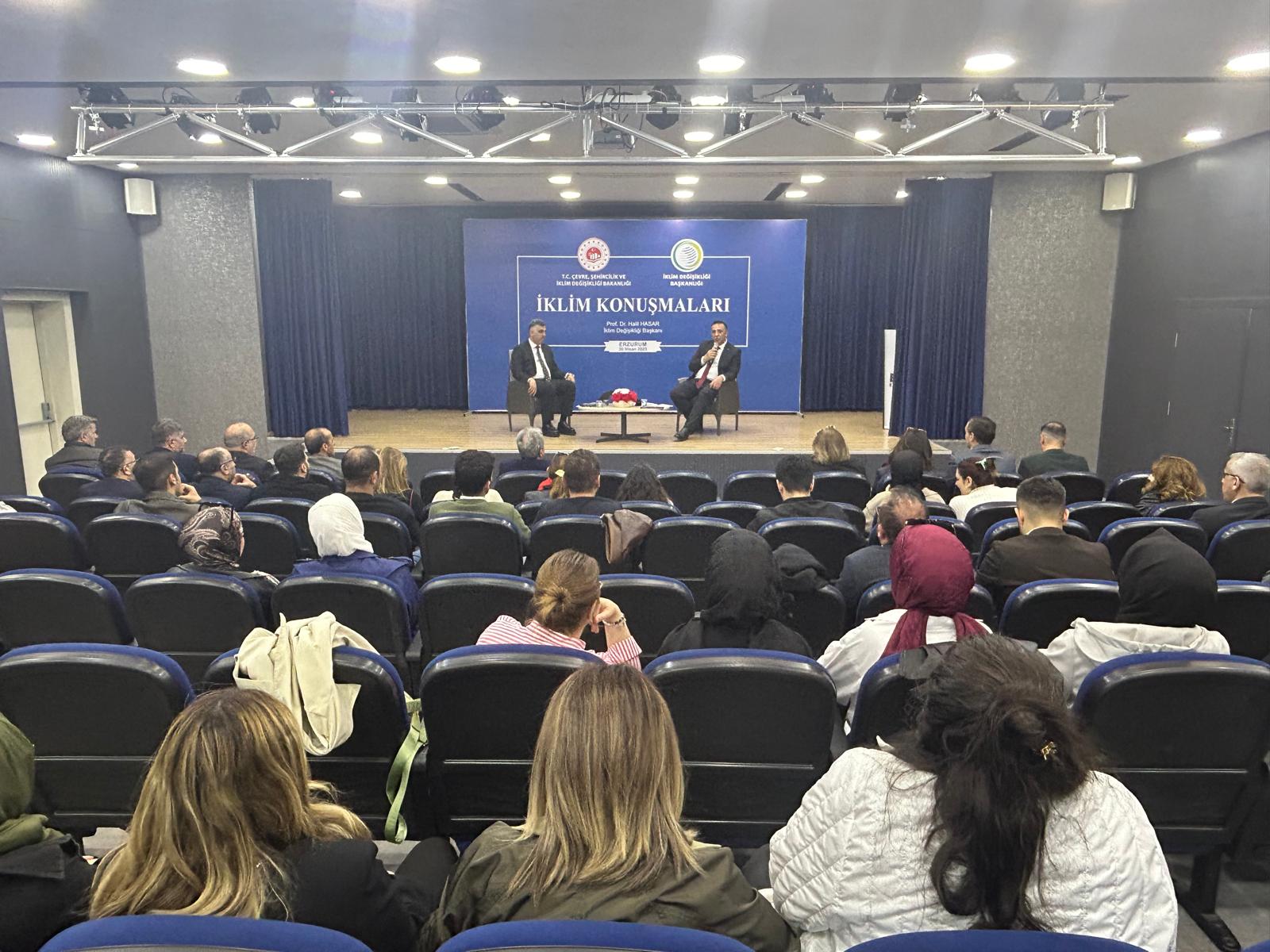
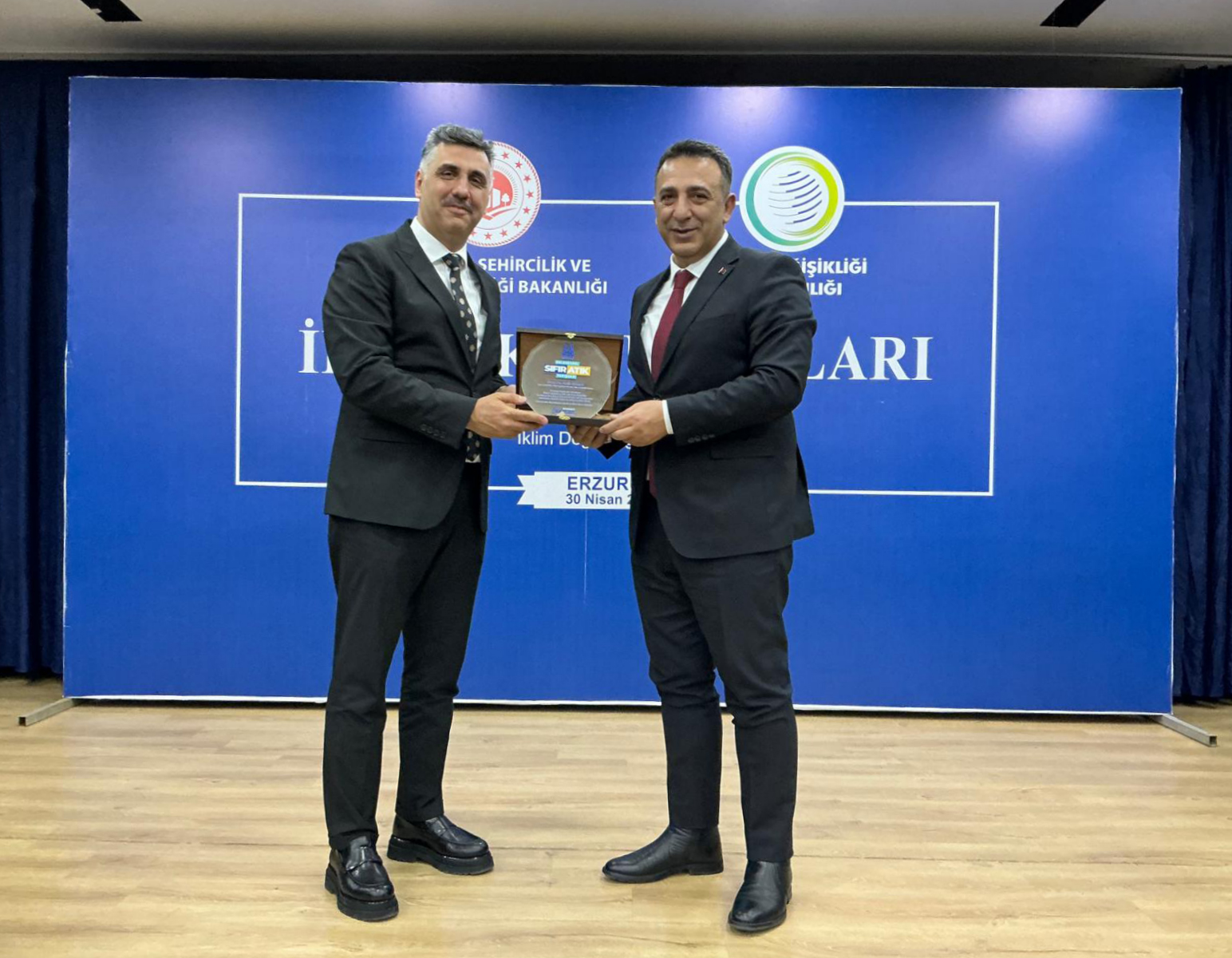
Climate Change Director Prof. Halil Hasar met with residents in Erzurum as part of the “Climate Talks” program. Organized by the Directorate of Climate Change and spanning provinces across Türkiye, the “Climate Talks” initiative brings Director Hasar together with representatives of non-governmental organizations, senior officials from governmental agencies, academics, university students, and members of the public.
At the program, which also addresses what needs to be done in the fight against climate change, Director Hasar answers questions of public interest on climate-related issues. Speaking at the first “Climate Talks” event held in Erzurum, Director Hasar said there is a covenant of compassion between humankind and nature, adding, “Humankind must show compassion toward nature. When humankind fails to show compassion, nature retaliates. Looking back on history, we see that whenever humankind treated nature harshly or exploited it, nature’s response was severe. Unfortunately, I believe we are now moving toward such a period.”
Explaining that climate issues concern states more than individuals, highlights from Director Hasar’s remarks included the following:
“Climate issues concern states more than individuals”
Climate issues concern states more than individuals. They stem from the strategies adopted by states and the production policies they pursue. Before the Industrial Revolution, atmospheric carbon dioxide concentrations stood at 280 ppm. Following the Industrial Revolution, this figure rose to 427 ppm. As a result, carbon dioxide concentrations have now reached intolerable levels. Due to elevated carbon dioxide concentrations, global average temperatures have increased sharply. The global average temperature has now reached approximately 1.55 degrees Celsius. If you consider the human body, an increase of 1.5 degrees in body temperature would prompt you to seek medical attention. The Earth is also a biological entity, and its structure should be viewed in the same way.
“Climate is not just an environmental issue; climate change is a global problem”
Climate is not just an environmental issue. While environmental problems may be local, climate change is a global problem. Emissions released by developed countries today affect developing and poorer countries. These emissions impact their economies, food security, agriculture, forestry, water resources, and many other areas. We are among the countries currently most affected by climate change. As a country located in the Mediterranean basin, Türkiye is experiencing the effects of climate change to a significant degree. In the climate adaptation process, our society, economy, water resources, food security, agriculture, and cities need to become more resilient.
“When a month’s worth of rain falls within an hour, it brings not abundance, but disaster.”
Climate change also manifests itself through increasing irregularities. When a month’s worth of rain falls within an hour, it brings not abundance, but disaster. This is precisely where the issue of climate becomes critical.
ON THE CLIMATE LAW
"The Climate Law imposes no restrictions on individuals”
The Climate Law imposes no restrictions on individuals. I’d like to state this clearly. Overall, the law contains no restrictive provisions. This is a protective law. It prioritizes organic farming and the expansion of forests.
“We regard emissions from animals as part of the natural life cycle”
Both methane and carbon dioxide are greenhouse gases. We regard emissions from animals as part of the natural life cycle. None of the claims circulating on social media, such as assertions that animals will be slaughtered, appear anywhere in the law. On the contrary, in agricultural and livestock policies, both traditional and moral values rank among our country’s priorities. There is a tendency to speak as though provisions that do not exist in the law actually do. One side argues that “this law lacks sufficient enforcement mechanisms,” while the other claims that “our freedoms will be restricted." This is not the case. There is no provision whatsoever that restricts individual freedoms.
“We are preparing Türkiye’s Green Taxonomy.”
Under the law, investors are now required to make investments that focus on emission reductions. This is why; in order to secure rapid access to such financing, we are preparing the Green Taxonomy Türkiye. Through the Green Taxonomy, investors will be able to see more easily whether their investments are clean or climate-friendly. We have also introduced a grant program to help acclimate our industrial sector to this framework.
“We achieved major gains at COP29.”
The main agenda of the 29th Conference of the Parties (COP29), held in Azerbaijan last year, was climate finance. Within the climate finance framework discussed at COP29, a two-layer system was established. As a result of the negotiations, our country is now benefiting from an annual pool of USD 300 billion, and we will also be able to benefit from a tier amounting to USD 1.3 trillion.
During the question-and-answer segment of the program, Director Hasar responded to inquiries from participants. The program concluded with a commemorative group photo.