


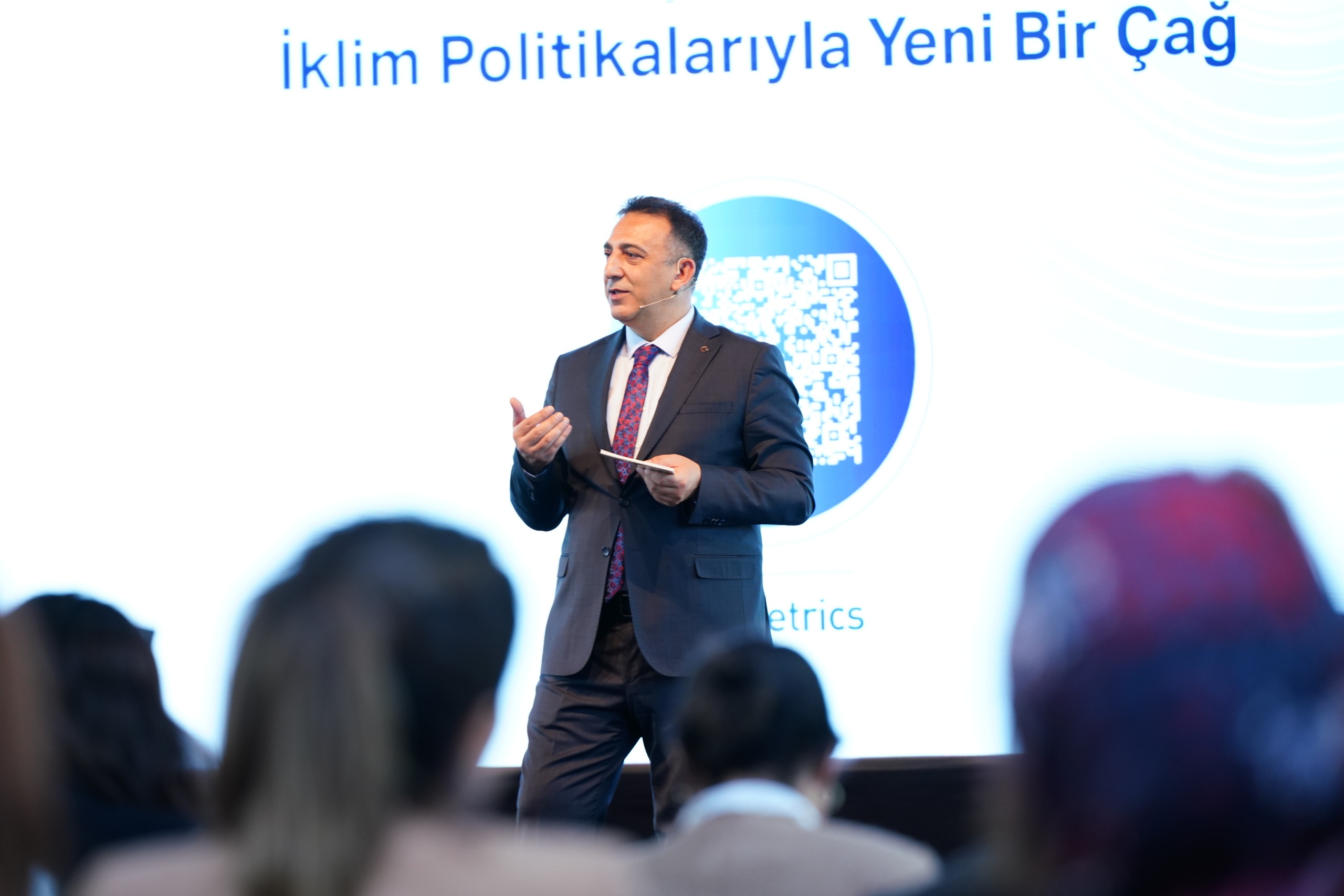
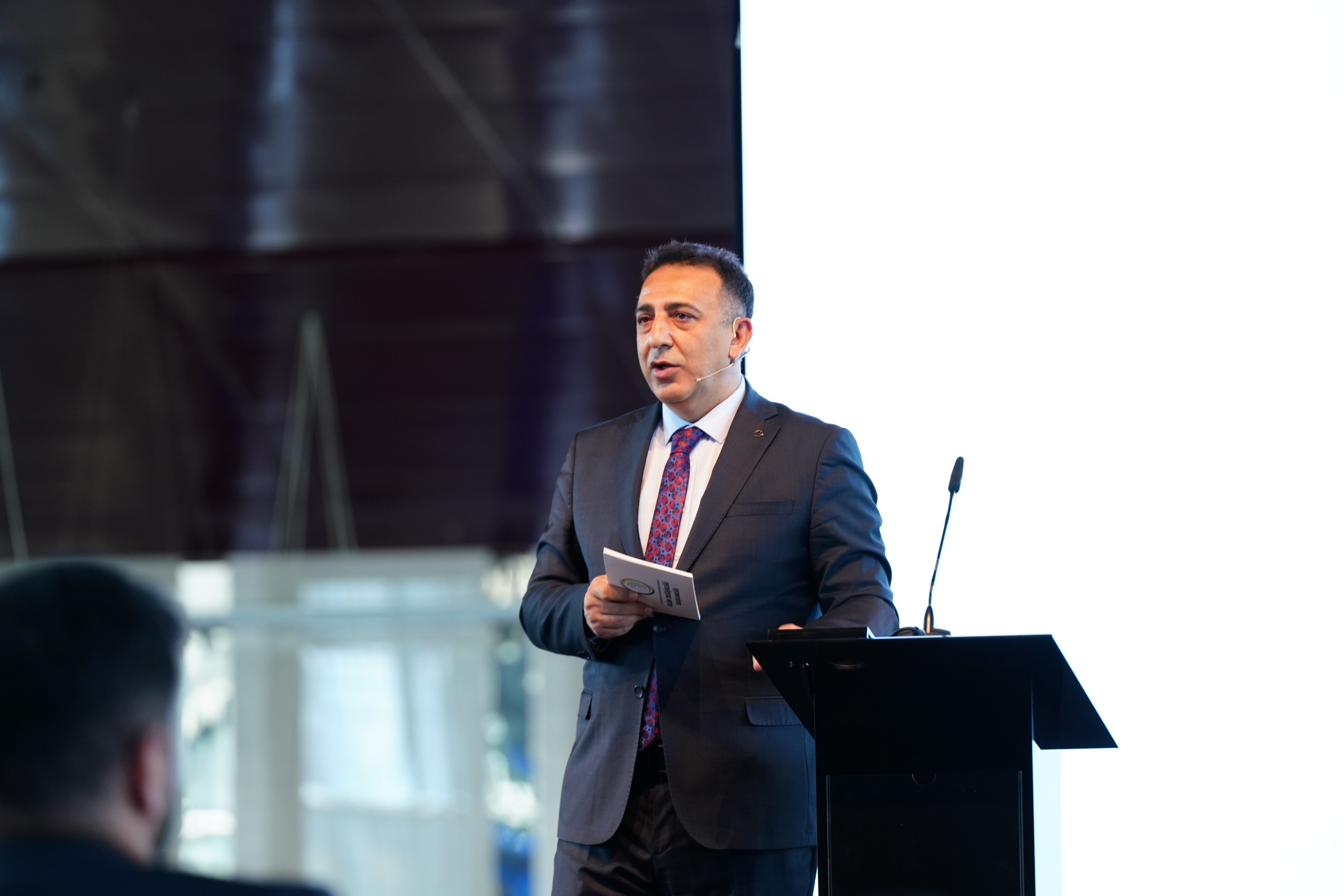
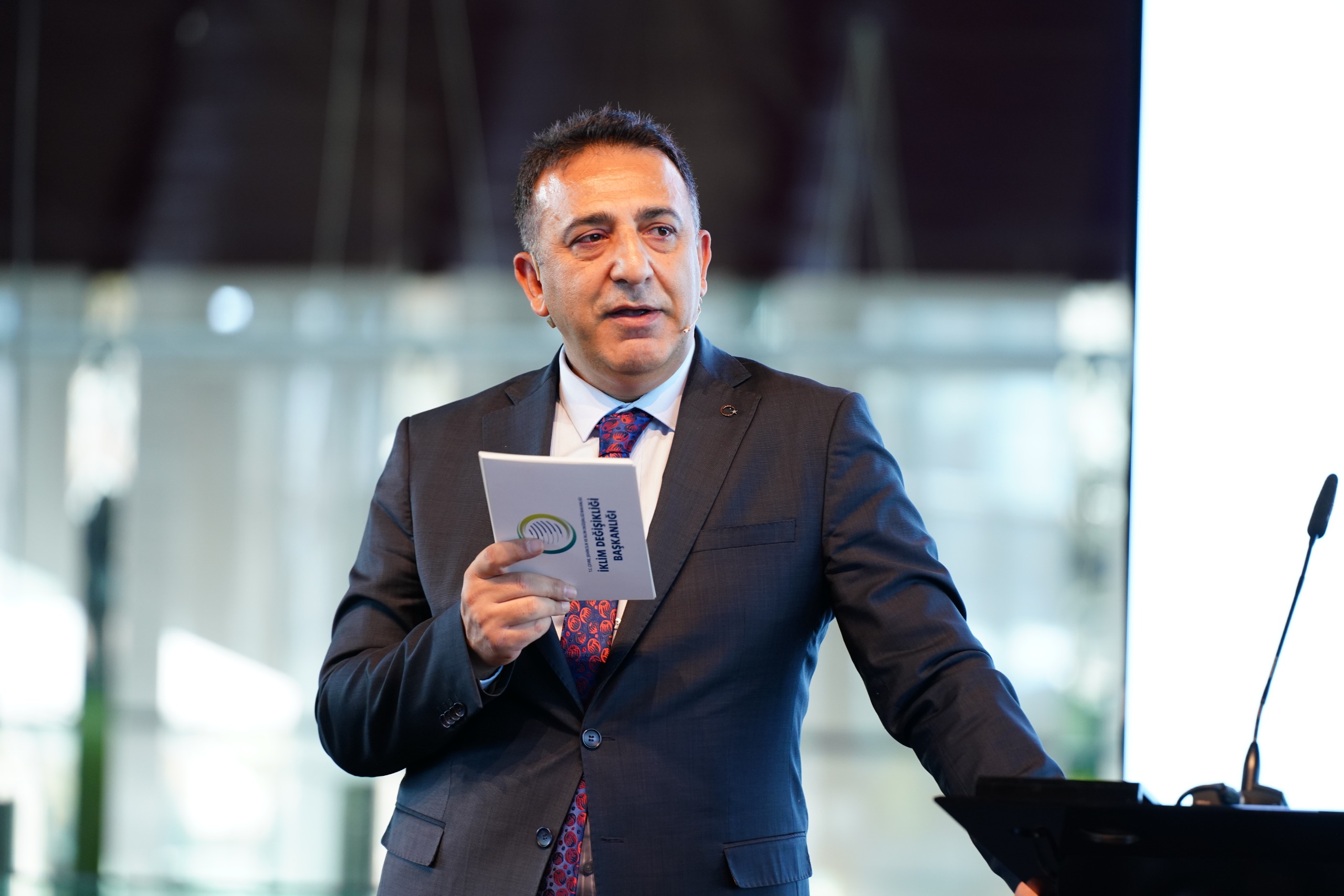
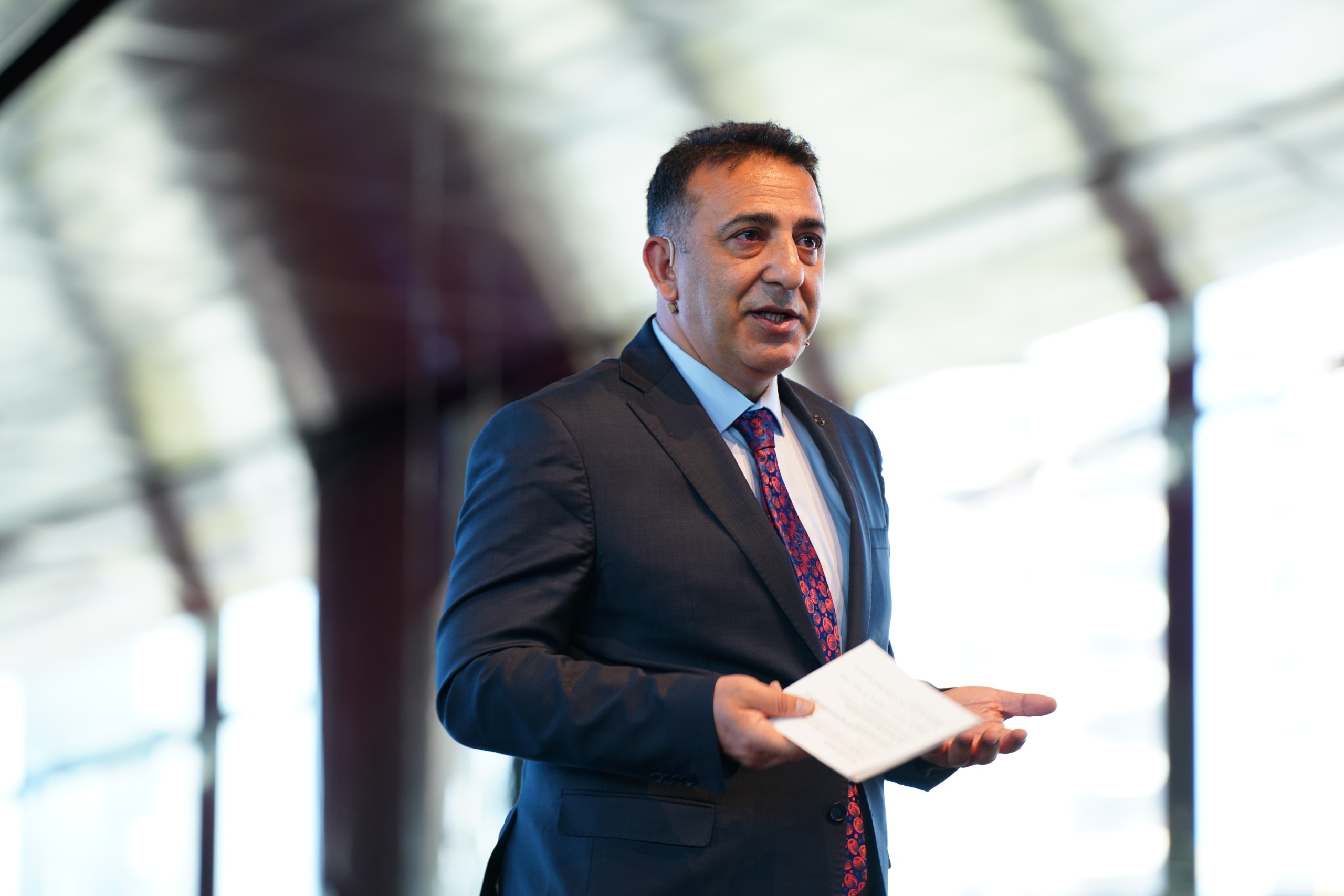
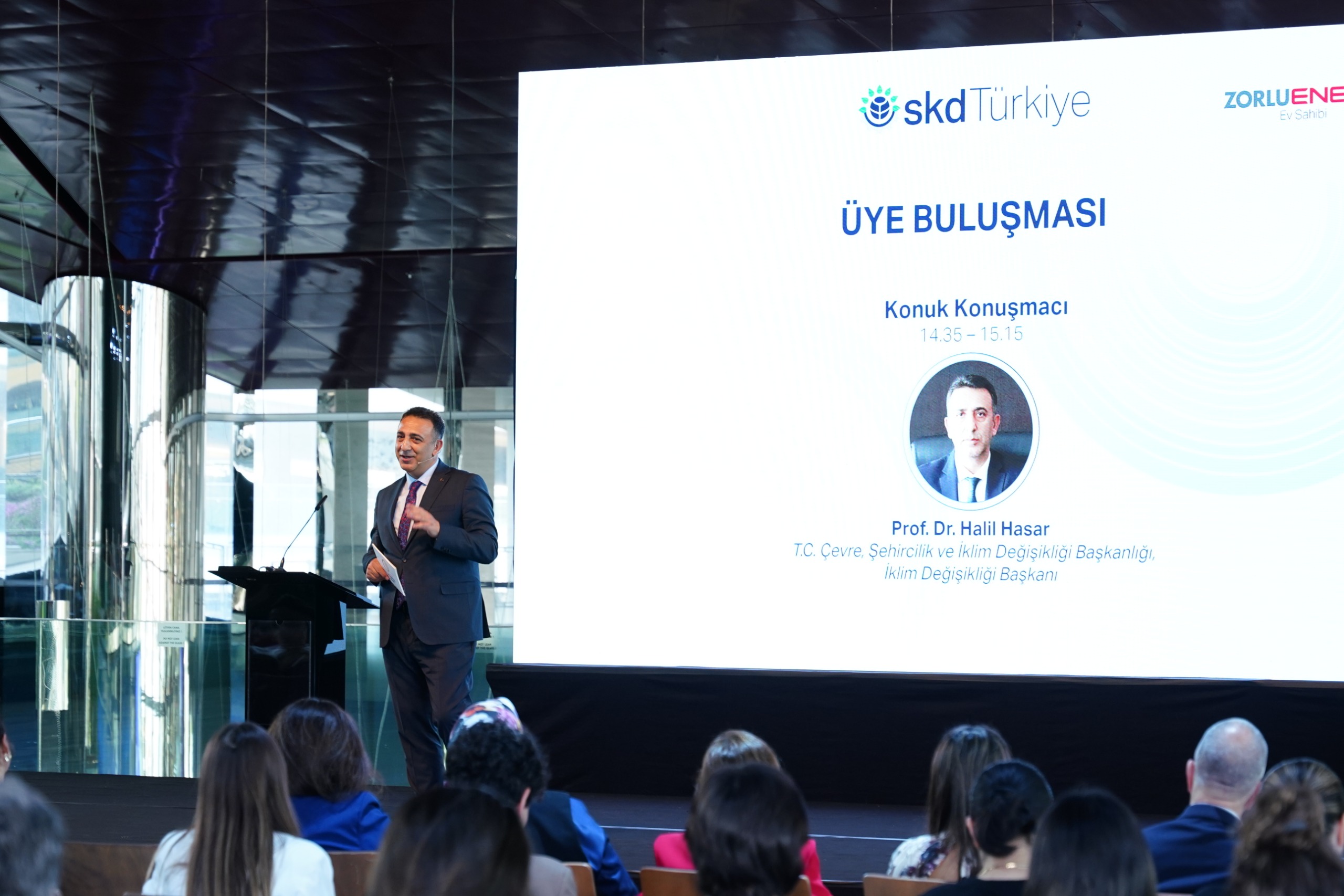
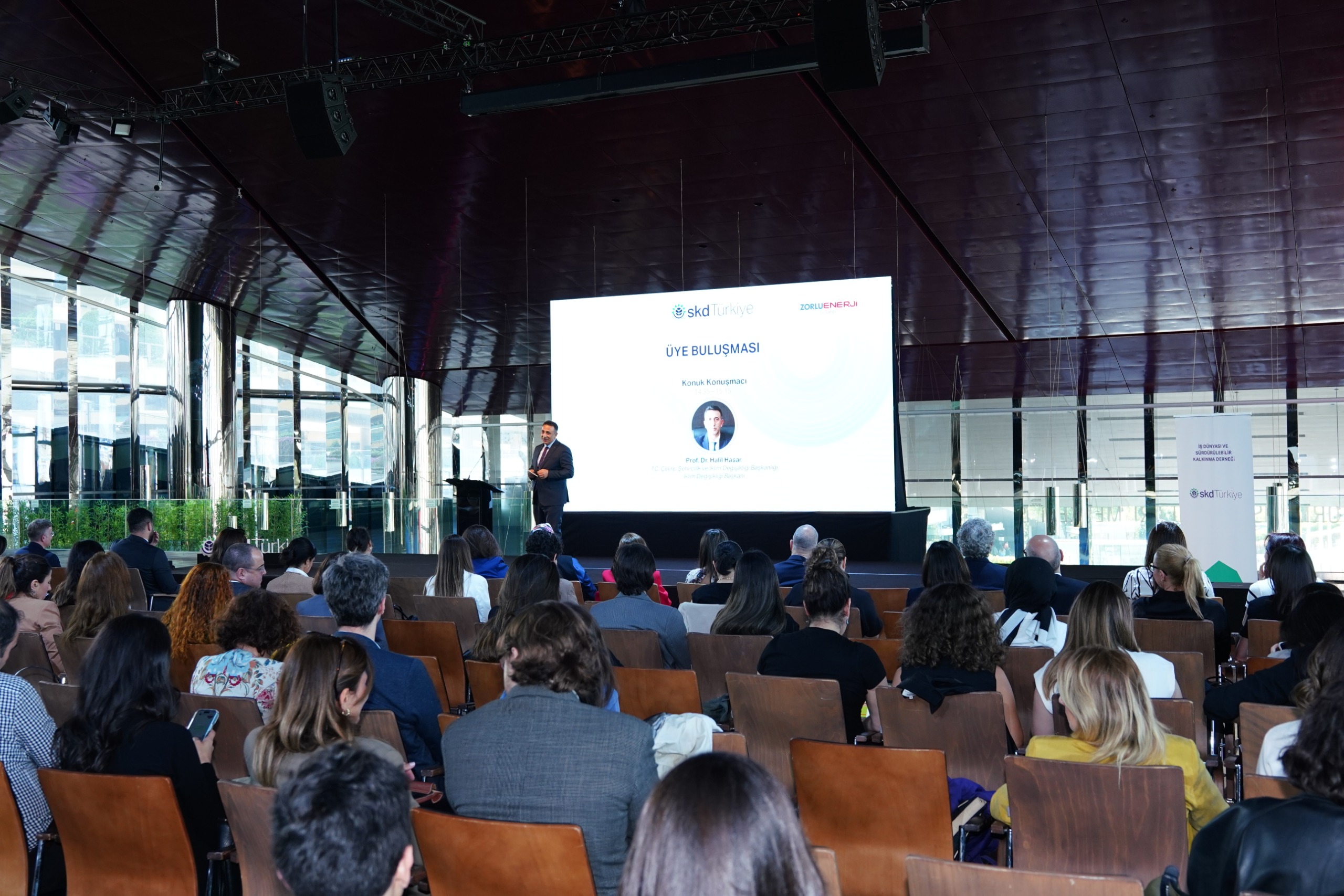
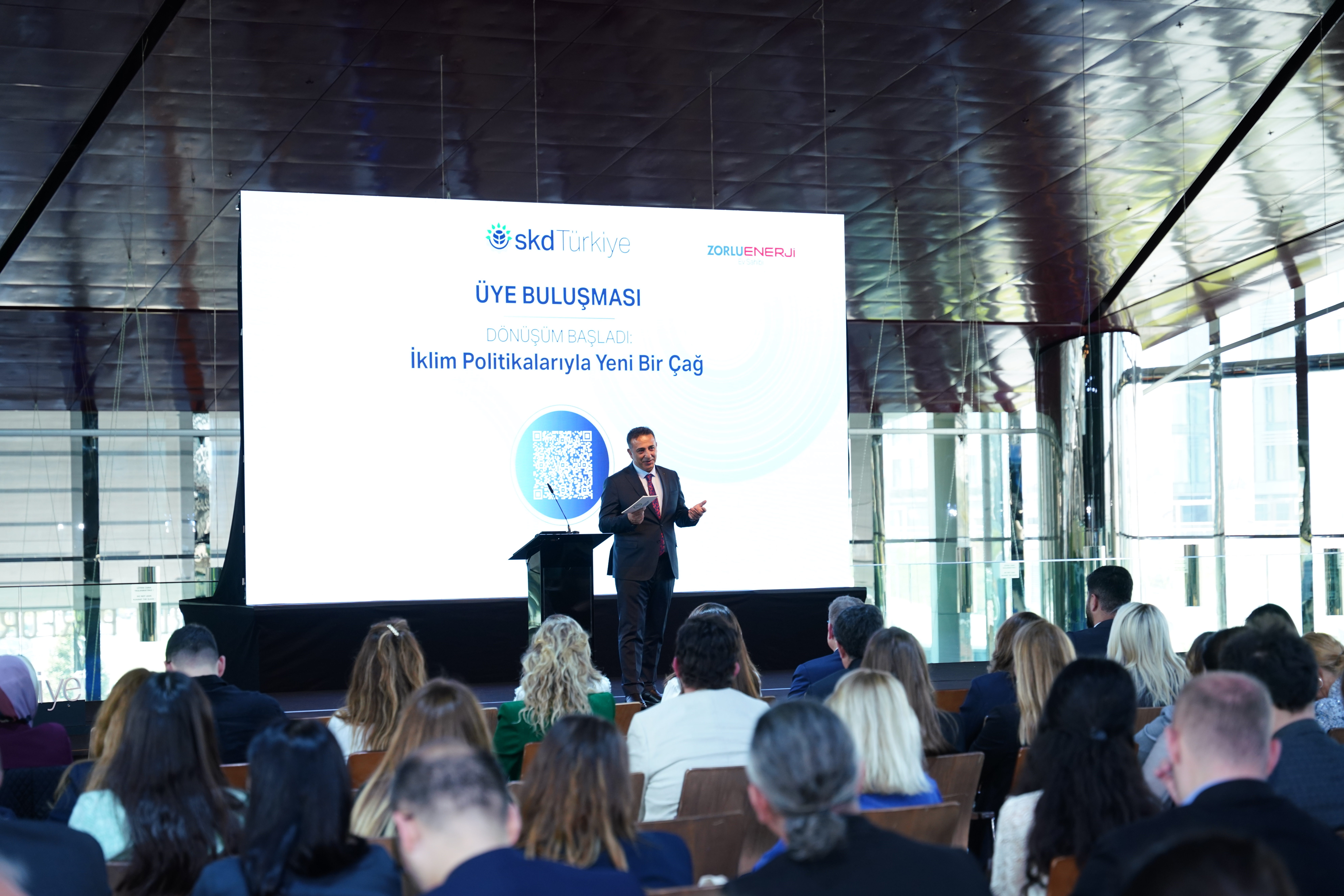
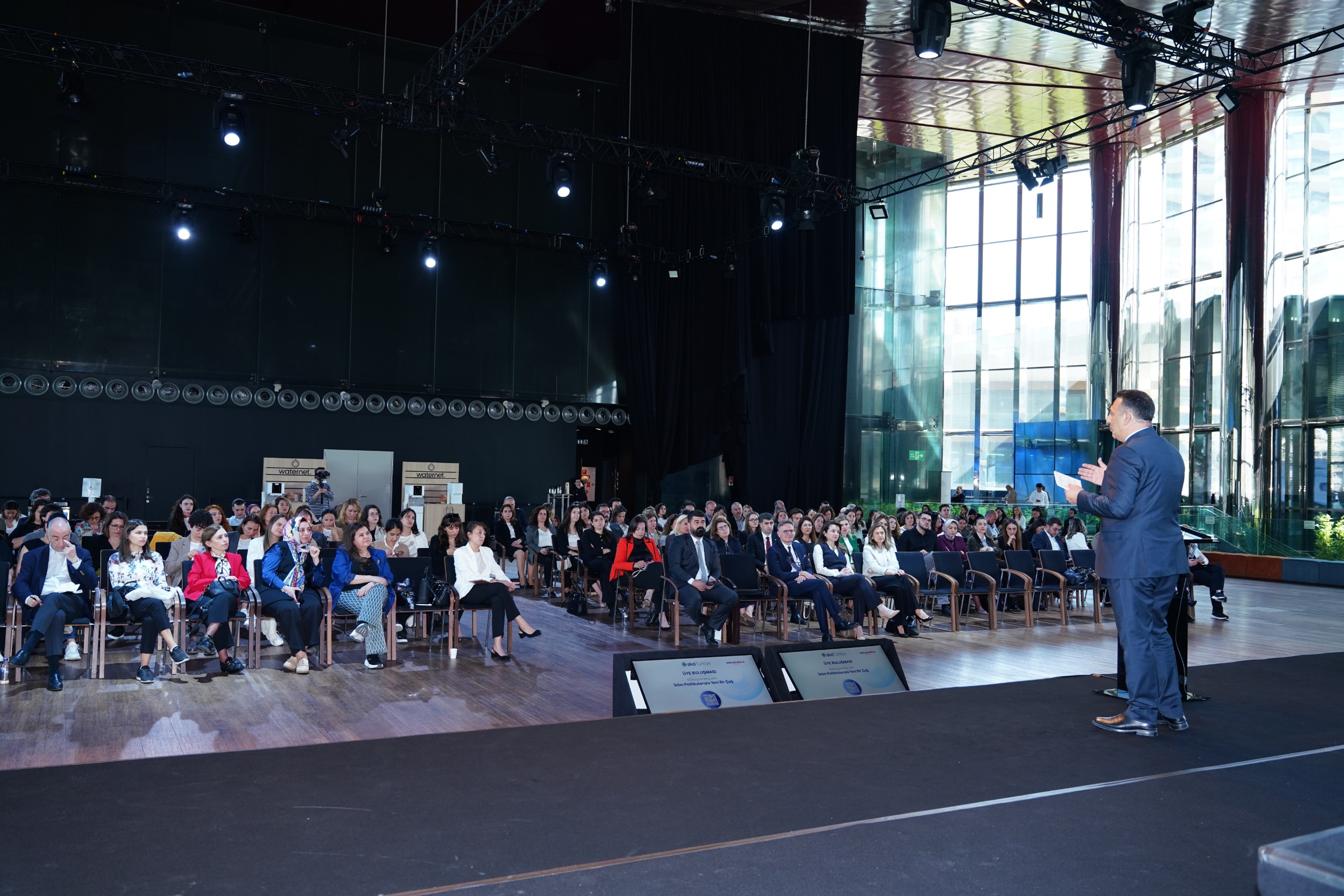
Director of Climate Change Prof. Hasar attended the panel discussion organized by the Business Council for Sustainable Development of Türkiye (BCSD Türkiye).
06 May 2025
Director of Climate Change Prof. Hasar attended the panel discussion organized by the Business Council for Sustainable Development of Türkiye (BCSD Türkiye). Delivering the opening address at the panel discussion held under the theme “The Transformation Has Begun: A New Era Through Climate Policies,” Director Hasar underscored that climate change is an undeniable reality, indicating that “climate change is not merely an environmental issue; it is a comprehensive crisis that is felt across a wide range of areas, from the economy and social order to global stability and human security.”
Emphasizing that the climate crisis is no longer a distant concern but one of the most urgent and pressing issues of our time, Director Hasar noted, based on the latest data from the World Meteorological Organization, that 2024 was 1.55°C warmer than the pre-industrial period and was recorded as the hottest year in history.
He stressed that if similar temperature increases continue over the coming years, as in 2024, the 1.5°C threshold set under the Paris Agreement would be exceeded.
He also drew attention to the fact that, under such circumstances, the world could reach the far more destructive 2°C increase much sooner than expected.
Noting that “although Türkiye has historically accounted for only 0.64 percent of the global carbon budget, we are taking determined steps to fulfill the responsibility that falls upon us at this historic threshold,” Director Hasar made the following points in his remarks:
“Türkiye’s 2053 Net Zero Emissions Target is not merely an environmental policy; it is an economic transformation program aimed at sustainable development.”
As Türkiye, we are on the stage not only at the national level but also as a strong contributor to the global fight against climate change. We have announced our 2053 Net Zero Emissions Target. We have given national climate policies a more institutional and coordinated structure. Türkiye’s 2053 Net Zero Emissions Target is not merely an environmental policy; it is also a comprehensive economic transformation program based on green growth and aimed at sustainable development.
The North–South Divide in the Fight Against Climate Change
Globally, the more industrialized countries of the North have historically contributed more to the global carbon budget. By contrast, the countries most affected by the adverse impacts of climate change, such as drought, forest fires, and extreme heat, are those of the Global South. At this point, when a climate-induced disaster occurs once, affected communities are able to show resilience. However, when such disasters recur, people are forced to leave the places where they live. Ultimately, it does not matter in which geography climate-induced disasters occur; the problem becomes a global one with the emergence of climate migration.
Green Transformation, Energy Source Diversity, and Security of Supply Must Be Ensured Simultaneously
We cannot disregard the baseload requirement for our energy security. Our baseload source is clear. No one should expect us to be unrealistic. In fact, climate diplomacy must revise its current tone and focus on more realistic narratives and commitments. Completely abandoning fossil fuels is not a realistic approach; what is needed is to maximize the share of clean energy by using clean and renewable energy sources to the greatest possible extent within the overall energy supply. Recent developments, particularly those experienced in Spain, have clearly demonstrated the importance of baseload capacity and security of supply. We have increased our renewable energy capacity within a very short period. In the coming years, we are progressing step by step toward our target of expanding this capacity to 120 GW. As we move toward this target, the diversity of energy sources will also be preserved, thereby ensuring that security of supply is not compromised.
“We are continuing our intensive efforts to implement an Emissions Trading System in our country.”
We are continuing our intensive efforts to implement an Emissions Trading System in our country. We plan for the revenues to be generated from the Emissions Trading System to be allocated exclusively to green transformation projects. In addition to compliance markets, our work on voluntary and international carbon markets is also ongoing. Türkiye ranks among the leading countries worldwide in terms of the number of registered projects in the voluntary carbon market. This, in turn, brings significant emissions reduction potential.
“As we advance toward our net zero target, we will continue to take every step with determination that will contribute both to the environment and to our economy.”
In order to steer investments in line with the green transition, we are preparing the Green Taxonomy Türkiye. Through Türkiye’s Green Taxonomy, we are creating a comprehensive list of environmentally sustainable economic activities. This taxonomy defines which activities will be considered environmentally sustainable. In this way, we will make green investments more visible and facilitate their access to finance. As we advance toward our net zero target, we will continue to take every step with determination that will contribute both to the environment and to our economy.
At the panel discussion organized by BCSD Türkiye under the theme “The Transformation Has Begun: A New Era Through Climate Policies,” which aimed to draw attention to the critical role the business community will play in combating the climate crisis and to underscore the importance of cooperation between policymakers and the private sector, the topics “The Road to 2053: The Climate Law, the Emissions Trading System, and Beyond” and “The Sustainable Business Model” were explored.
The panel discussion was attended by Fatih Birol, Executive Director of the International Energy Agency; Cenk Alper, CEO of Sabancı Holding and a member of the WBCSD Executive Committee; Peter Bakker, President and CEO of the WBCSD; Ediz Günsel, Chair of the Board of BCSD Türkiye; and numerous other distinguished guests.