


At the COP30 held in Belém, Brazil, Türkiye stood out as a pioneering country with its national “Country-Specific Greenhouse Gas” modeling.
16 November 2025
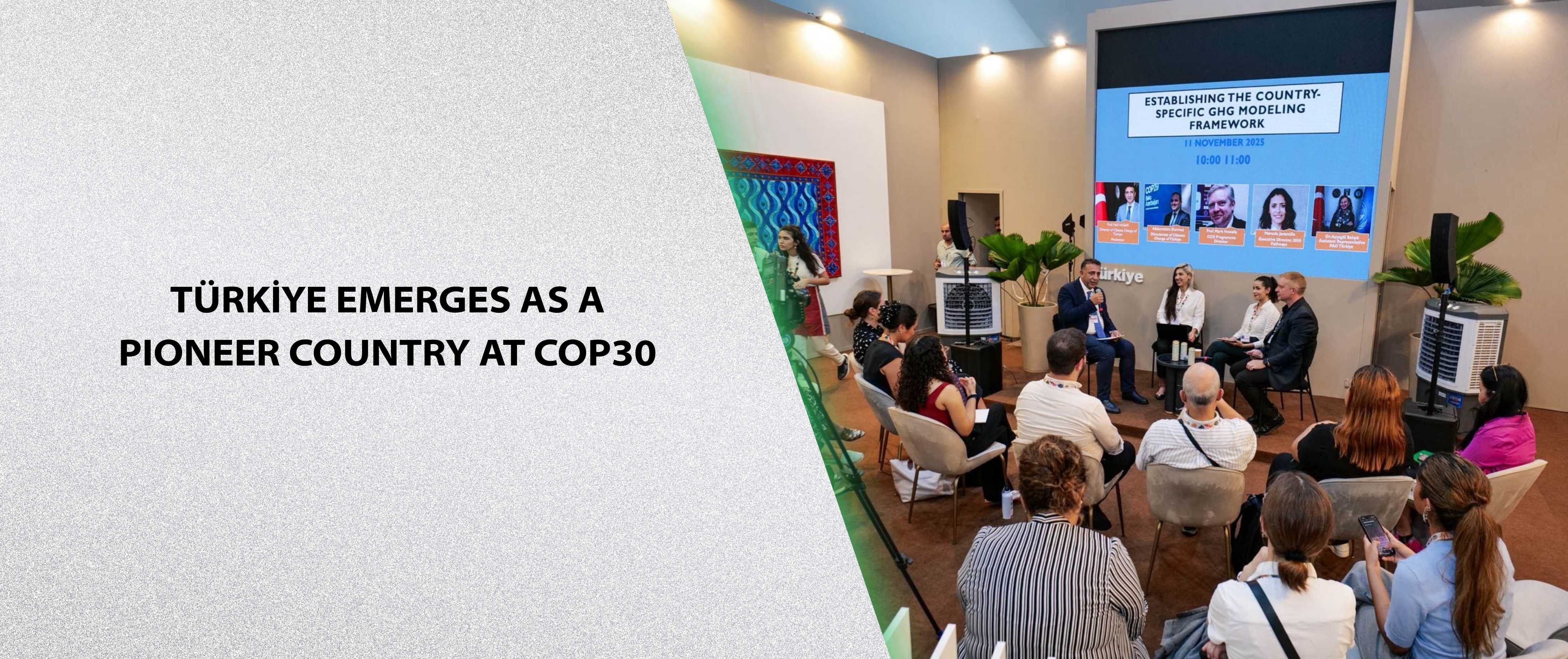
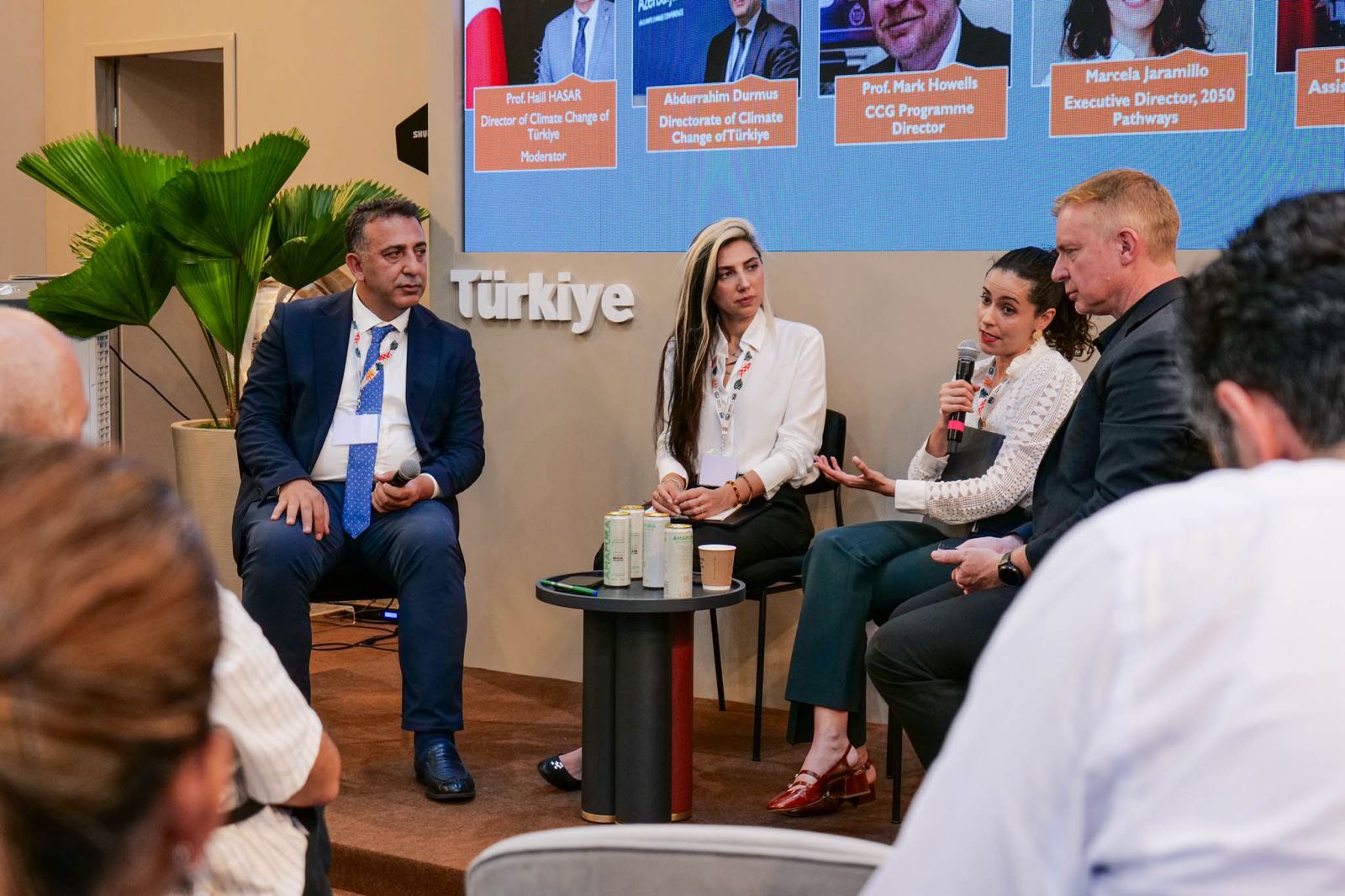
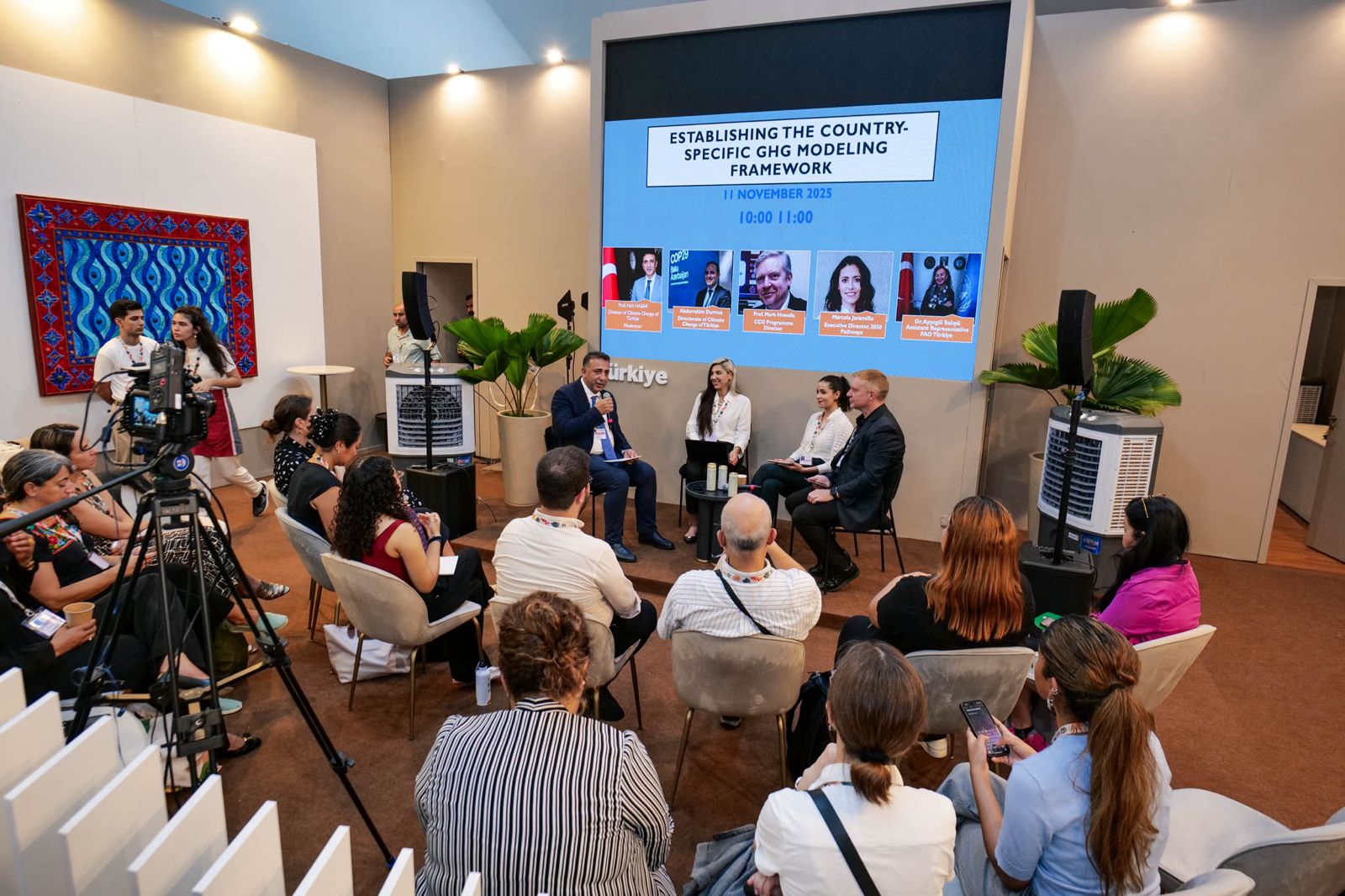
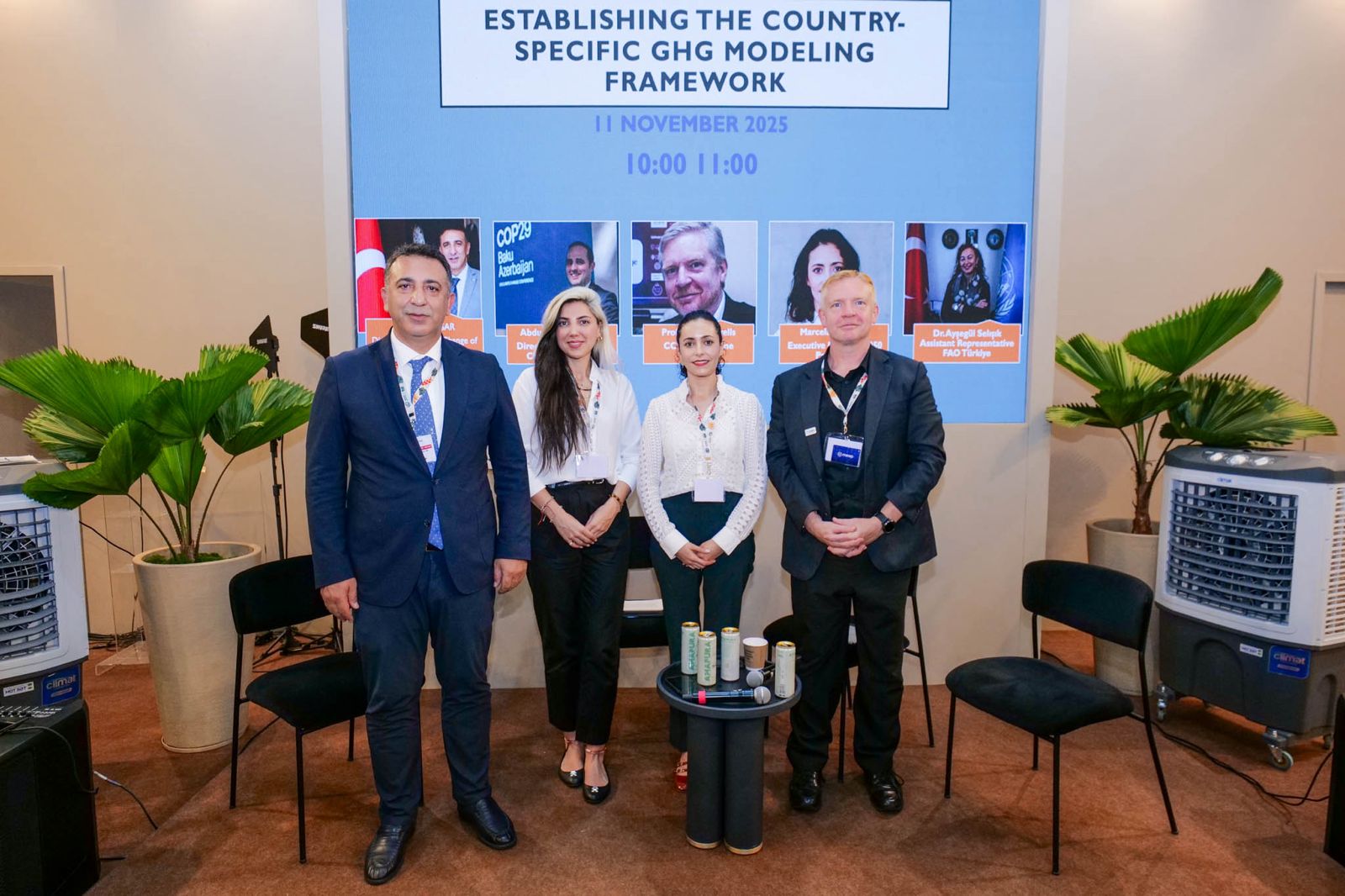
A panel titled “Establishing a Country-Specific Greenhouse Gas (GHG) Modeling Framework” was organized as part of the Türkiye Pavilion at COP30, where Türkiye’s national modeling capacity and the development of its Second Nationally Determined Contribution (NDC 3.0), submitted to the UN Secretariat, were shared with international stakeholders.
The panel demonstrated that Türkiye’s climate policies are built on a modeling infrastructure that is science-based, transparent, and grounded in national institutional capacity.
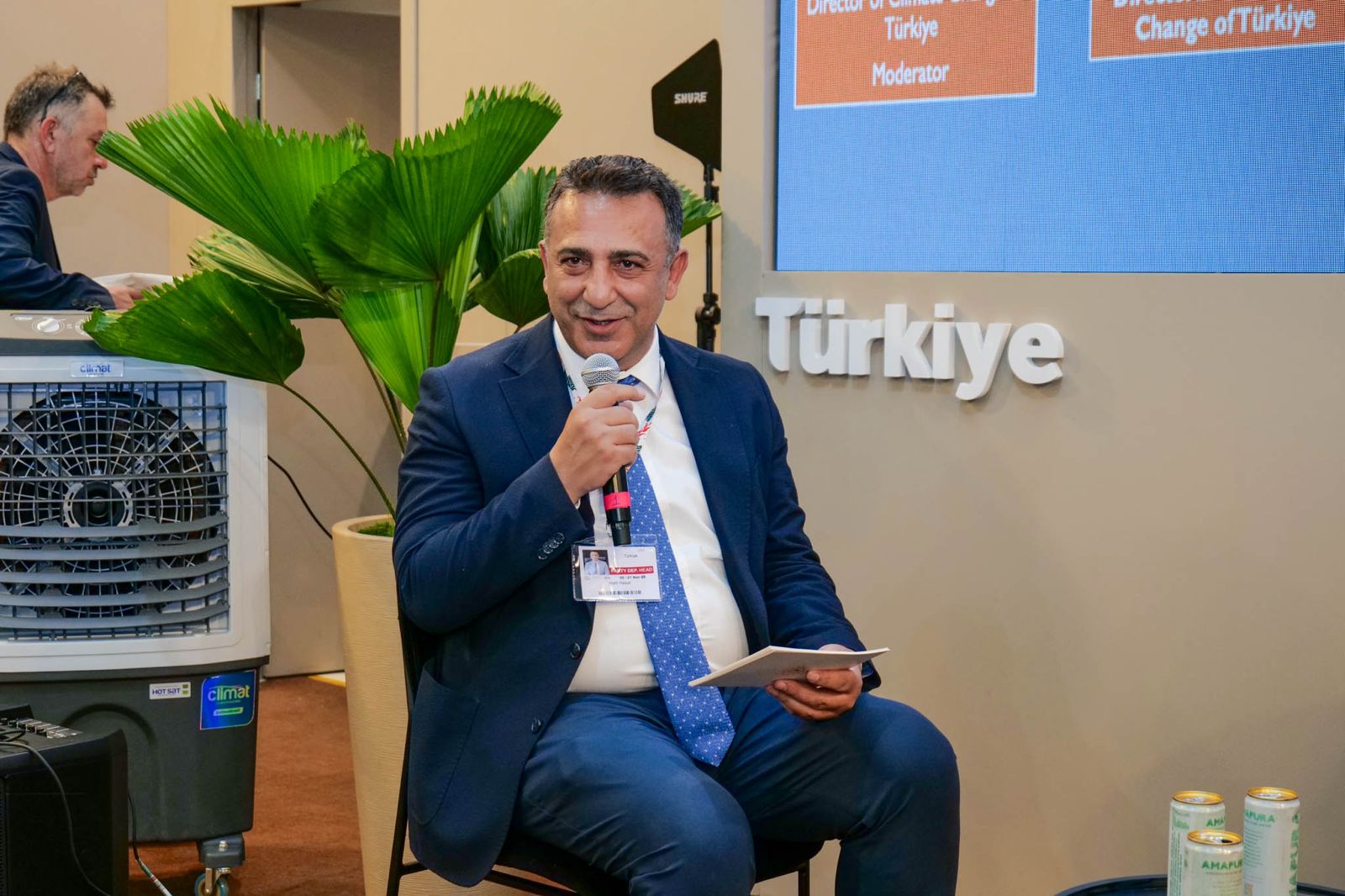
Delivering the opening remarks, Director of Climate Change Prof. Halil Hasar underscored that COP30 marks a critical threshold, particularly for the 2025 NDC cycle. “Science-based policy design carries strategic importance in this process.
Modeling serves as a bridge between technical analysis and political decision-making.” stated Director Hasar.
“Türkiye’s experience in developing its own GHG modeling framework is a strong example of ‘national ownership, institutional cooperation, and long-term vision.’” Director Hasar added, “The model we developed not only supports the 2025 NDC update but also forms the foundation for long-term strategies aligned with the 2053 Net Zero Emissions Target. Strengthening human resources and institutional capacity is essential. Türkiye continues to benefit from international cooperation in this process. At its core, the model is built on institutional capacity and coordination.”
A Global First from Türkiye
Türkiye became the first country in the world to introduce an “Open-Source National Integrated Assessment Model.”
Türkiye announced that, in cooperation with experts from the 2050 Pathways Platform and Climate Compatible Growth (CCG), it has developed the world’s first open-source National Integrated Assessment Model, which is a significant innovation.
Through this initiative, Türkiye rapidly established a national greenhouse gas modeling system, integrated it into the Directorate of Climate Change, and strengthened the country’s capacity for data-driven policy development.
Türkiye has developed a dynamic and evolving national modeling framework that will be used not only for the 2025 NDC update, but also for all future nationally determined contributions and its long-term low-emission strategy.
The panel, moderated by Director of Climate Change Hasar, featured CCG Program Director Prof. Mark Howells, 2050 Pathways Platform Executive Director Marcela Jaramillo, and Directorate of Climate Change Senior Mitigation Specialist, Elif Pınar Polat