


Held for the eighth time this year to assess the energy transition process in the Western Balkans, the MEF Energy Forum took place in Skopje, the capital of North Macedonia.

18 June 2025
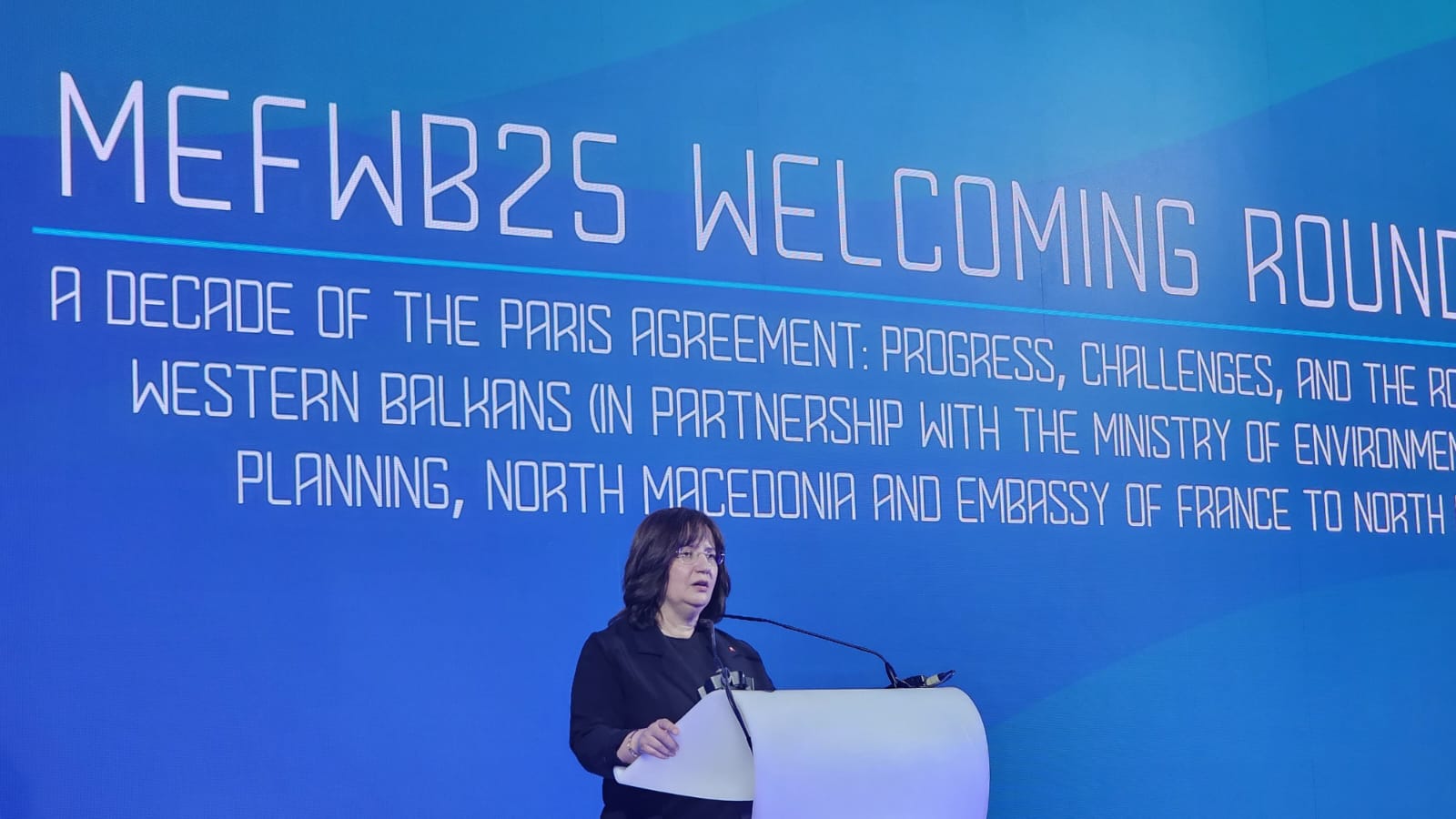
Held for the eighth time this year to assess the energy transition process in the Western Balkans, the MEF Energy Forum took place in Skopje, the capital of North Macedonia. The forum, where Türkiye was represented by Deputy Minister of Environment, Urbanization, and Climate Change Fatma Varank and Director of Climate Change Prof. Halil Hasar, focuses on climate action aligned with the global targets set at COP29 and on preparations for COP30.
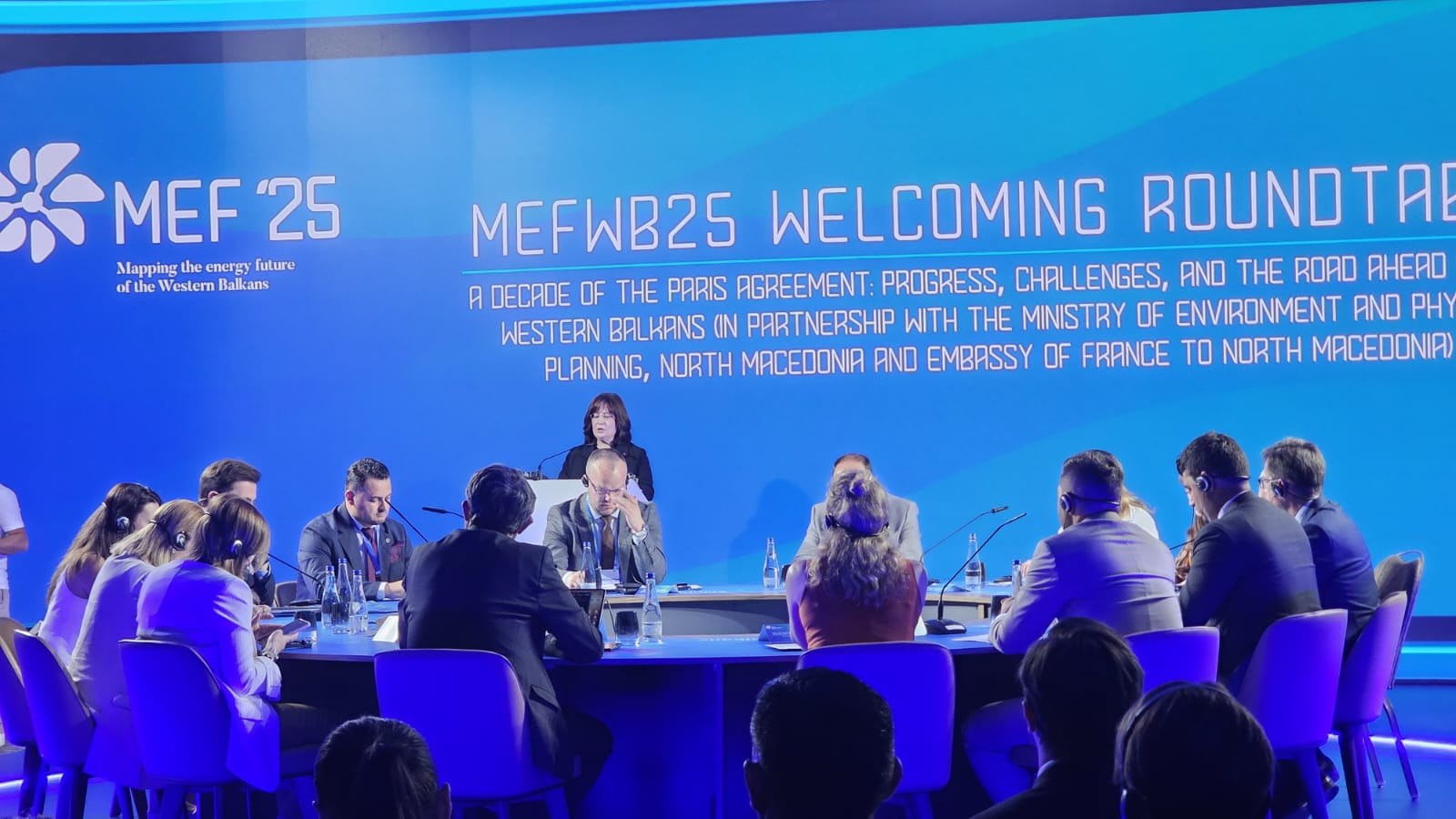
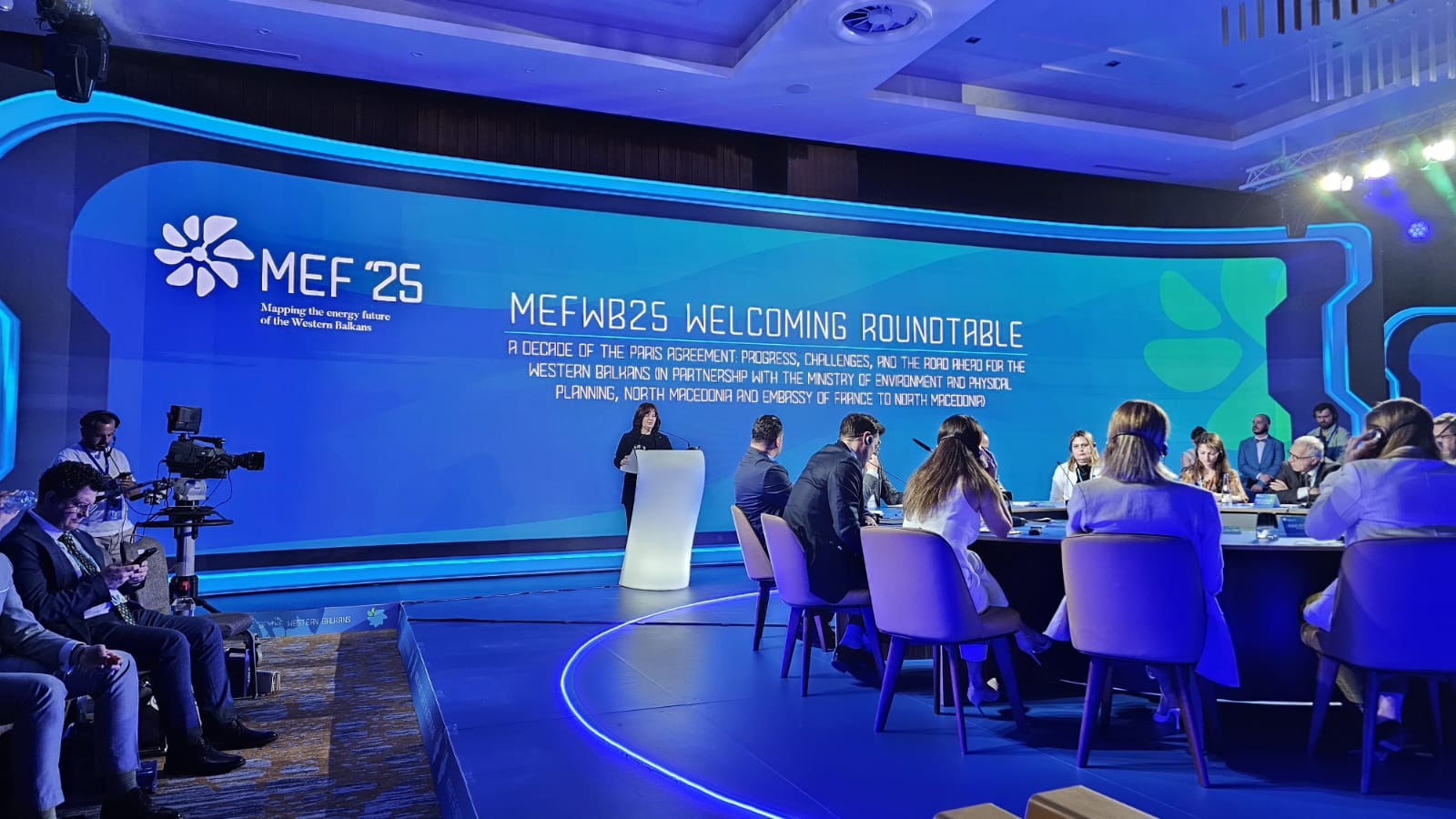
Within the framework of the Global Stocktake decision adopted at COP28, the forum highlighted that tripling renewable energy capacity and doubling energy efficiency by 2030 point to the need for a comprehensive transformation in the Western Balkans, and addressed “A Decade of the Paris Agreement: Progress, Challenges, and the Road Ahead for the Western Balkans” in a roundtable format.
Over the years, the MEF has become an important platform for multi-stakeholder dialogue on energy transition in the region, where policymakers, private sector representatives, technical experts, and civil society organizations come together to discuss the shift from theoretical debate to implementation-oriented strategies.
Speaking at the opening panel session, Deputy Minister Varank indicated that Türkiye attaches great importance to active cooperation in order to support a just and inclusive energy transition at the regional level.
Deputy Minister Varank said, “Countries’ energy needs in many sectors such as manufacturing, transportation, and heating continue to grow by the day. This is why, the energy transition has become a priority in reducing emissions in the fight against climate change.”
Referring to recent developments in the region, Deputy Minister Varank said:
“The conflicts in our region have once again demonstrated how serious global energy security risks are.”
Recent conflicts and large-scale regional disruptions in our geography have once again demonstrated how serious global energy security risks are. More efficient and cleaner energy systems have the potential to reduce these risks. Energy security must be addressed through a holistic approach and should not be limited solely to the security of supply of conventional fuels; it must also encompass the secure transformation of electricity systems, the integration of renewable energy, and the resilience of supply chains for clean energy technologies. In recent years, there has been a visible acceleration in the clean energy transition. This momentum has largely been shaped by climate policies. The global increase in manufacturing capacity for clean energy technologies offers a significant opportunity for a faster transition aligned with net-zero targets. In this transformation, renewable energy sources and nuclear energy have stood out in particular.
“Türkiye’s energy transition stands at the heart of our long-term strategy.”
Türkiye is a country whose economy and industry are developing rapidly. Owing to its effective and resolute stance in combating climate change, it has made substantial progress in the renewable energy transition and has set ambitious targets. Türkiye’s energy transition lies at the core of our long-term strategy, and we plan to increase electricity generation from renewable energy sources more assertively, both in terms of share and resource diversity.
“By expanding our nuclear energy capacity, we will position Türkiye at the center of the clean and reliable energy vision.”
Our core priorities for our 2053 net-zero emissions targets are to scale up renewable energy capacity, mainstream energy efficiency across all sectors, and enhance energy diversity. We will expand our installed wind and solar power capacity. By increasing our nuclear energy capacity, we will not only reinforce our energy supply security but also position Türkiye at the center of a clean and reliable energy vision.Through our national energy efficiency action plan covering 2024–2030, we project a reduction of 100 million tons of carbon dioxide equivalent emissions. By 2053, we aim to supply half of primary energy demand from renewable sources, firmly anchoring our sustainable development pathway on a green energy axis. The two-day forum, which has become a key platform for multi-stakeholder dialogue on the energy transition, brought together government officials, policymakers, private sector representatives, technical experts, and civil society organizations.