


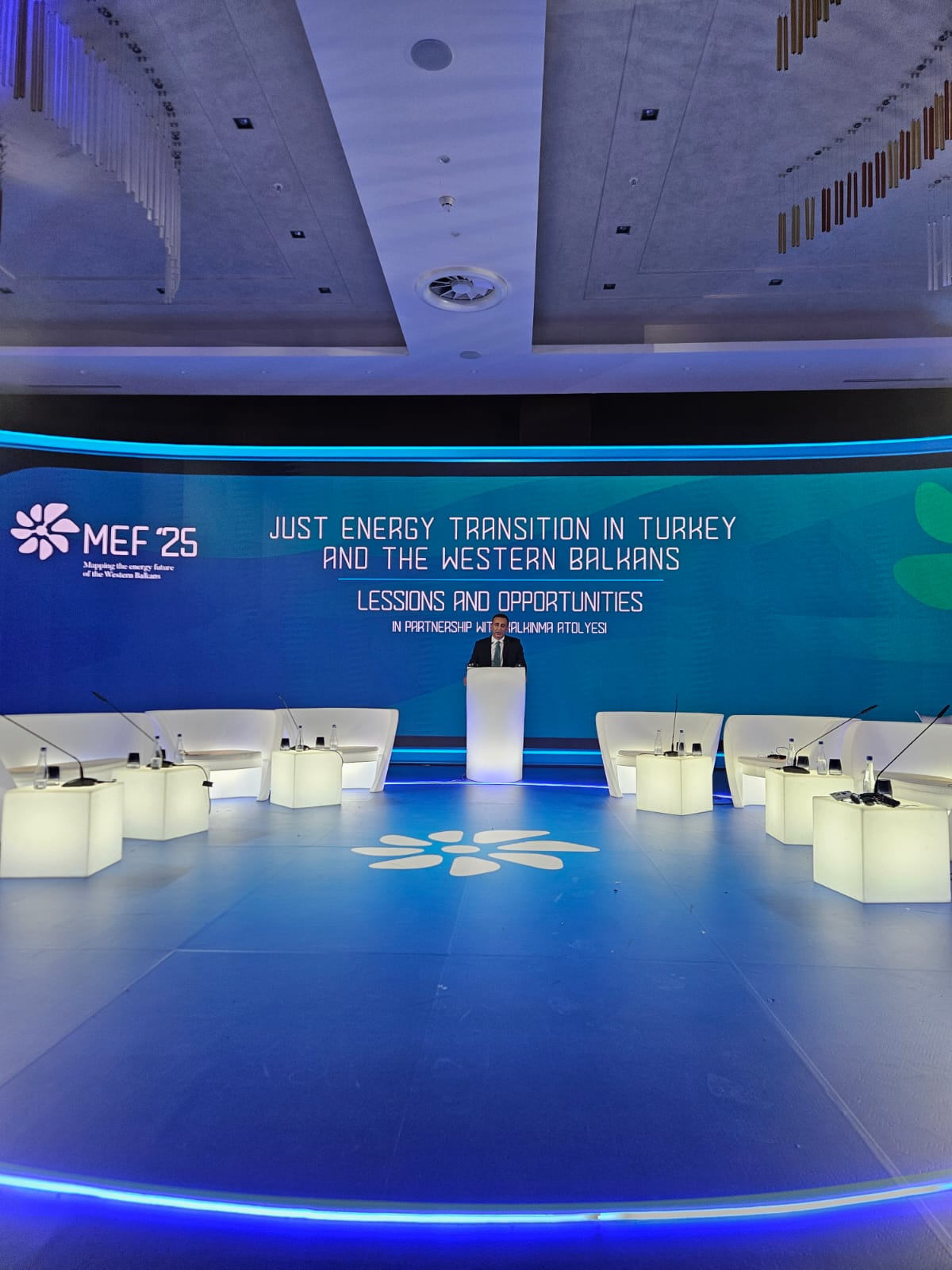
The MEF Energy Forum, organized for the eighth time this year to assess the energy transition process in the Western Balkans region and scheduled to last two days, was held in Skopje, the capital of North Macedonia.
18 June 2025
The MEF Energy Forum, organized for the eighth time this year to assess the energy transition process in the Western Balkans region and scheduled to last two days, was held in Skopje, the capital of North Macedonia.
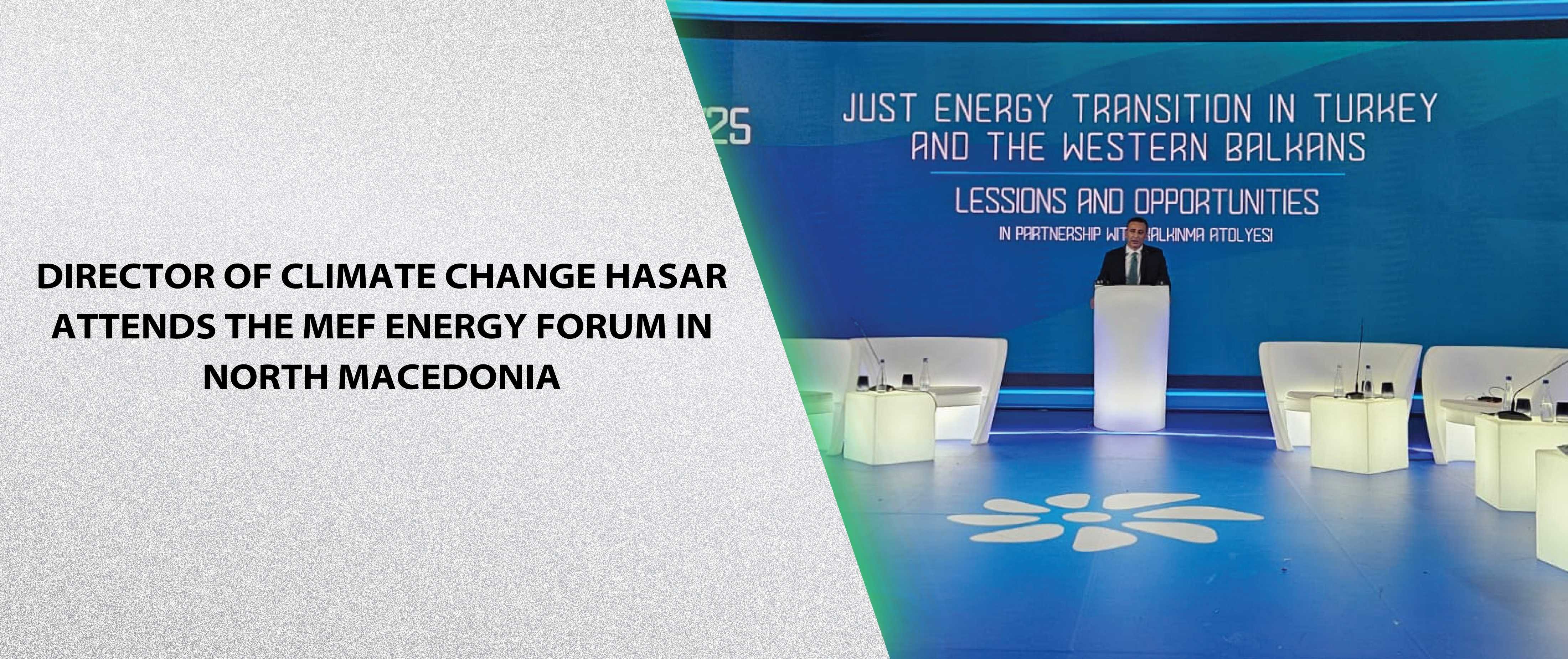
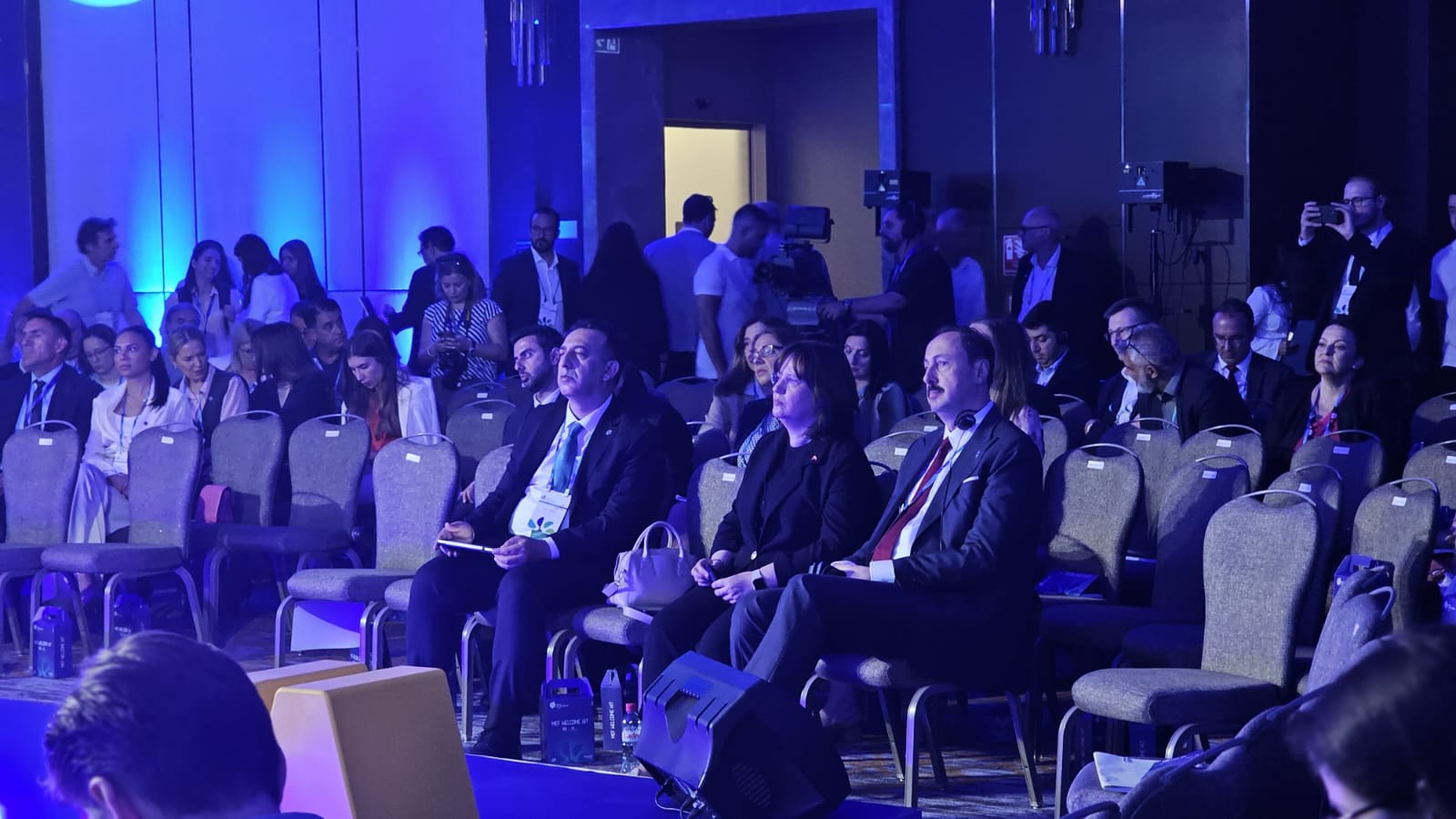
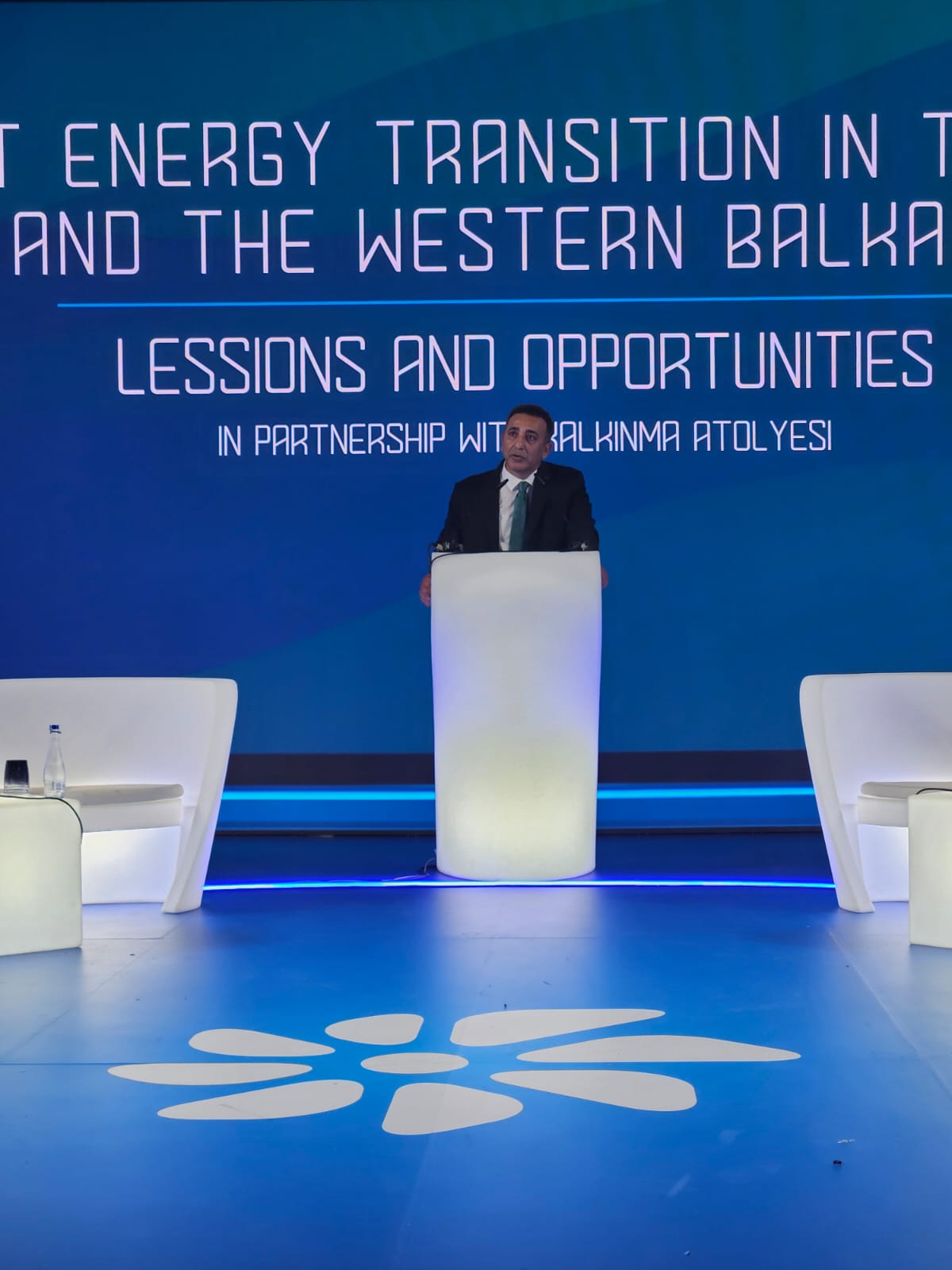
Representing Türkiye at the Western Balkans Energy Forum together with Deputy Minister Fatma Varank, Director of Climate Change Hasar delivered the opening address of the session titled “A Just Energy Transition in Türkiye and the Western Balkans: Lessons and Opportunities.”
Emphasizing the need to safeguard the rights of those affected during the transition to clean energy, Director Hasar underscored the importance of a “just transition” in his remarks and said, “As we navigate the transition to clean energy, which is one of the most critical challenges of our time, we must prioritize protecting the rights of all affected workers and communities.
While this transformation supports climate action, it also holds the potential to fundamentally strengthen social justice, as the issue is not merely replacing fossil fuels with renewables but also safeguarding livelihoods and creating new opportunities.”
Highlighting the International Labour Organization’s (ILO) projection that climate policies could eliminate 24 million jobs by 2030 while creating 6 million new jobs in renewable energy and efficiency sectors, Director Hasar stressed that this transformation represents a massive shift that will affect millions worldwide. Key excerpts from Director Hasar’s remarks are as follows:
“We must build a better future without leaving anyone behind.”
Under the United Nations Framework Convention on Climate Change (UNFCCC), just transition is increasingly recognized as a critical component of climate strategies. The Paris Agreement explicitly emphasizes the importance of “a just transition of the workforce.” Accordingly, at COP27, the Parties agreed to establish the Just Transition Work Programme to align climate action with workers’ rights and social equity. We must seize this opportunity to build a better future without leaving anyone behind.
“We must also support our mine workers as we transition to clean energy.”
More than 40,000 workers are currently employed in coal mining and coal-fired power plants. As we shift to clean energy sources, these communities must be carefully supported. Alongside these challenges, however, there are significant opportunities. Türkiye has doubled its renewable energy capacity over the past 10 years and plans to quadruple its wind and solar capacity by 2035. This expansion will be backed by USD 70 billion in investment and will create 300,000 new green jobs. Considering all these challenges and opportunities, we believe that Türkiye can achieve its climate targets without leaving communities behind. In this regard, we are working to develop an integrated vision for a just renewable energy transition.
“Just transition is one of the cornerstones of our long-term vision.”
Just transition is one of the cornerstones of our long-term vision. We have incorporated just transition principles into our strategy, including developing green employment opportunities by 2030, preventing energy poverty, and retraining workers for new green economy alternatives. We have integrated sector-specific actions that strengthen social dialogue with unions and employers, implement large-scale reskilling programs, and ensure inclusive employment opportunities with specific targets, particularly for women’s participation.
“The energy transition is not merely an environmental necessity but an opportunity to build a fairer economy for citizens.”
Our focus is now on effectively implementing these policies, particularly in workforce reskilling and green job creation. The energy transition is not merely an environmental necessity. It is an opportunity to build a fairer and more sustainable economy that works for all citizens. By applying just transition principles thoughtfully and consistently, we can achieve our climate targets while creating new opportunities and protecting vulnerable groups. Over the years, the MEF has become an important platform for multi-stakeholder dialogue on energy transition in the region, where policymakers, private sector representatives, technical experts, and civil society organizations come together to discuss the shift from theoretical debate to implementation-oriented strategies.