


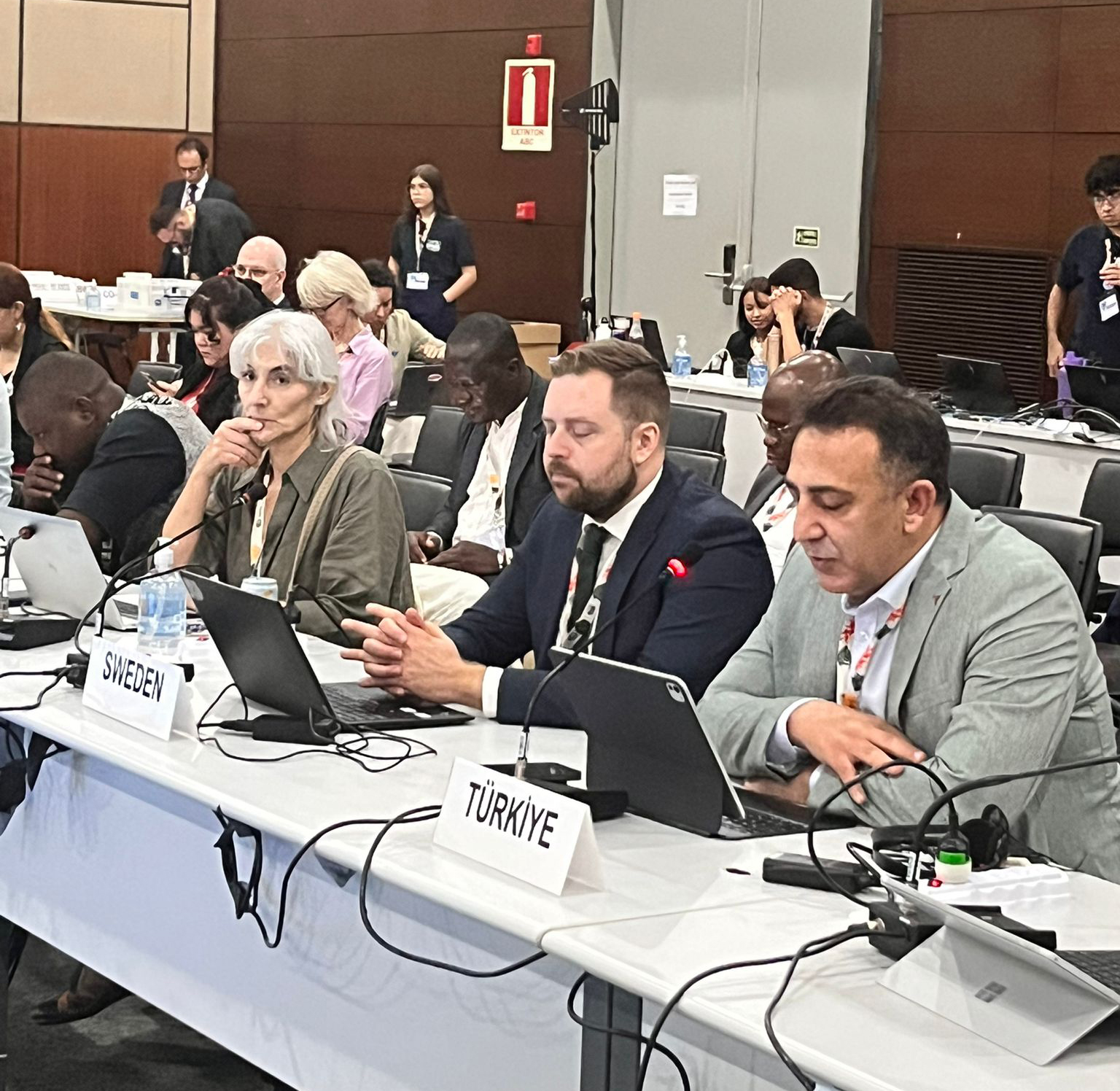
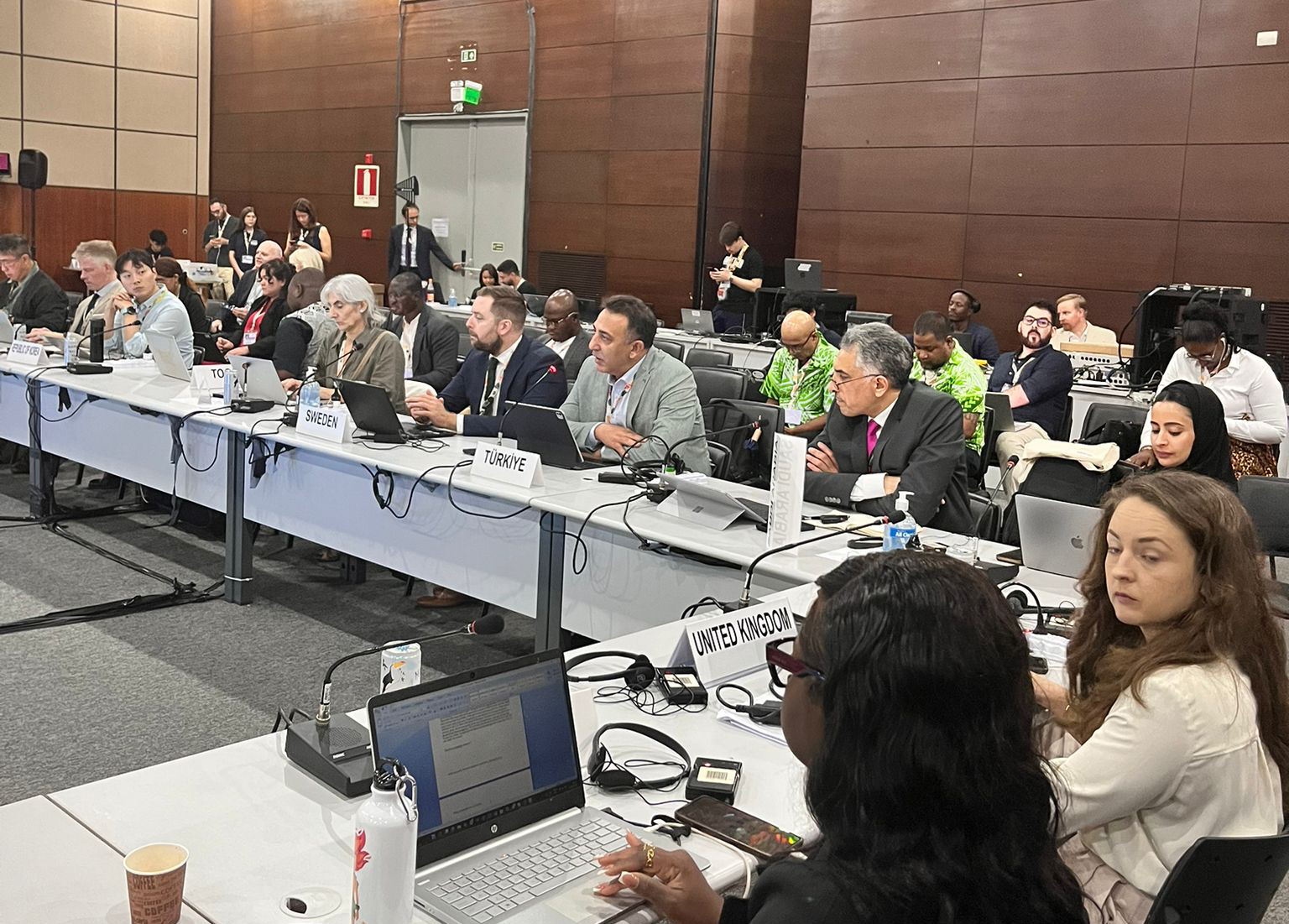
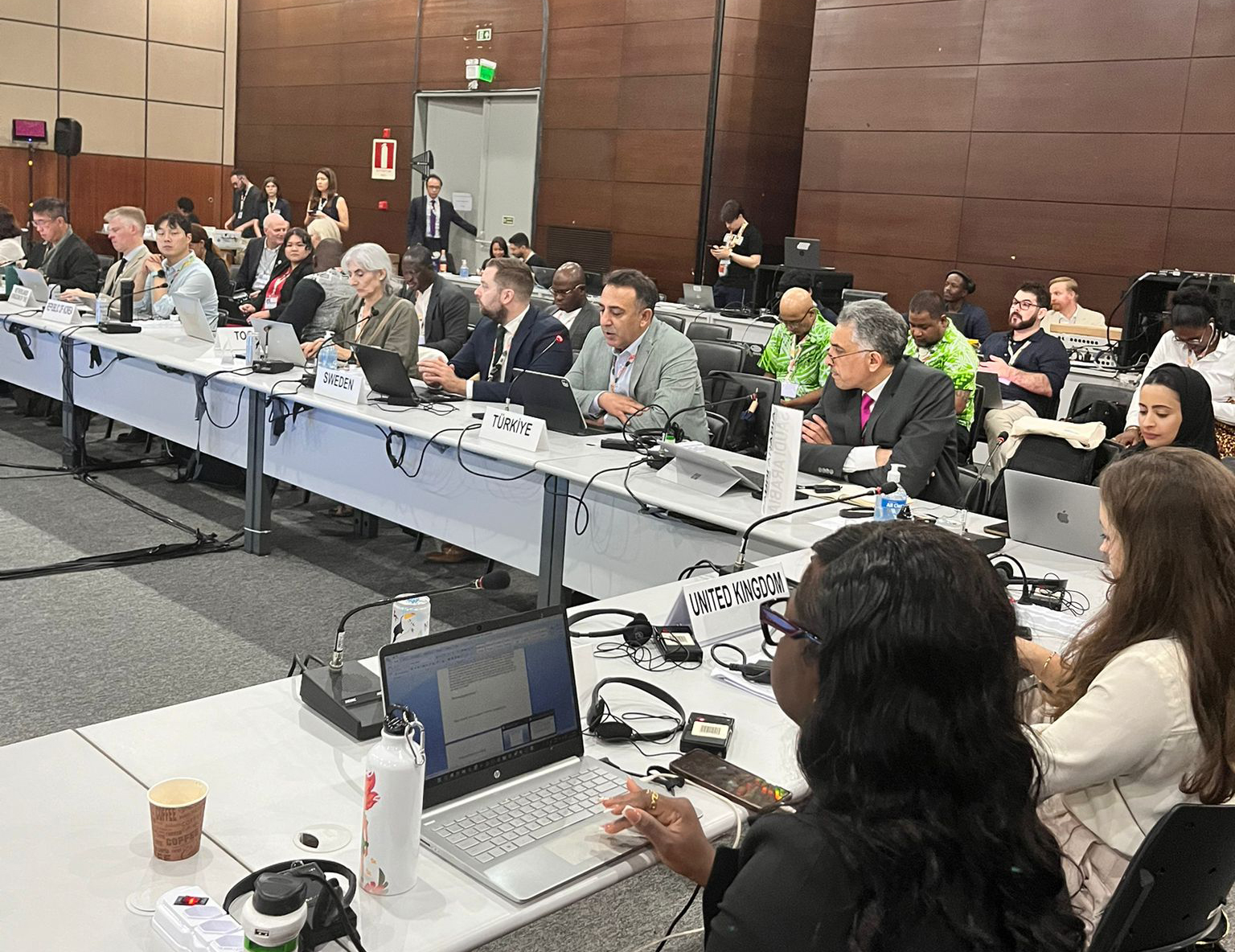
Director of Climate Change Prof. Halil Hasar attended the roundtable meeting titled “Ministerial-Level High-Level Dialogue on Transparency: Celebrating the First Enhanced Transparency Framework (ETF) Cycle,” held as part of COP30.
14 November 2025
Director of Climate Change Prof. Halil Hasar attended the roundtable meeting titled “Ministerial-Level High-Level Dialogue on Transparency: Celebrating the First Enhanced Transparency Framework (ETF) Cycle,” held as part of COP30.
Speaking at the roundtable, which plays a key role in helping countries better identify their needs and prioritize climate policies, Hasar underlined that transparency is one of the core pillars of the Paris Agreement, saying, “As Türkiye, we view transparency processes not merely as a reporting obligation, but also as an opportunity to strengthen our national policy development and implementation capacity. In this context, the experience we have accumulated over time and our Biennial Transparency Report (BTR) have enabled us to establish a robust infrastructure and transparency system.”
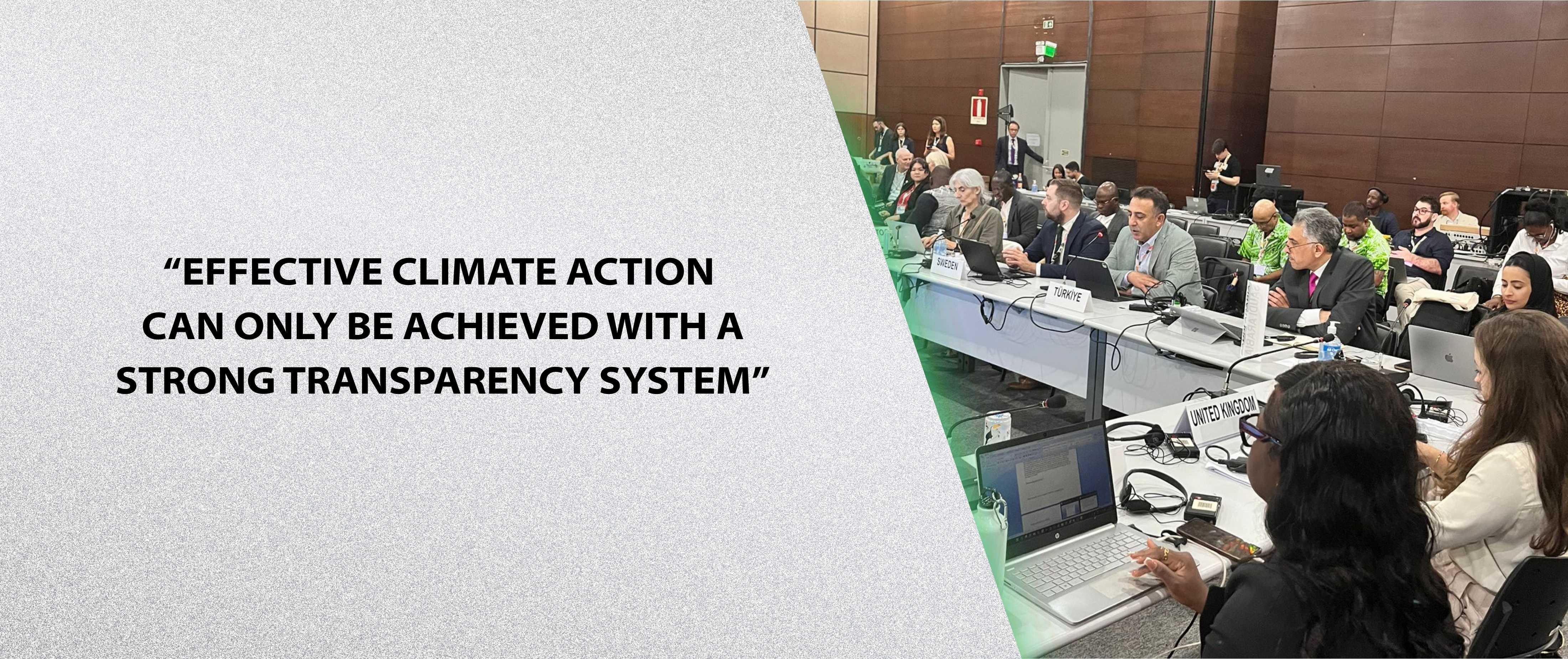
Stressing that effective climate action can only be achieved with a strong transparency framework, Hasar continued:
“The ETF process has contributed to the development of a shared understanding not only in the field of climate change, but also across sectors such as energy, agriculture, transport, industry, and finance. Along the BTR preparation process, Türkiye strengthened its national greenhouse gas inventory system and improved quality control procedures in data collection, verification, and reporting. In this period, a strong mechanism was established for data sharing and verification among different ministries and institutions. First, data management capacity was enhanced. Second, inter-institutional coordination was strengthened. The ETF process has contributed to building a shared understanding and perspective not only in climate policy but also across energy, agriculture, transport, industry, and finance. Evidence-based policymaking mechanisms have been reinforced. The findings of the BTR serve as a key input for shaping green transition policies and translating the 2053 Net Zero Emissions Target into concrete action.”
Essential Nature of Effective and Sustainable Support Mechanisms
As Türkiye, we consider our obligations under the ETF not merely as a reporting tool, but as a mechanism that strengthens national capacity building, policy planning, and evidence-based decision-making processes. Effective implementation of the ETF requires timely and predictable technical and financial support, particularly for developing countries. In this context, Türkiye wishes to make the following points: Simplifying application procedures for financial support mechanisms will facilitate access for developing countries. Establishing long-term technical partnerships will ensure that BTR preparation capacity becomes permanent, without the need to rebuild it every two years. Effective use of regional knowledge-sharing platforms will strengthen mutual learning and exchange of experience. Moreover, making existing global financial mechanisms more proactive, user-friendly, and transparent will expedite countries’ access to resources of support. Aligning support mechanisms with the BTR preparation timeline will provide countries with significant operational advantages.
“Effective climate action can only be achieved with a strong transparency system”
The success of the ETF depends not only on the timely submission of reports, but also on building lasting corporate memory and sustainable capacity in the countries Institutional ownership is key to success. We must move beyond short-term, project-based support and aim to establish permanent institutional capacity at the national level. This is why, we attach great importance to strengthening our national data collection, quality assurance, and verification systems. Effective climate action can only be achieved with a strong transparency system”
Therefore, we must continue our joint efforts toward more accessible finance, more coordinated technical support, and more inclusive capacity-building mechanisms.
Three Areas That Türkiye Believes Should Be Prioritized In The Future
Türkiye believes that three areas should be prioritized in the future: strengthening capacity-building and knowledge-sharing networks; ensuring the continued provision of timely, predictable, and accessible financial and technical support; and increasing the exchange of experience among countries. The ETF process reflects the spirit of international solidarity and shared responsibility. In this context, Türkiye remains committed to making a strong contribution to this collective effort.
The roundtable meeting on the Enhanced Transparency Framework (ETF) is of critical importance in helping countries better identify their needs and prioritize climate policies. The ETF also strengthens the assessment of global climate efforts, and highlights areas where additional action and support are needed. It builds trust by tracking progress under Nationally Determined Contributions (NDCs), thereby supporting countries in developing more ambitious and effective climate plans.