


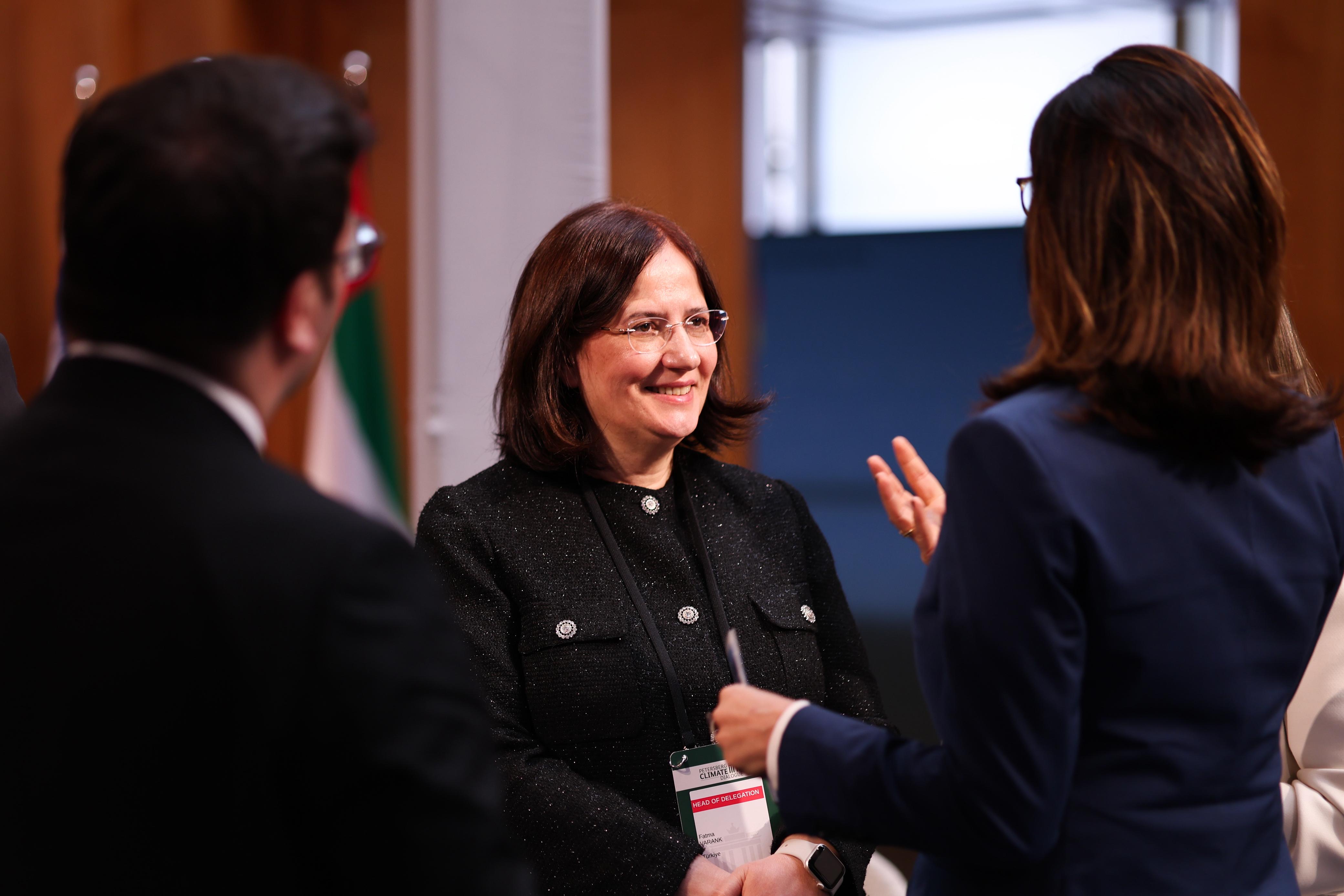
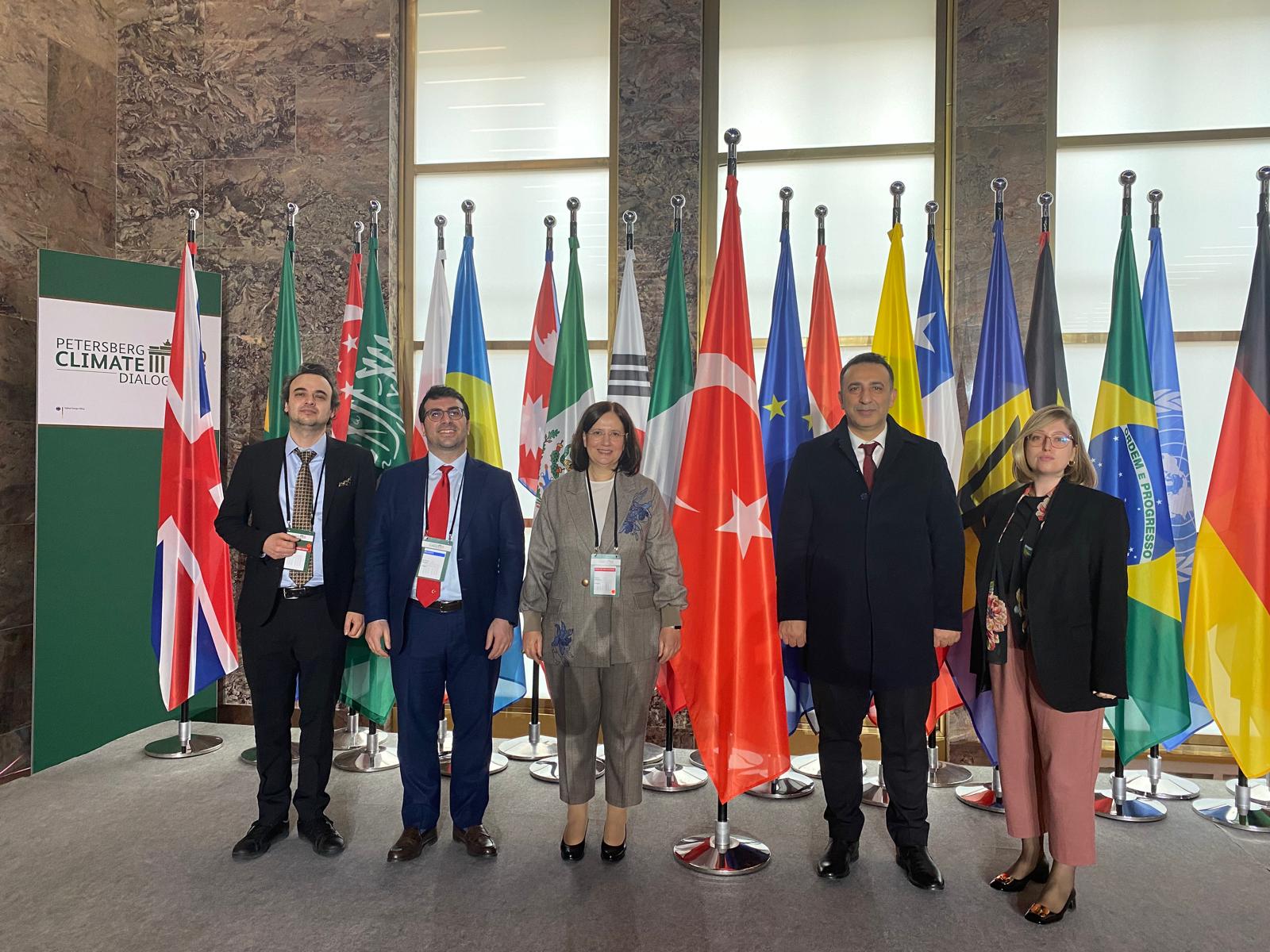
Deputy Minister of Environment, Urbanization, and Climate Change and Türkiye’s Chief Climate Negotiator Fatma Varank continues her engagements in Berlin, where she is attending the 16th Petersberg Climate Dialogue.
26 March 2025
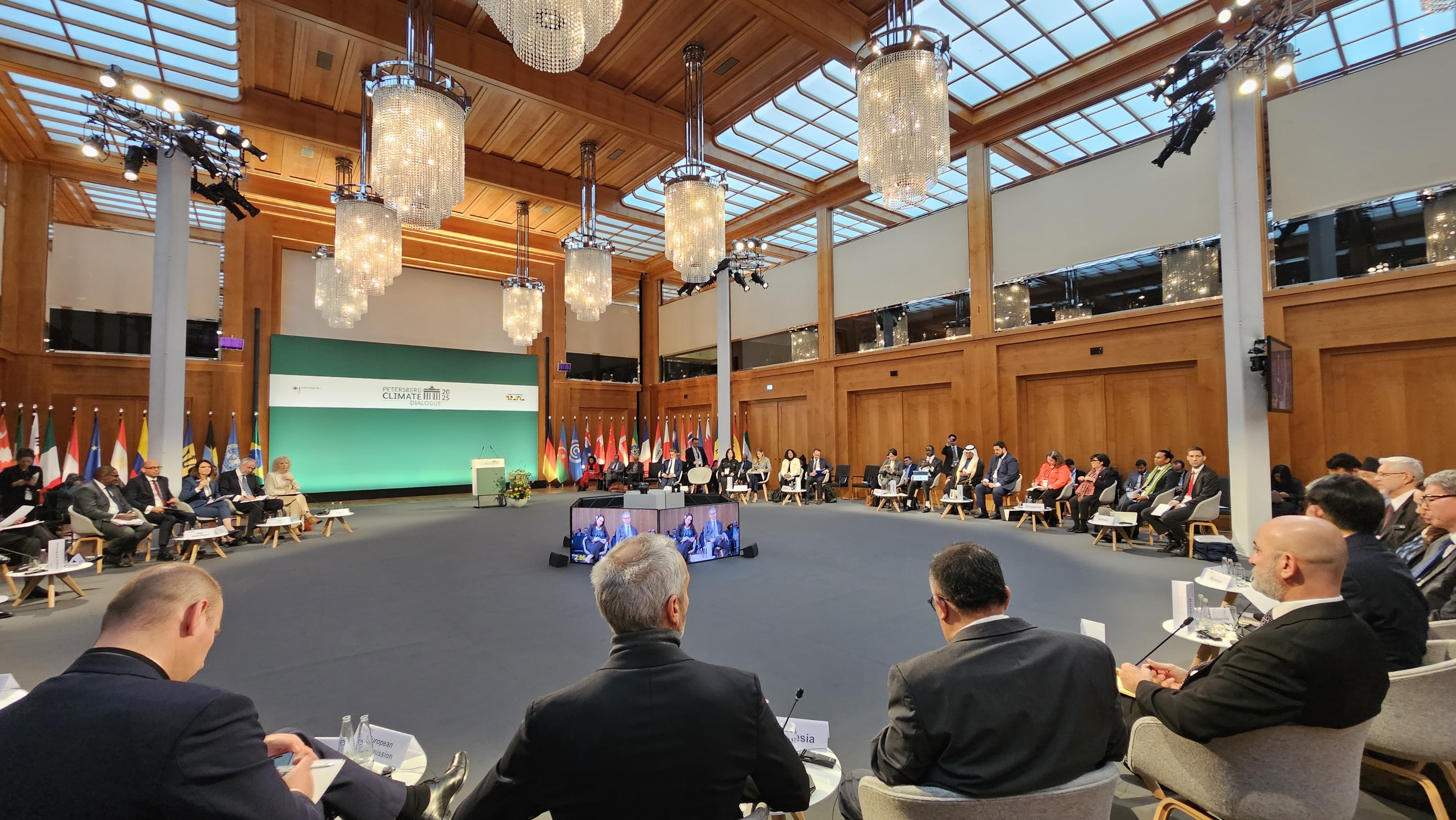
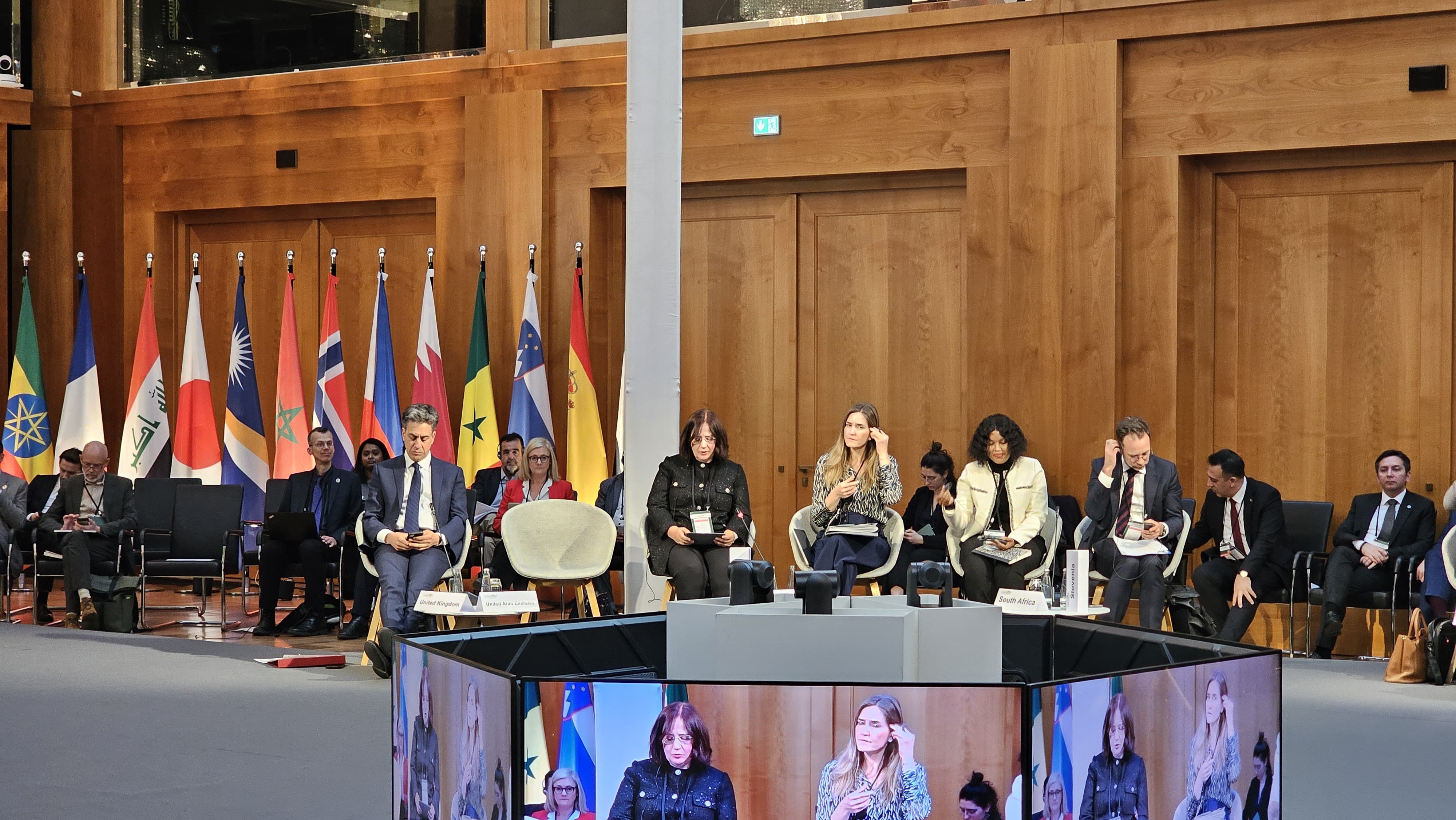
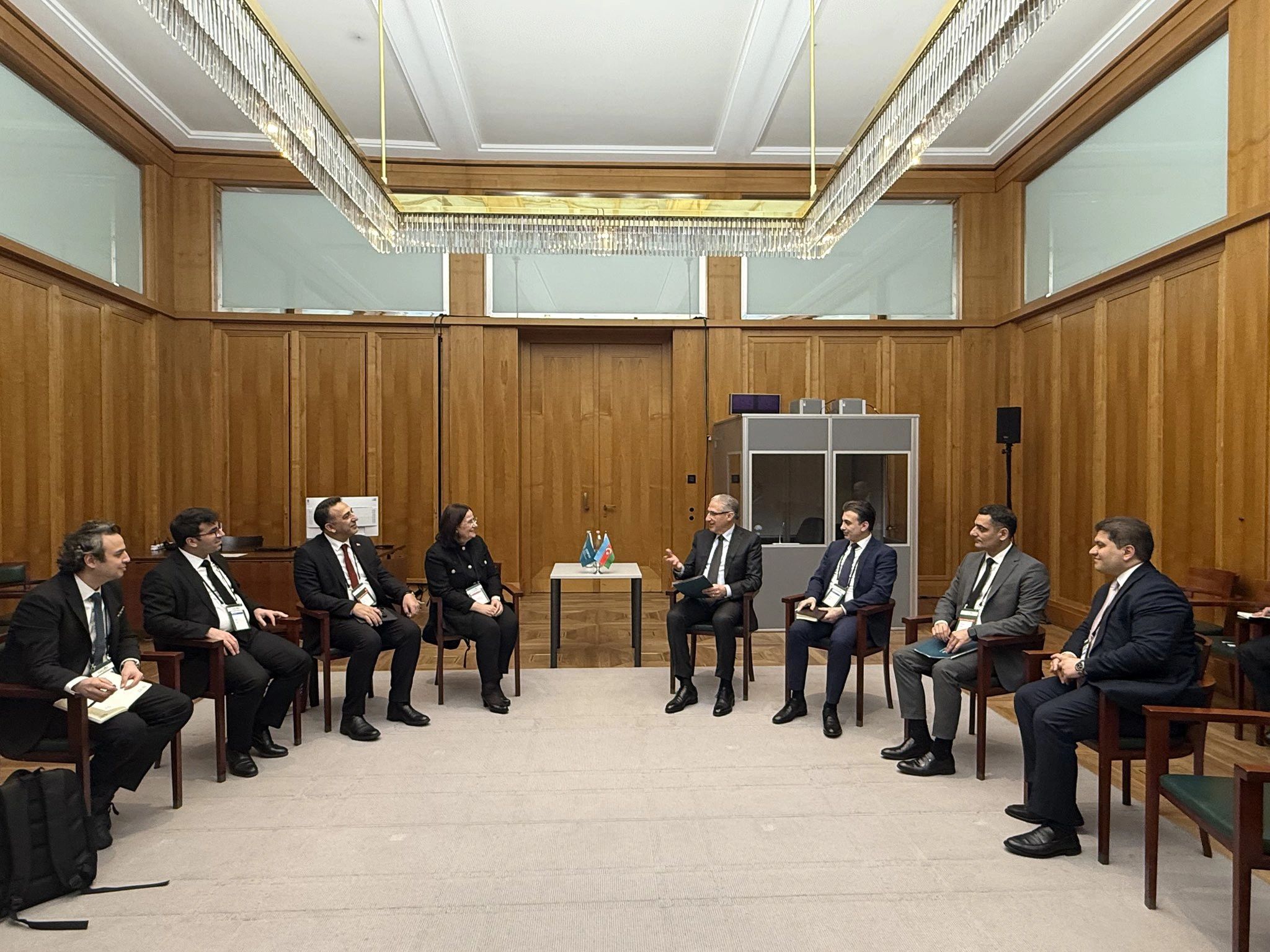
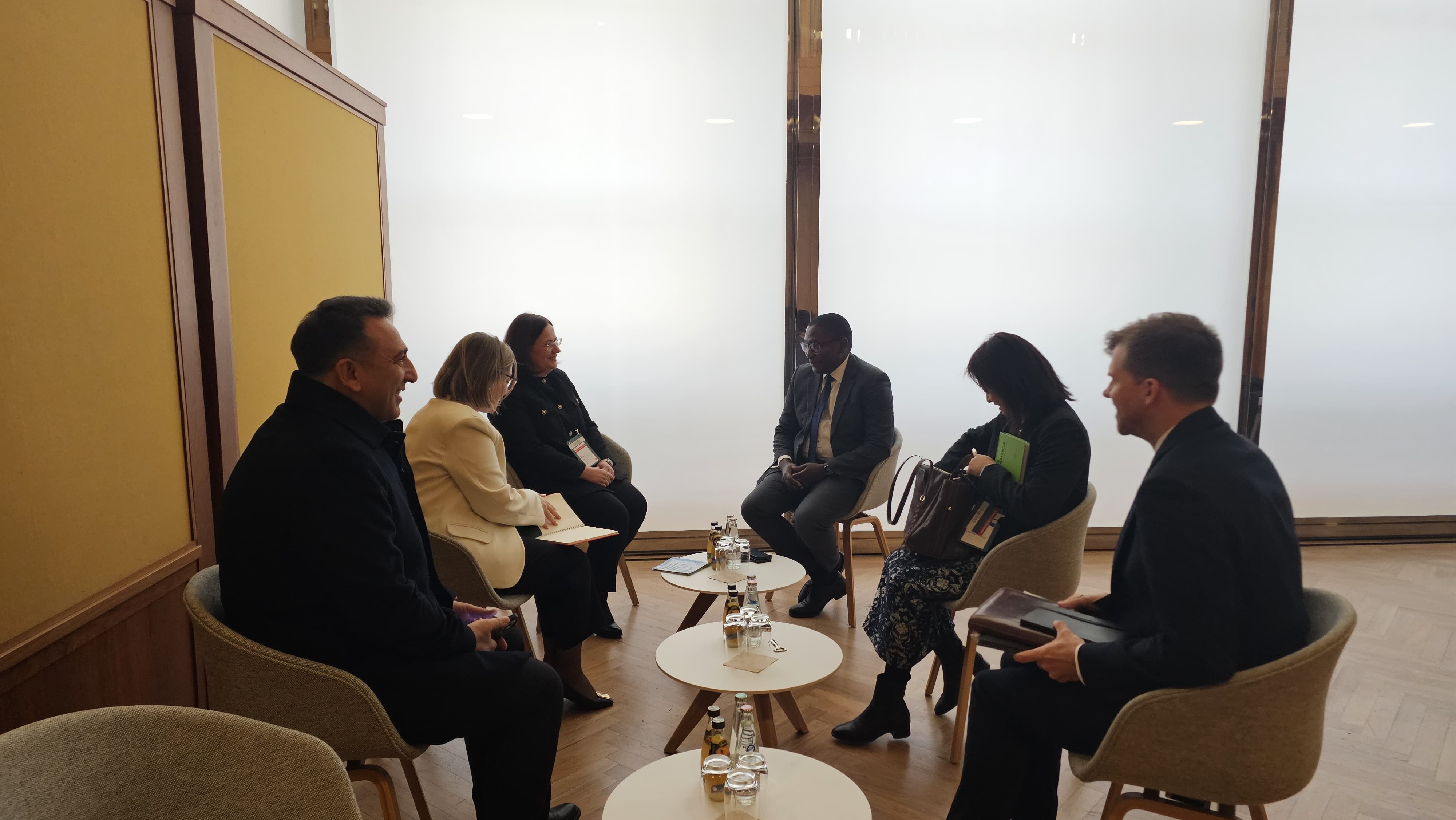
Deputy Minister of Environment, Urbanization, and Climate Change and Türkiye’s Chief Climate Negotiator Fatma Varank continues her engagements in Berlin, where she is attending the 16th Petersberg Climate Dialogue. During her bilateral meetings in Berlin, Deputy Minister Varank raised Türkiye’s candidacy to host COP31, the country’s expectations from COP30, the strengthening of multilateral mechanisms, and the need to build collective momentum in the fight against climate change. As part of the 16th Petersberg Climate Dialogue, Varank took part in the roundtable sessions titled “Implementation of the Global Stocktake” and “Building Adaptation and Resilience,” where she delivered remarks on behalf of Türkiye.
Speaking at the session on Implementation of the Global Stocktake, which addressed issues including mitigation outcomes that are expected to generate momentum at COP30 to align 2035 Nationally Determined Contributions (NDCs) with efforts to limit global temperature rise to 1.5°C, halting and reversing deforestation, tripling renewable energy capacity, and doubling annual energy efficiency gains, Varank said: “Given the core architecture of the Paris Agreement, we consider Global Stocktake decisions to provide critical guidance to Parties and to make a significant contribution to the strengthening of NDCs.”
At the same session, where matters related to the modalities of the UAE Dialogue on the implementation of the Global Stocktake and the annual Global Stocktake Dialogue, which could not be finalized during COP29, were also discussed, Varank underlined the following key points:
“We need roadmaps shaped by fair, reliable, and tangible support”
Countries need roadmaps shaped by fair, reliable, tangible, and country-specific support in order to implement the targets set out in Global Stocktake decisions. Accordingly, we believe that the decisions to be adopted at COP30 must deliver concrete progress on finance, technology, and capacity-building, which form the implementation pillars of the Paris Agreement, and must generate momentum to support mitigation action by aligning countries’ 2035 NDCs with the 1.5°C target. We consider this to be the only way to achieve the level of momentum required for the effective implementation of mitigation decisions contained in the Global Stocktake. Finally, we assess that one of the main reasons why progress could not be achieved at COP29 on the UAE Dialogue and the annual Global Stocktake Dialogue was the divergence of expectations regarding the scope and function of these dialogues.
“We support the dialogue as an invaluable platform for collective thinking and action”
The dialogue serves as an invaluable platform for fostering collective thinking and action. At the same time, it supports international cooperation by providing space for the exchange of diverse experiences. We support the continuation of the dialogue, as we believe that it not only reinforces the momentum generated by the first Global Stocktake but also helps address critical gaps in implementation and ambition. This year’s second dialogue will serve as a platform to support Parties in further developing their strategies and strengthening their capacity to submit and implement their NDCs.
Speaking at the session on “Building Adaptation and Resilience”, Varank stated: “Effective implementation of mechanisms will play a critical role in strengthening global resilience to climate change impacts”
The Baku High-Level Dialogue on Adaptation will serve as an important platform to advance global adaptation efforts, particularly in the context of the Global Goal on Adaptation (GGA). By offering an opportunity to further refine the GGA framework, the dialogue constitutes a key instrument for ensuring that adaptation targets are grounded in science and aligned with national circumstances. In this context, it is of great importance to establish indicators that will enable the consistent tracking of adaptation progress across regions and sectors. The effective implementation of these mechanisms will play a critical role in strengthening resilience to climate change impacts at the global level.
“One of the key expectations from COP30 is the effective delivery of commitments”
One of the main expectations from COP30 is the closing of the ongoing adaptation finance gap and the effective delivery of commitments undertaken under the UAE–Belém Work Programme. It is essential to underline the need for accessible, predictable, and adequate financial resources for developing countries that face high levels of climate vulnerability. Even if the 1.5°C goal is achieved, a significant adaptation finance gap will continue to exist in order to minimize climate-related risks. New pathways to enhance adaptation finance, as well as innovative approaches to strengthen the financial viability of adaptation projects, must be discussed comprehensively. In this context, issues such as blended finance, risk reduction through guarantees and insurance, and supportive incentives should also be considered.