


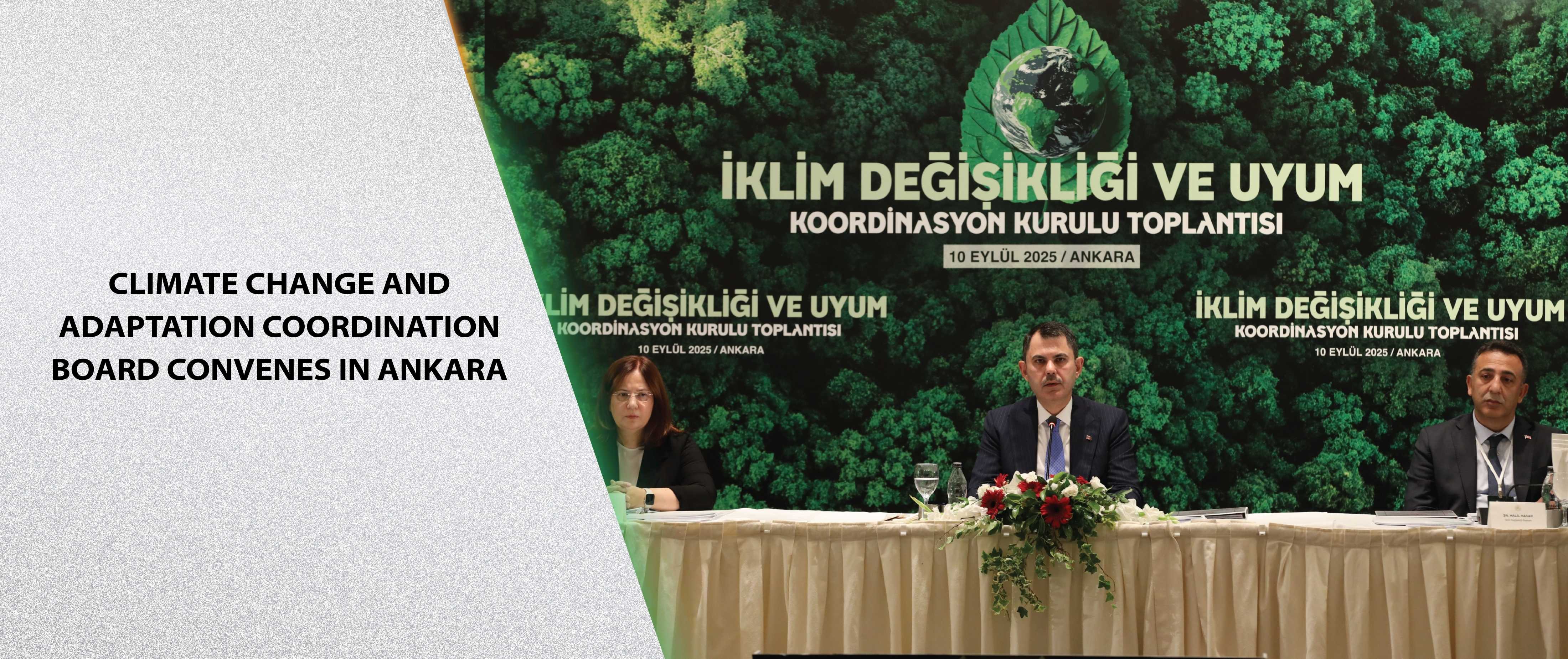
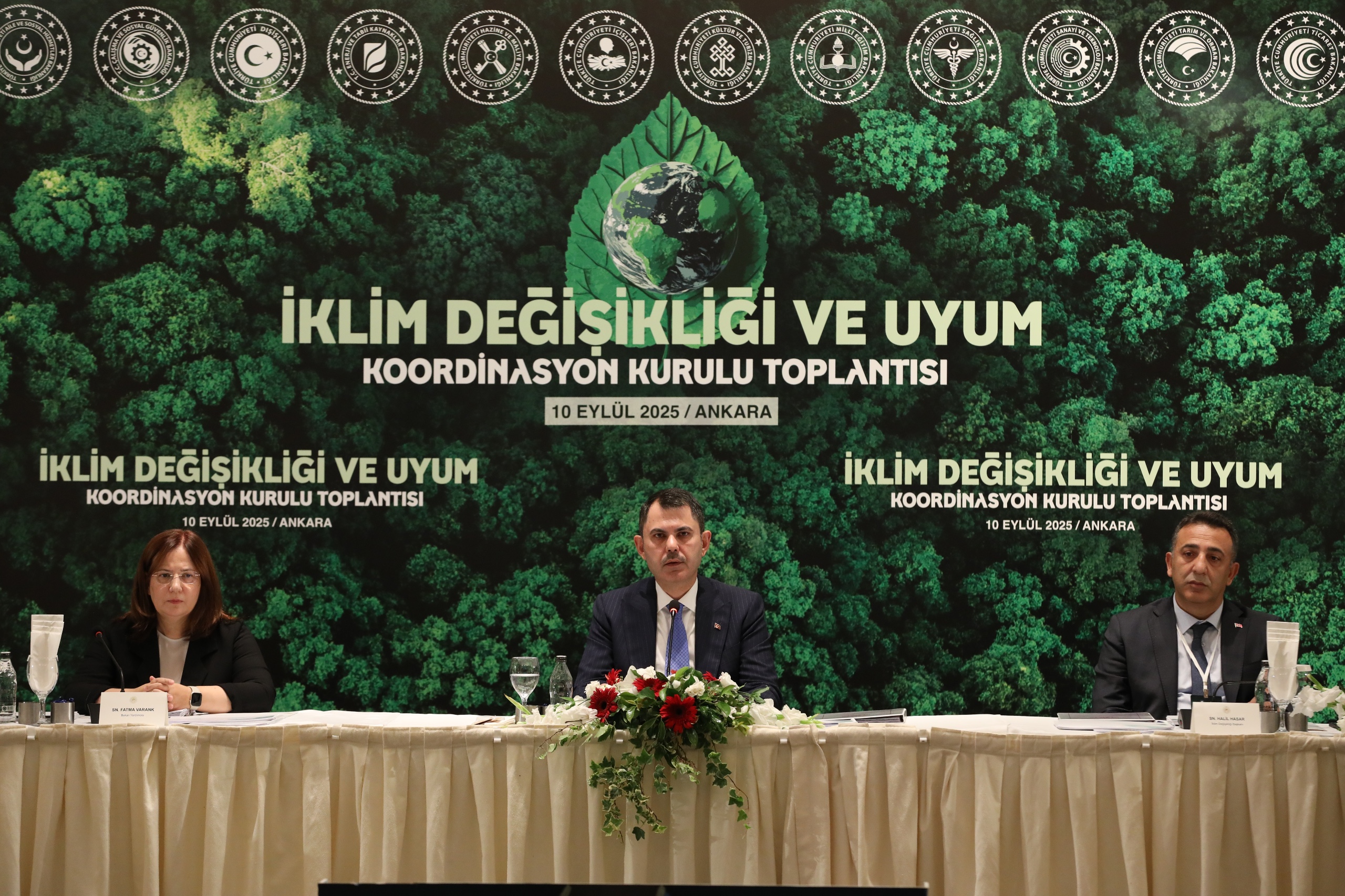
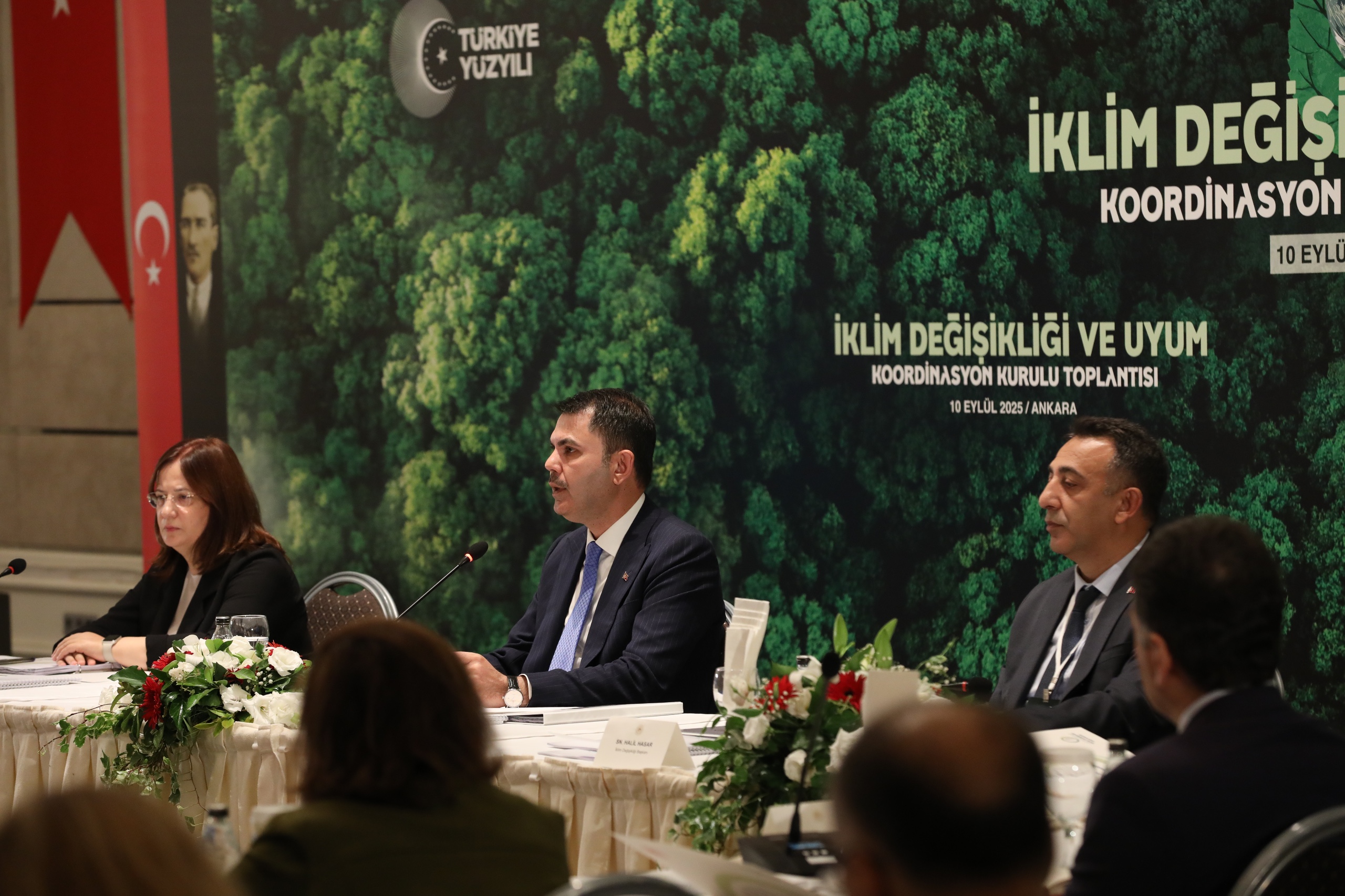
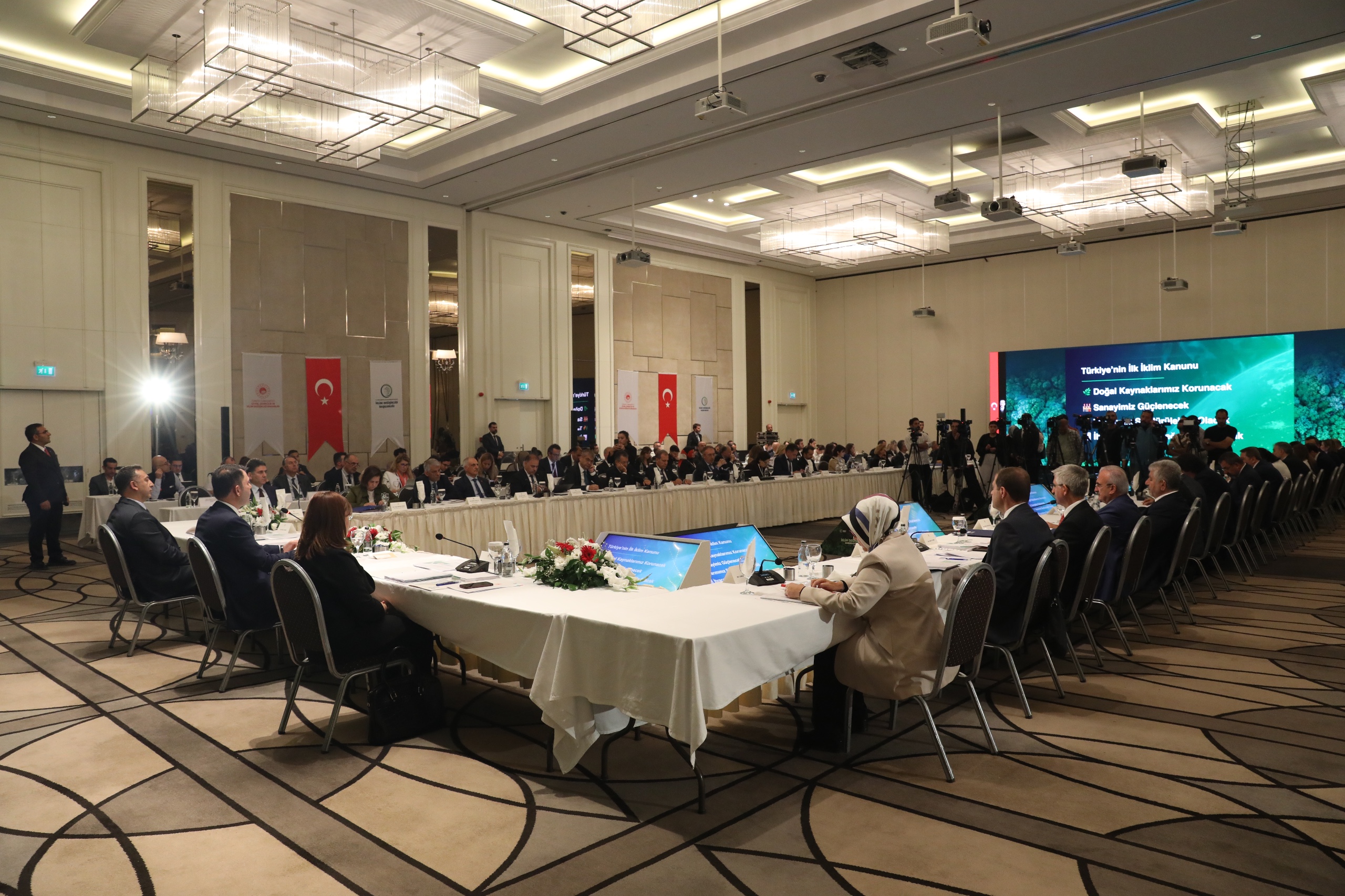
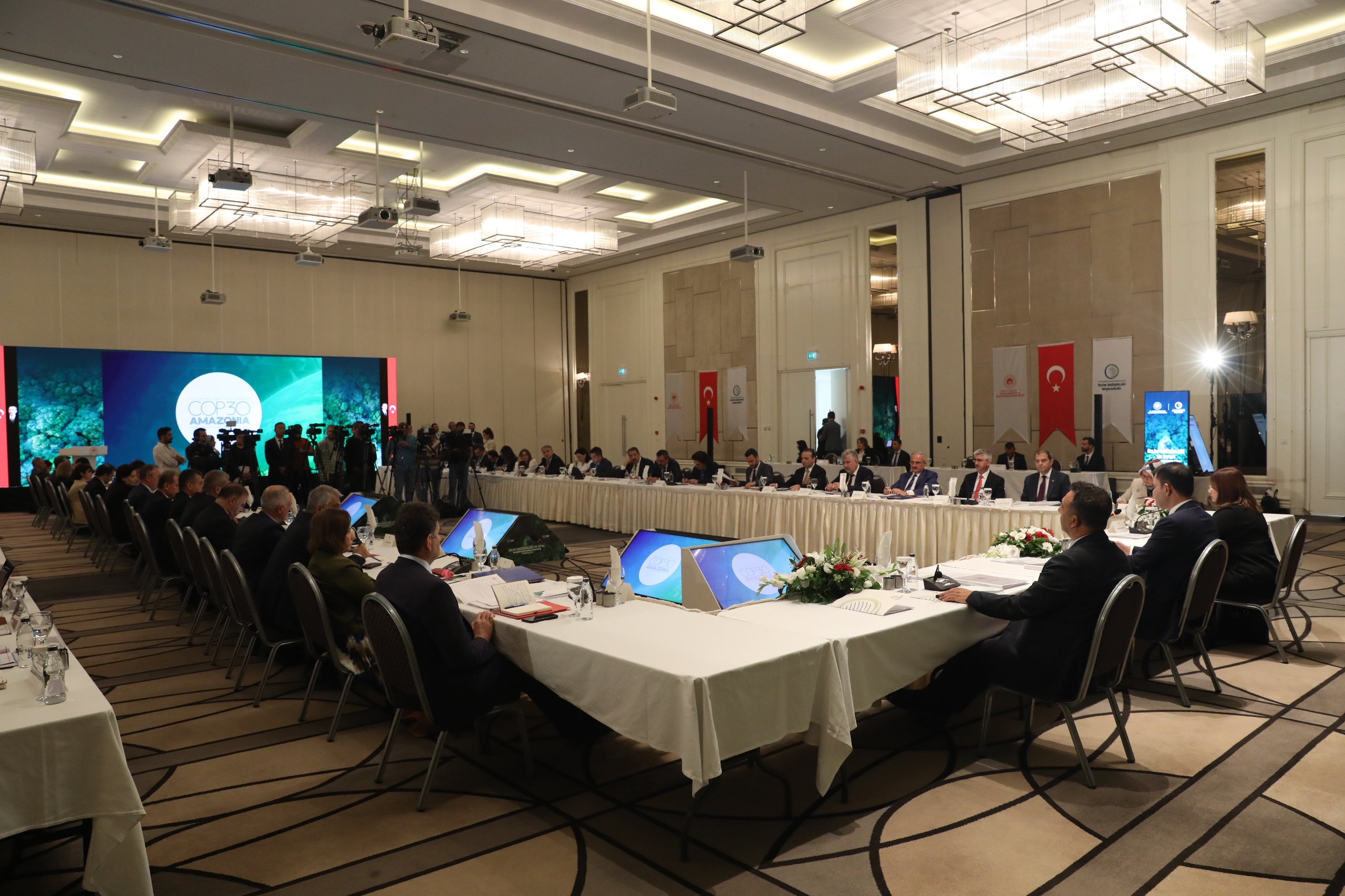
The Climate Change and Adaptation Coordination Board convened in Ankara under the chairmanship of Minister of Environment, Urbanization and Climate Change Murat Kurum.
10 September 2025
The Climate Change and Adaptation Coordination Board convened in Ankara under the chairmanship of Minister of Environment, Urbanization and Climate Change Murat Kurum.
Hosted by the Directorate of Climate Change and attended by representatives from relevant ministries and institutions, the meeting also reviewed Türkiye’s Second Nationally Determined Contribution and preparations for COP30.
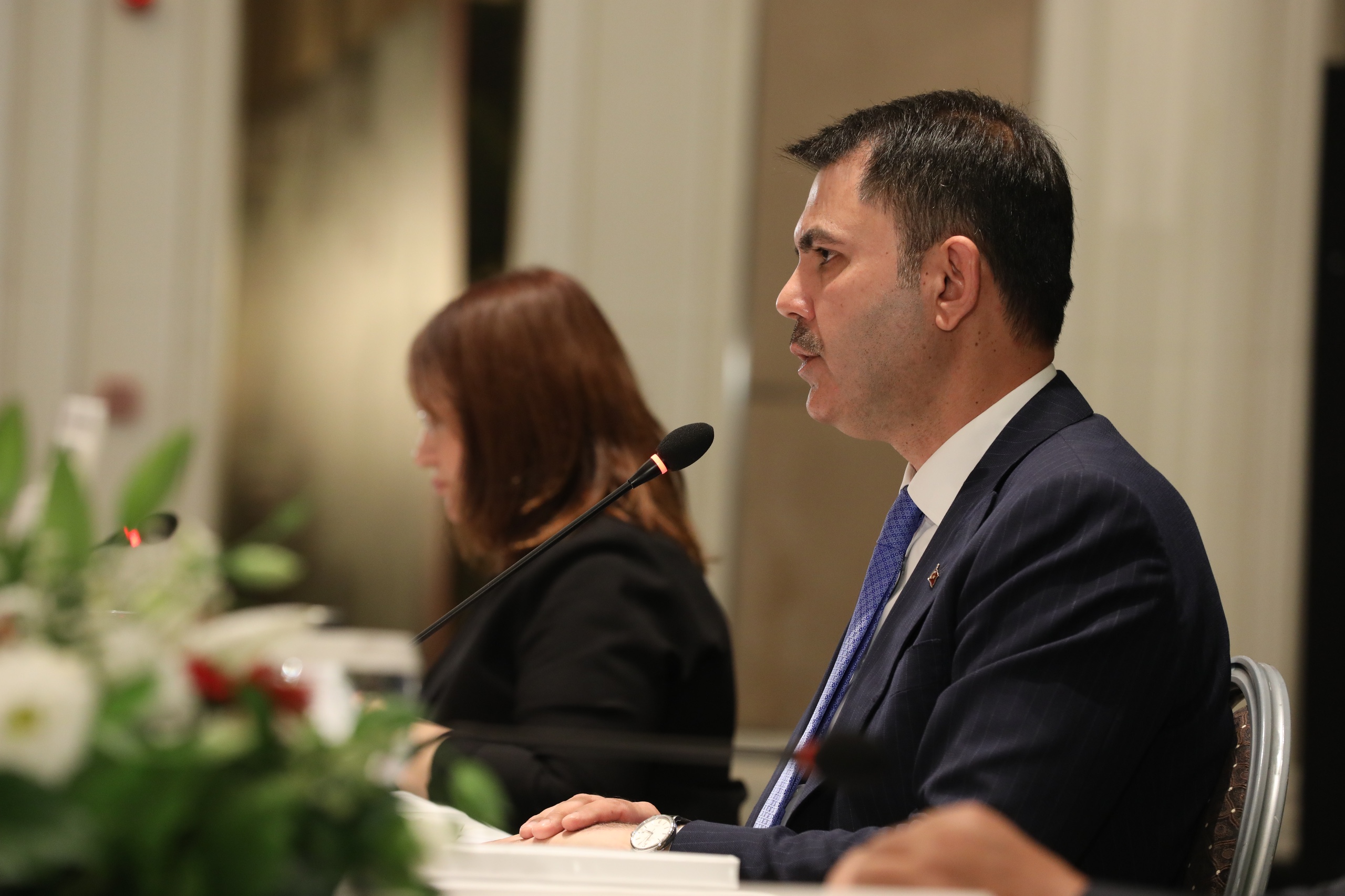
Delivering the opening address, Minister Kurum underlined that the Climate Law has opened “an entirely new chapter” in Türkiye’s fight against climate change, saying: “With this law, the shift toward renewable energy will accelerate, our industrialists’ global competitiveness will multiply, and both our natural environment and our production capacity will be safeguarded.”
Delivering the opening address, Minister Kurum underlined that the Climate Law has opened “an entirely new chapter” in Türkiye’s fight against climate change, saying: “With this law, the shift toward renewable energy will accelerate, our industrialists’ global competitiveness will multiply, and both our natural environment and our production capacity will be safeguarded.
Emphasizing that the climate crisis is not a distant threat for Türkiye, Kurum noted: “Unfortunately, we see that the climate crisis has a multiplier effect on wildfires. ”The wildfire season in our country is now significantly longer than it used to be."
Drawing attention to the impacts of the climate crisis, Minister Kurum said: “Even over the past 50 years alone, wildlife populations have declined by 73 percent worldwide. This figure tells us that nearly 1 million species face the risk of extinction. Freshwater resources are diminishing each passing day. Today, 75 percent of the world’s population—three out of every four people—live under the threat of water scarcity. Despite this grim picture, humanity continues to produce 5,900 tons of plastic waste every 10 minutes. While millions struggle with hunger, nearly 1 billion meals are thrown away every day.”
Highlights from Minister Kurum’s remarks are as follows:
“Nearly 1,500 floods occur every year due to the climate crisis”
“Over the past 50 years, more than 11,000 weather-, climate-, and water-related disasters have been recorded worldwide. These disasters resulted in over 2 million deaths and economic losses totaling USD 3.64 trillion. Due to extreme weather events, nearly 1,500 floods occur every year. Record-breaking temperatures reaching 50.5 degrees Celsius have been recorded in Silopi, Şırnak. As water resources decline, our country is now among those experiencing water stress. When reservoirs are sounding the alarm, agricultural frost damages farmers’ harvests, and fires spread rapidly, threatening lives and property, the climate crisis is not a distant scenario for Türkiye but a clear and immediate threat.”
“The wildfire season is now significantly longer than it used to be”
“Undoubtedly, nine out of every ten forest fires are caused by human activity. Yet there is another reality: the climate crisis clearly has a multiplier effect on fires. In our country, the wildfire season is now significantly longer than it used to be. Rising temperatures, increasing drought, and declining humidity cause fires to grow rapidly and spread over wider areas. Sparks carried by heat transfer ignite new fires, making firefighting efforts significantly more difficult. For all these reasons, the summer of 2025 has been a year in which we experienced the devastating consequences of wildfire disasters very clearly.”
“If the climate crisis is global, the solution must also be global”
“The climate crisis affects many areas, from the economy and trade to the social order and global stability. We view our climate change mitigation efforts not only as a matter of our citizens’ safety but also as a responsibility toward humanity as a whole. First and foremost, we said, ‘If the climate crisis is global, the solution must also be global,’ and in 2021 we ratified the Paris Agreement. Our President announced Türkiye’s 2053 Net Zero Emissions target to the world.
In line with this target, we launched a comprehensive and deep transformation process, together with all our ministries, spanning energy, industry, transport, waste management, agriculture, and urban planning. We submitted our Updated First Nationally Determined Contribution to the United Nations Framework Convention on Climate Change and increased our 2030 emission reduction target from 21 percent to 41 percent. We also published our two-year Transparency Report covering Türkiye’s climate change mitigation and adaptation actions for 2022 and 2024.”
“All 300,000 homes in the earthquake zone are climate-resilient”
“None of the steps we have taken have merely remained on paper. To reduce urban heat islands, we expanded green spaces through the nation gardens we established in our cities. We introduced the Green Building Certification system so that buildings are constructed in an environmentally friendly manner and reflect the geographical and climatic characteristics of their location. To ensure that our industry produces in line with the European Green Deal and that our exports grow based on circular economy principles, we rapidly put mechanisms such as the Green Organized Industrial Zone and Green Industry Certification into practice. The work we have done across the 11 provinces affected by the disaster of the century is the clearest proof of this. All 300,000 homes delivered in the earthquake zone as of September 6 are climate-resilient, compliant with zero-waste principles, and environmentally friendly.”
“The Climate Law will accelerate the shift toward renewable energy”
“With the Climate Law, our country has opened a new chapter in combating climate change. Through this law, we are working to protect Türkiye’s natural resources, strengthen its industry, ensure sustainable agriculture, and prepare exports for the future. The shift toward renewable energy sources will increase, our industrialists’ global competitiveness will multiply, and both our environment and our production will be protected. Now, we have been preparing Türkiye’s National Green Taxonomy and together with our relevant ministries, continuing our efforts to establish an Emissions Trading System. Furthermore, climate projections for Türkiye extending to the year 2100 are being developed. This will allow us to anticipate when, where, and which weather events may occur in the long term, thereby minimizing uncertainty related to climate-driven sectoral risks.”
“We will share our Second Nationally Determined Contribution with the world at COP30”
“Since 2022, we have held seven major meetings and taken very important decisions at each one. At last year’s Climate Change and Adaptation Coordination Board meeting, we announced Türkiye’s 2053 Long-Term Climate Strategy to the world at COP29 in Baku. The main agenda of today’s meeting is our Second Nationally Determined Contribution, which is of critical importance for our country. We will make decisions on this Contribution today and share its details with the international community at the 30th Session of the Conference of the Parties (COP30), to be held in Belém, Brazil, from 10 to 21 November. I believe the decisions we take today will be the clearest indication and proof of our leadership role in the fight against the climate crisis.”
Deputy Minister Fatma Varank:
“We are a country that delivers reductions, not increases”
Speaking at the meeting, Deputy Minister of Environment, Urbanization and Climate Change Fatma Varank emphasized Türkiye’s determination to reduce emissions. “The work we are carrying out here today for Türkiye’s future will also affect the entire world,” she said.
“On the path to our 2053 Net Zero Emissions target, we are a country that delivers reductions rather than increases. The reduction efforts we have undertaken toward our 2053 target, shaped through consultations with our energy, industry, transport, and agriculture ministries, will be finalized through the decisions taken today by the Climate Change and Adaptation Coordination Board.”
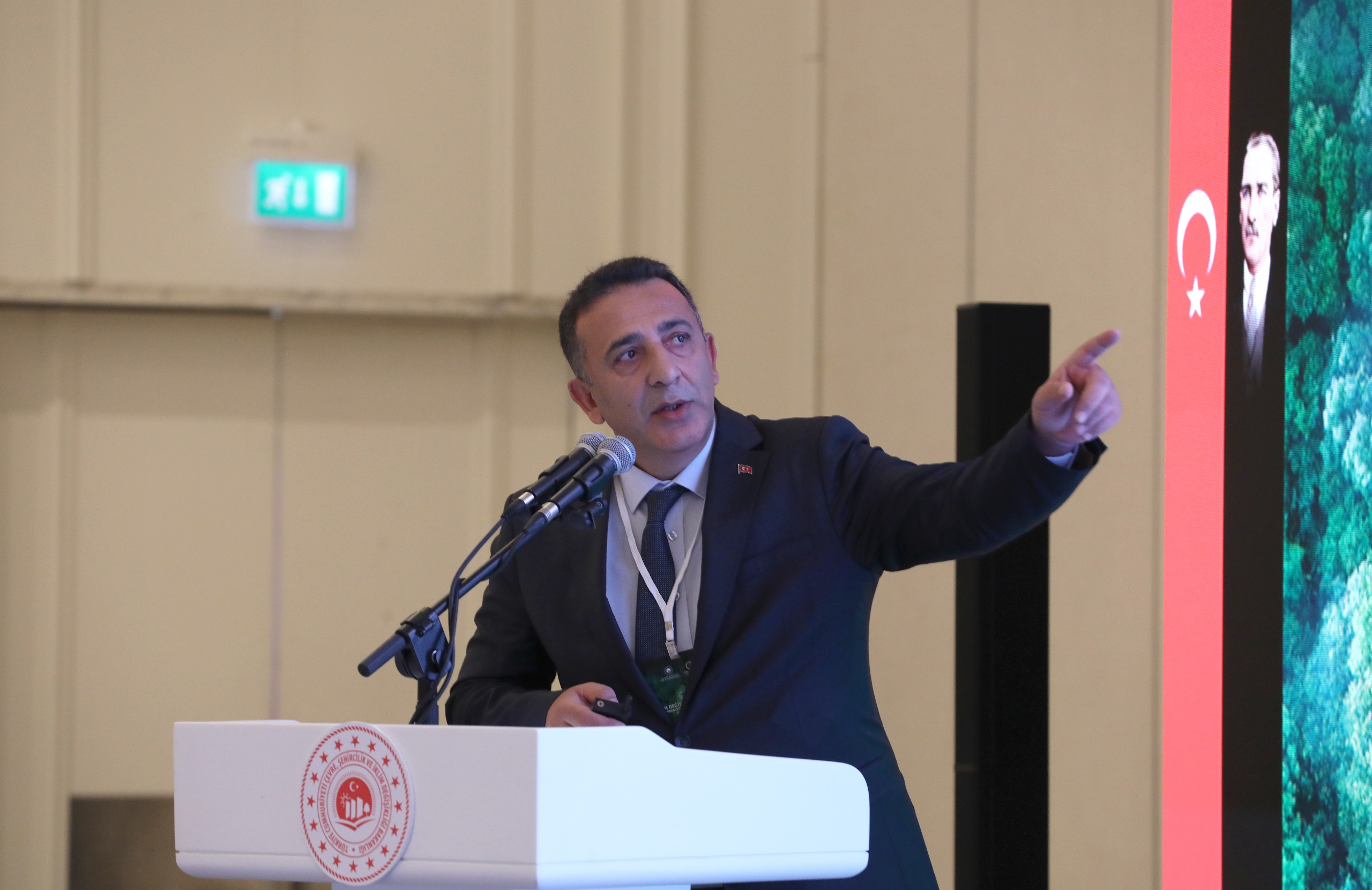
Follow ing the meeting, Director of Climate Change Prof. Halil Hasar briefed participants on the current stage of Türkiye’s fight against climate change, the Second Nationally Determined Contribution, and mitigation and adaptation efforts.
Prof. Hasar shared some details on the work carried out by the Directorate of Climate Change in coordination with relevant ministries regarding Türkiye’s 2035 mitigation policies. He also provided information on the models and methodologies used in preparing the Second Nationally Determined Contribution.
Noting that issues such as climate finance and international cooperation related to Türkiye’s 2035 target were also discussed during consultations among board members, Prof. Hasar indicated that Türkiye’s Second Nationally Determined Contribution is expected to be announced ahead of COP30.