


-
21 May 2026
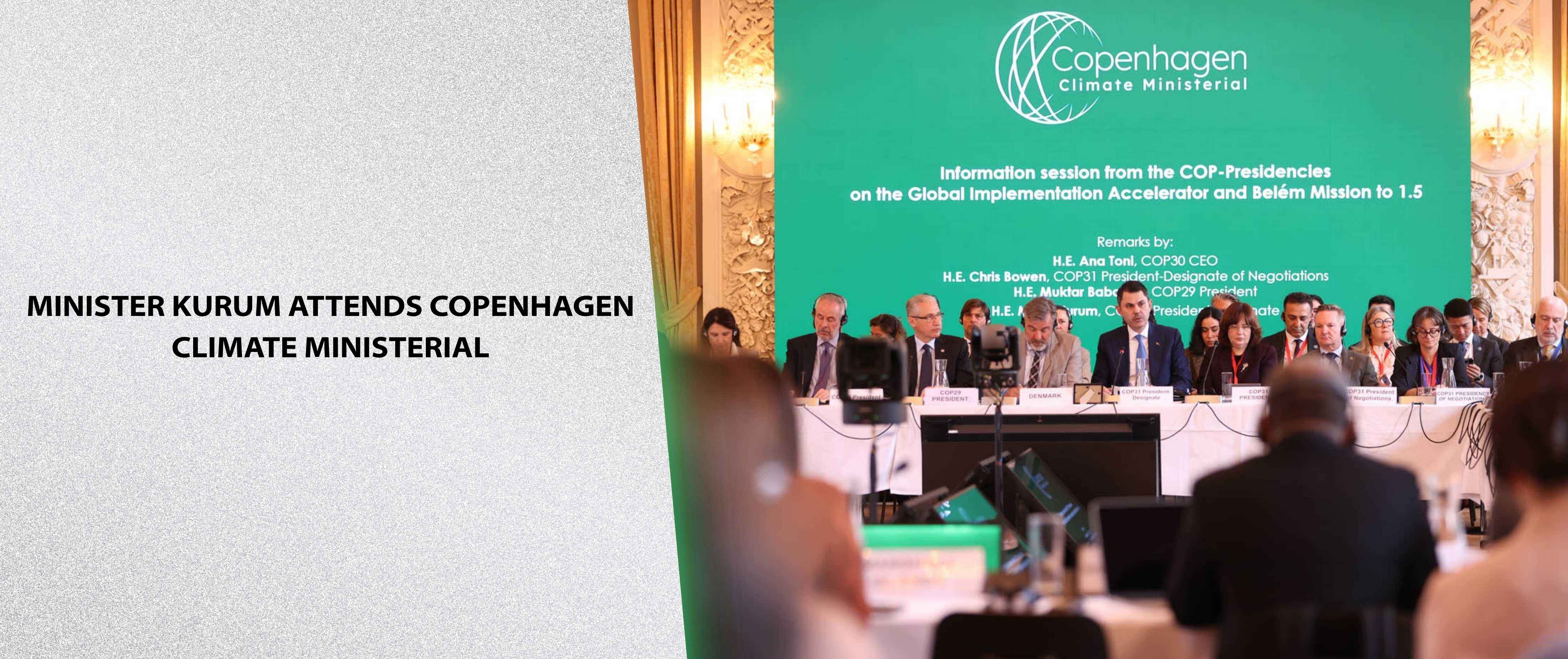
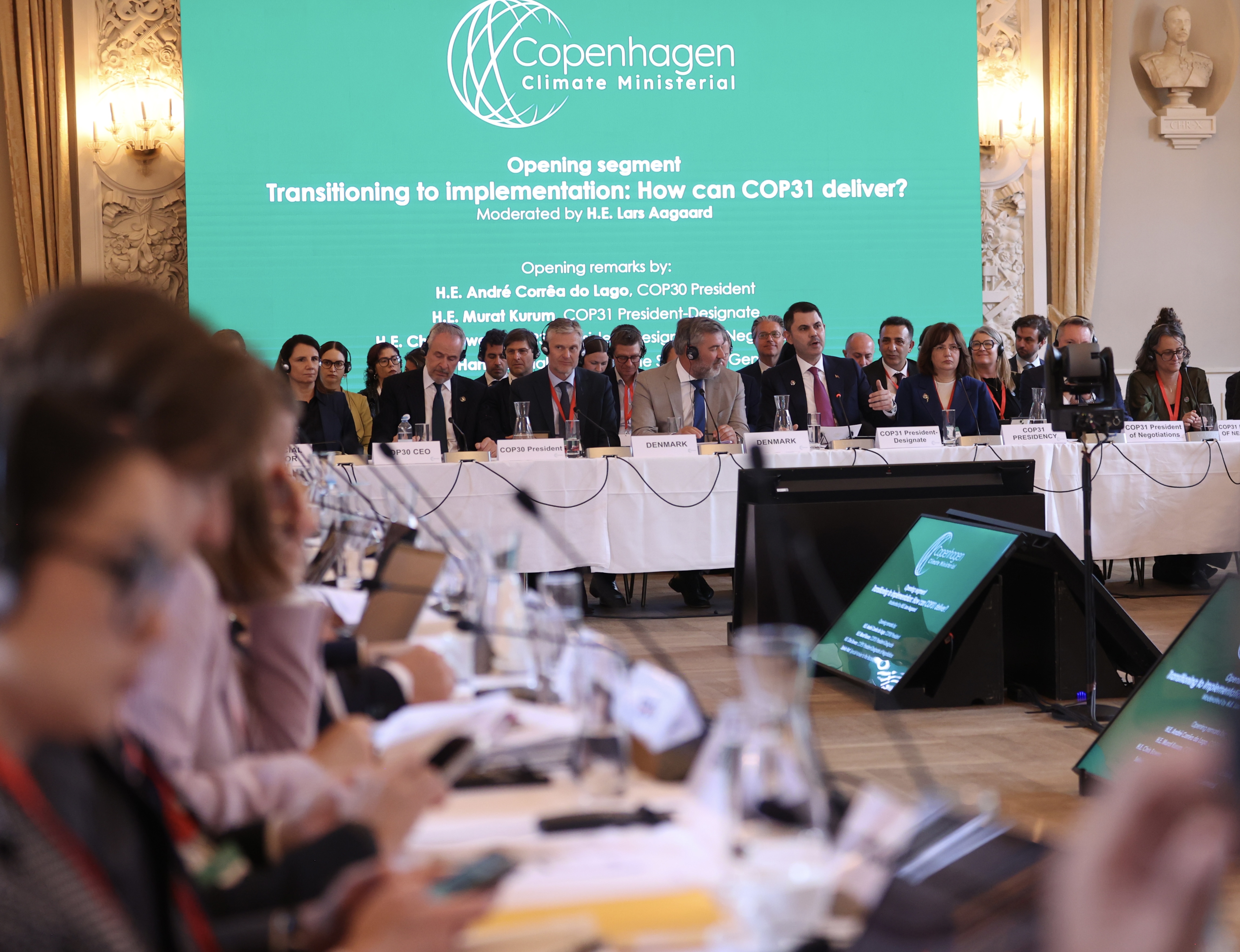
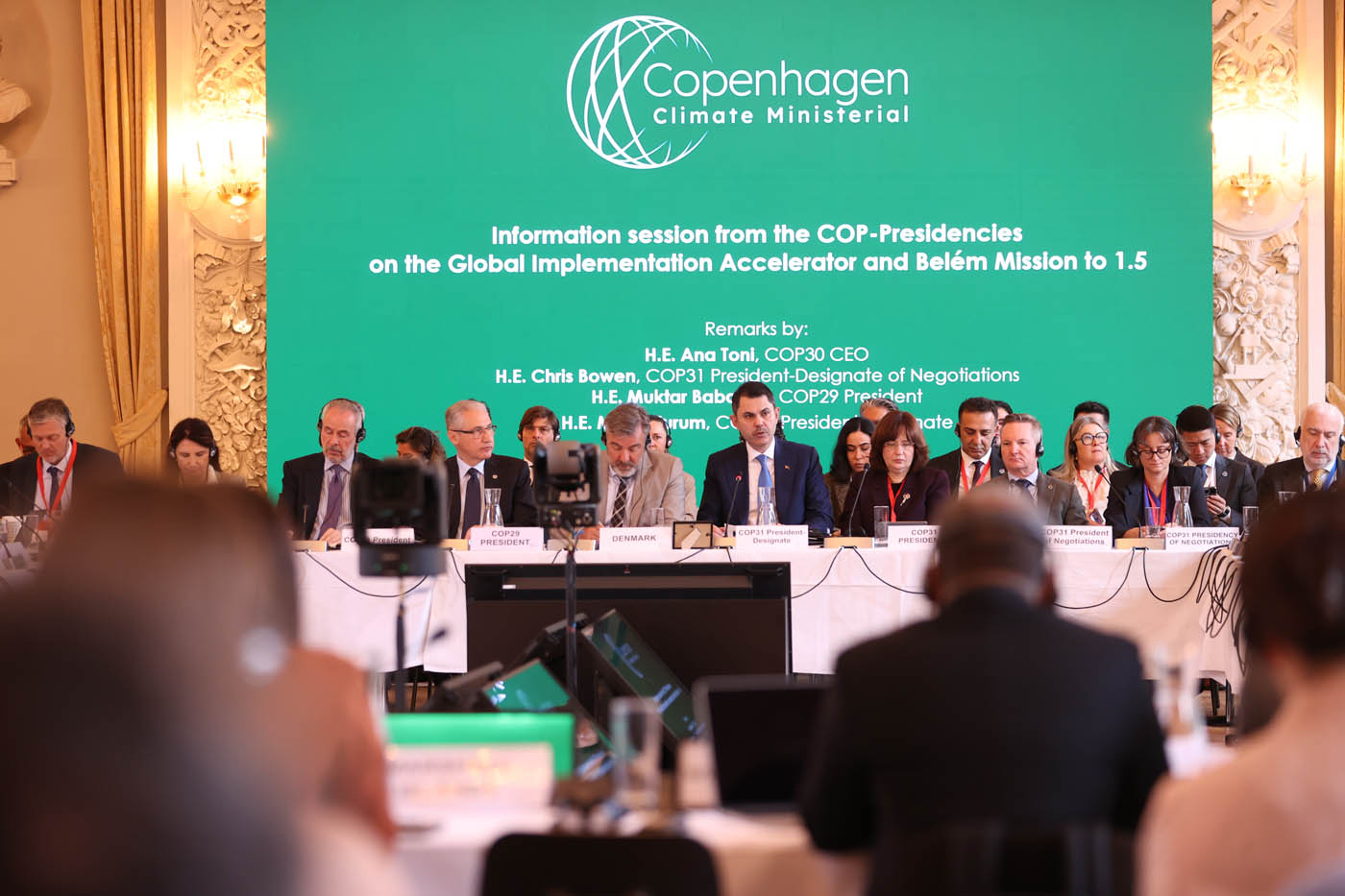
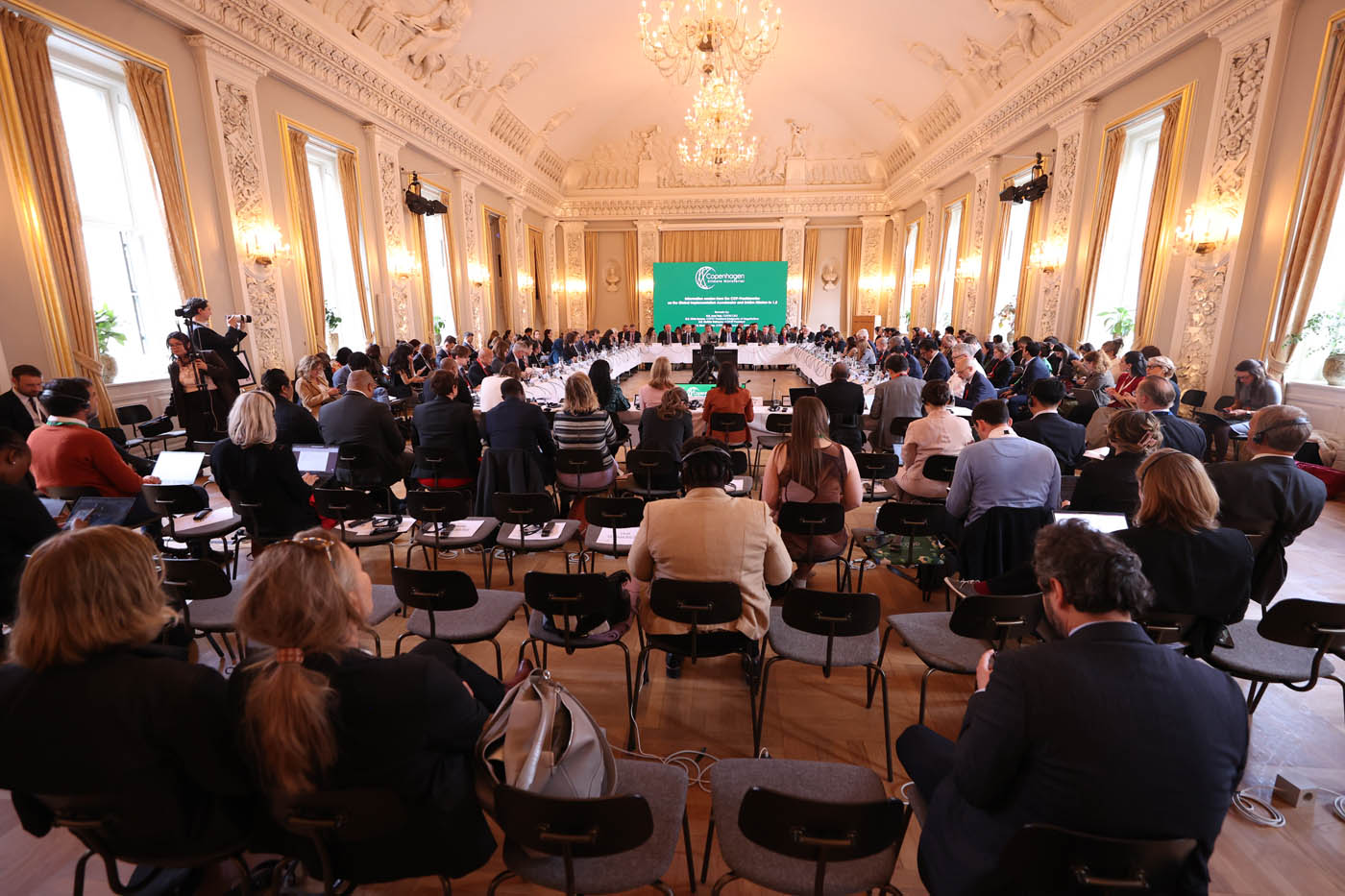
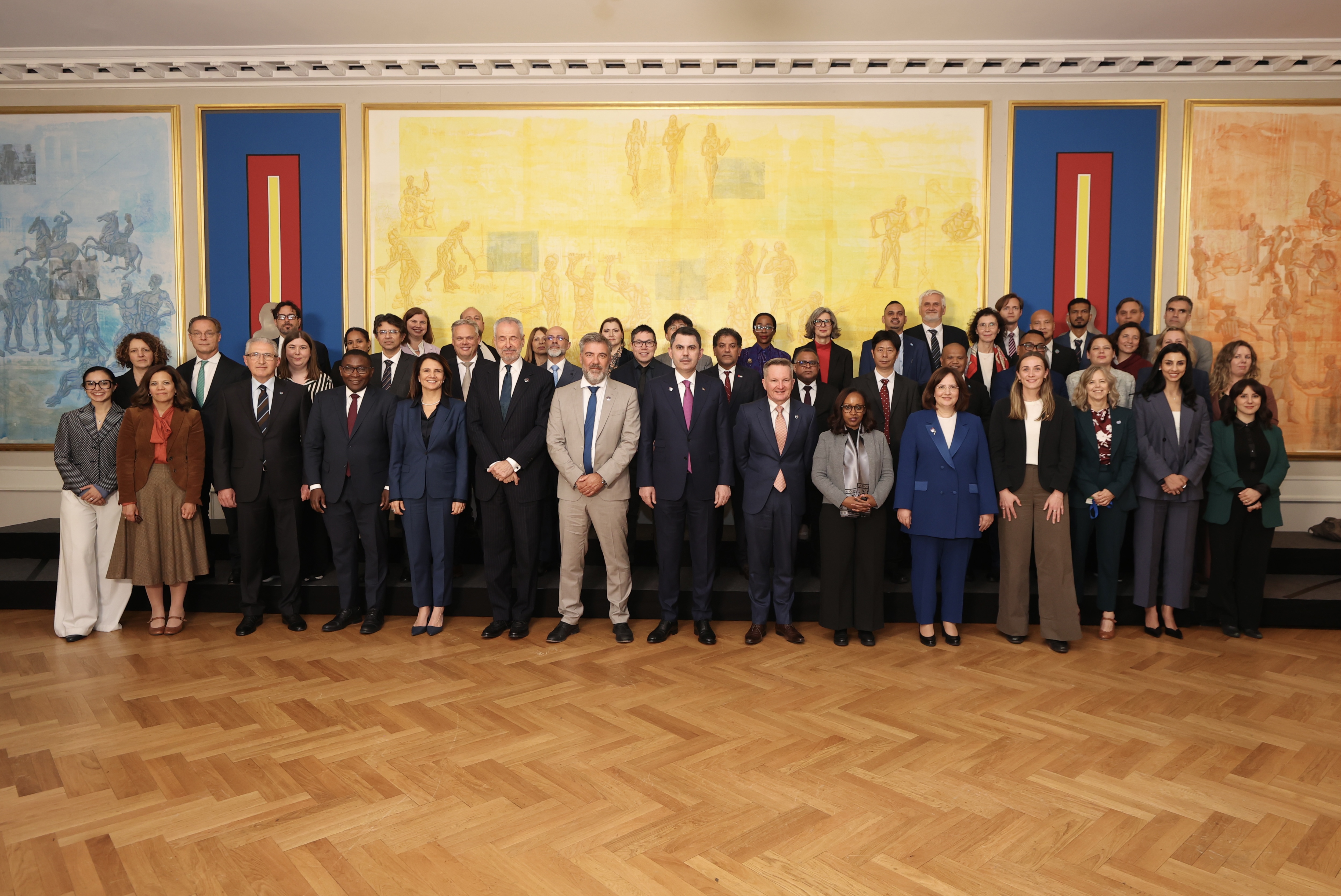
Murat Kurum, the COP31 President-Designate and Türkiye’s Minister of Environment, Urbanization and Climate Change, attended the Copenhagen Climate Ministerial. Hosted by Denmark, the meeting served as a critical staging ground for global climate action, focusing on emission targets and charting the roadmap leading up to the COP31 summit. Delivering the opening address, Minister Kurum pressed for a massive acceleration in global electrification.
“As the COP31 Presidency, we want to ignite a global discussion and take a definitive step forward in Antalya,” Minister Kurum said. “Today, electricity accounts for only about 20 percent of final energy consumption. We must push this ratio as high as possible. This requires both decarbonizing electricity generation and embedding electrification into every aspect of daily life.”
Kurum highlighted clean energy, clean cooking, resilient cities, and industrial decarbonization as top priorities for the COP31 Action Agenda. He added that Türkiye is actively collaborating with key international bodies, including the International Energy Agency (IEA), the International Renewable Energy Agency (IRENA), and the Global Renewables Alliance. The two-day ministerial meeting was also attended by the Director of Climate Change, Prof. Halil Hasar, alongside global delegates who delivered a series of floor speeches during several sessions. Minister Kurum’s call to all stakeholders Looking ahead to COP31, Kurum emphasized that Türkiye welcomes diverse institutional contributions to global climate action, issuing a broad call to all international stakeholders. “While we fully respect the party-driven nature of this process, we believe it is vital to create spaces for productive dialogue outside formal negotiations,” Kurum stated.
“The new model of the Global Climate Action Agenda will feature dedicated forums designed for practical, collaborative problem-solving. We call on all our stakeholders to secure the funding of the Intergovernmental Panel on Climate Change. We believe that national roadmaps are the foundational building blocks of collective action and the Paris mechanism. To maximize impact, these roadmaps must strictly align with the UN Framework Convention on Climate Change (UNFCCC) and be submitted as Nationally Determined Contributions (NDCs), backed by Biennial Transparency Reports (BTRs). We also prioritize National Adaptation Plans (NAPs). Roadmaps must ultimately strengthen the system, not weaken it.”
Some highlights from Minister Kurum’s remarks are as follows:
“We Will Continue to Work with Financial Institutions to Enhance Accessibility”
Emphasizing that climate finance will stand out as one of the pivotal topics at COP31, Minister Kurum stated: "First and foremost, we are looking at practical steps to scale up climate finance for the developing world. We will work with all actors to implement the recommendations of the Global Implementation Accelerator, alongside an additional mechanism and the Baku-to-Belém Roadmap. We want COP31 to be a platform where international private sector actors can cooperate to mobilize climate finance. We will hold donors strictly accountable to their commitments under the $300 billion Baku Finance Goal. At the end of COP31, we want to see exactly what percentage of that $300 billion pledge has materialized on the ground. We intend to route this funding through implementation mechanisms that directly support developing nations and boost local climate adaptation. Concessional and grant-based public finance will be essential, particularly for developing economies to adapt, build resilience, and respond to loss and damage. We will continue to work with financial institutions to enhance accessibility. To this end, we will use our best efforts to triple the resources provided by UN climate funds by 2030.
“Resource Replenishment for Green Climate Fund Crucial This Year”
Stressing that the Green Climate Fund holds a vital place in supporting climate targets at COP31, Minister Kurum said, “It is of critical importance for the Green Climate Fund to secure resource replenishment this year. In addition, developed countries must submit their first biennial communications to the COP presidency this year to demonstrate how they intend to meet their fair share of the Baku Finance Goal. Speaking about supporting global climate action is simple, but fulfilling that promise is what matters. Through our Action Agenda, we are determined to enhance the process, deliver concrete results, and accelerate the transition. Ultimately, we are compelled to take collective action for the future of this world.
This is not a choice; it is an obligation. We are resolute in fulfilling this obligation together with our dear friends.”
“What We Need Is Stronger Implementation, Stronger Cooperation”
In his speech at the end of the meeting, Minister Kurum reminded the audience that a decade has passed since the signing of the Paris Climate Agreement and continued as follows: “We have entered the second decade of the Paris Agreement and are making significant progress. Today, we stand at a very clear juncture. The fundamental challenge of the climate regime is no longer merely announcing new targets, but transforming existing commitments into concrete results on the ground. This is why we firmly believe and say that the global climate regime has clearly entered a new era of implementation. Today, it is evident that the gap between the current level of mitigation and actual implementation capacity must be closed rapidly. At this stage, we must treat nationally determined contributions not merely as policy documents, but as actionable transformation roadmaps. This is because what we require now is stronger implementation, more robust cooperation, and more tangible results. The energy transition, in particular, lies at the absolute heart of this process, given that nearly 70 percent of emissions are energy-related. The opening session also featured speeches by Australian Minister for Climate Change and Energy Chris Bowen, COP30 President Andre Correa do Lago, and UN Assistant Secretary-General Selwin Hart.
Joint Press Conference with Denmark, Brazil, and Australia
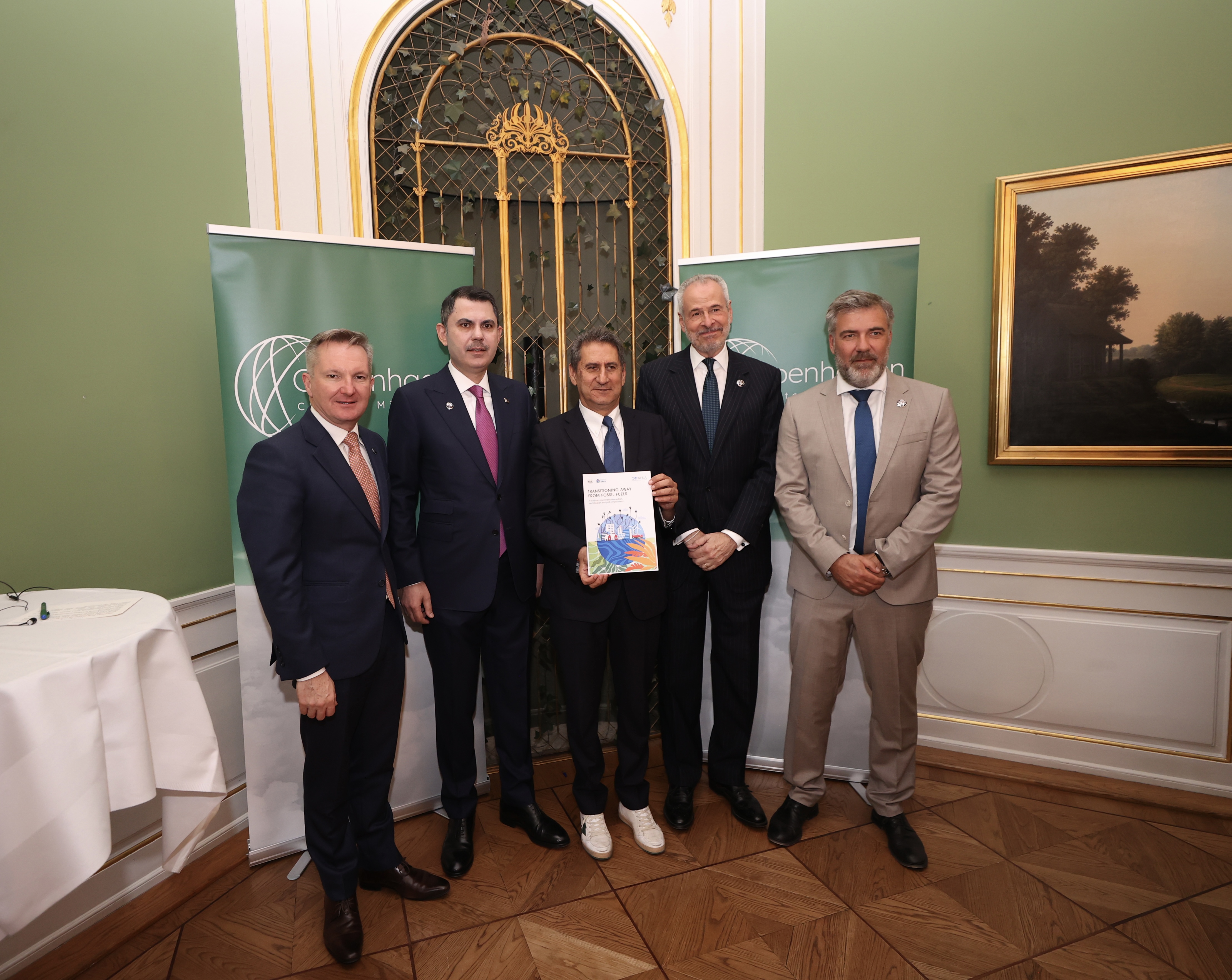
Ahead of the meeting, Minister Kurum met with Australia’s Minister for Climate Change and Energy, Chris Bowen, whose country will jointly conduct negotiations with Türkiye under the COP31 Presidency.
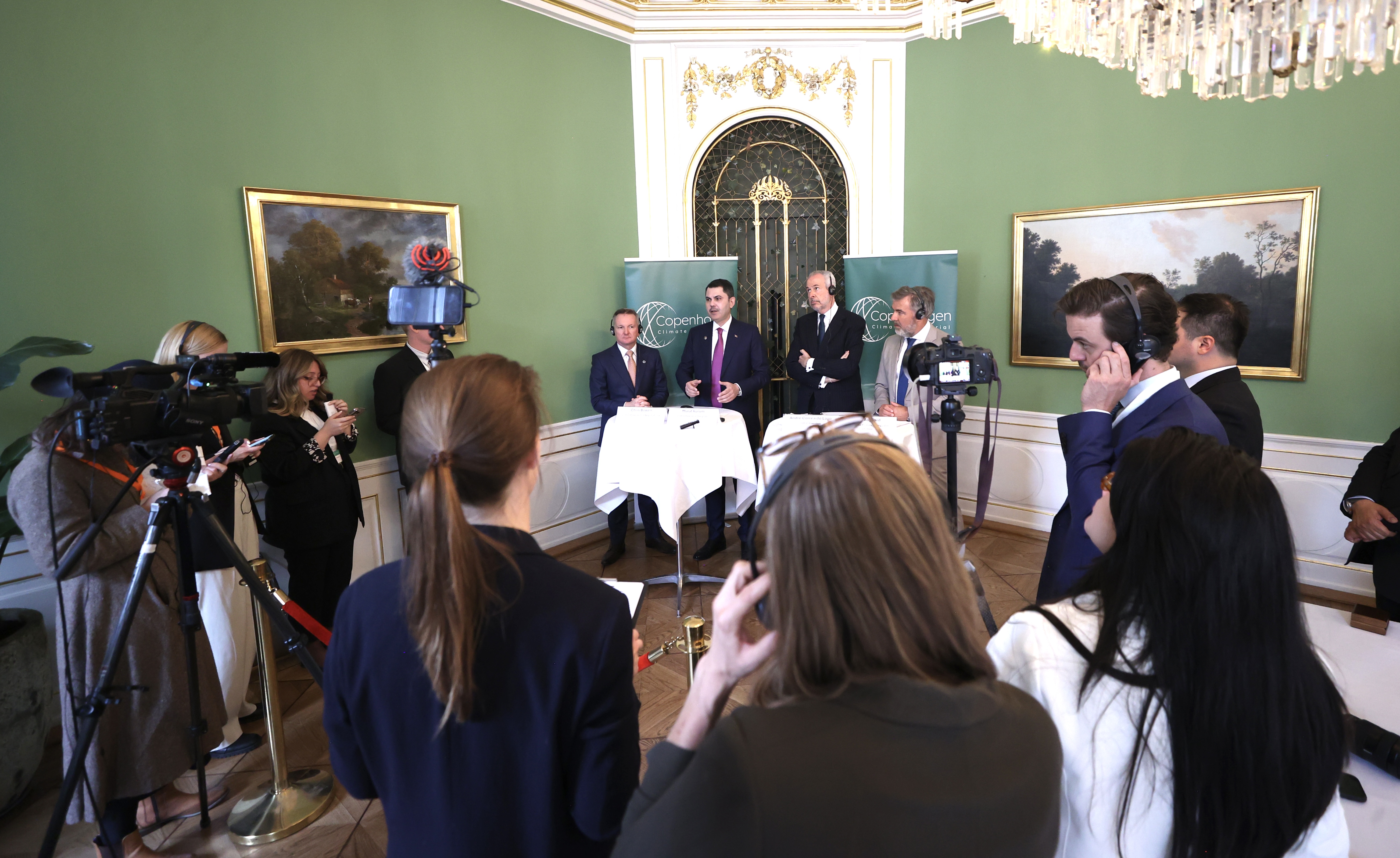
The inter-delegation meeting addressed preparations for the COP31 Summit, which will be hosted in Antalya. Following the talks, Minister Kurum held a joint press conference for international media members alongside Danish Minister Lars Aagaard, Brazilian Government Climate Envoy and COP30 President Andre Correa do Lago, and Australian Minister Chris Bowen.