


COP31 President-Designate and Minister of Environment, Urbanization and Climate Change Murat Kurum has unveiled the 10 priority areas and 6 key targets of the COP31 Action Agenda to the global community at the Bonn Climate Change Conference.
09 June 2026
COP31 President-Designate and Minister of Environment, Urbanization and Climate Change Murat Kurum has unveiled the 10 priority areas and 6 key targets of the COP31 Action Agenda to the global community at the Bonn Climate Change Conference.
“We have identified 10 priority themes under the COP31 Action Agenda,” said Minister Kurum. “In defining these themes, we did not simply pick headings; instead, we focused squarely on the world’s most pressing needs, the implementation challenges countries face on the ground, and the areas where COP31 can leave a lasting legacy.”
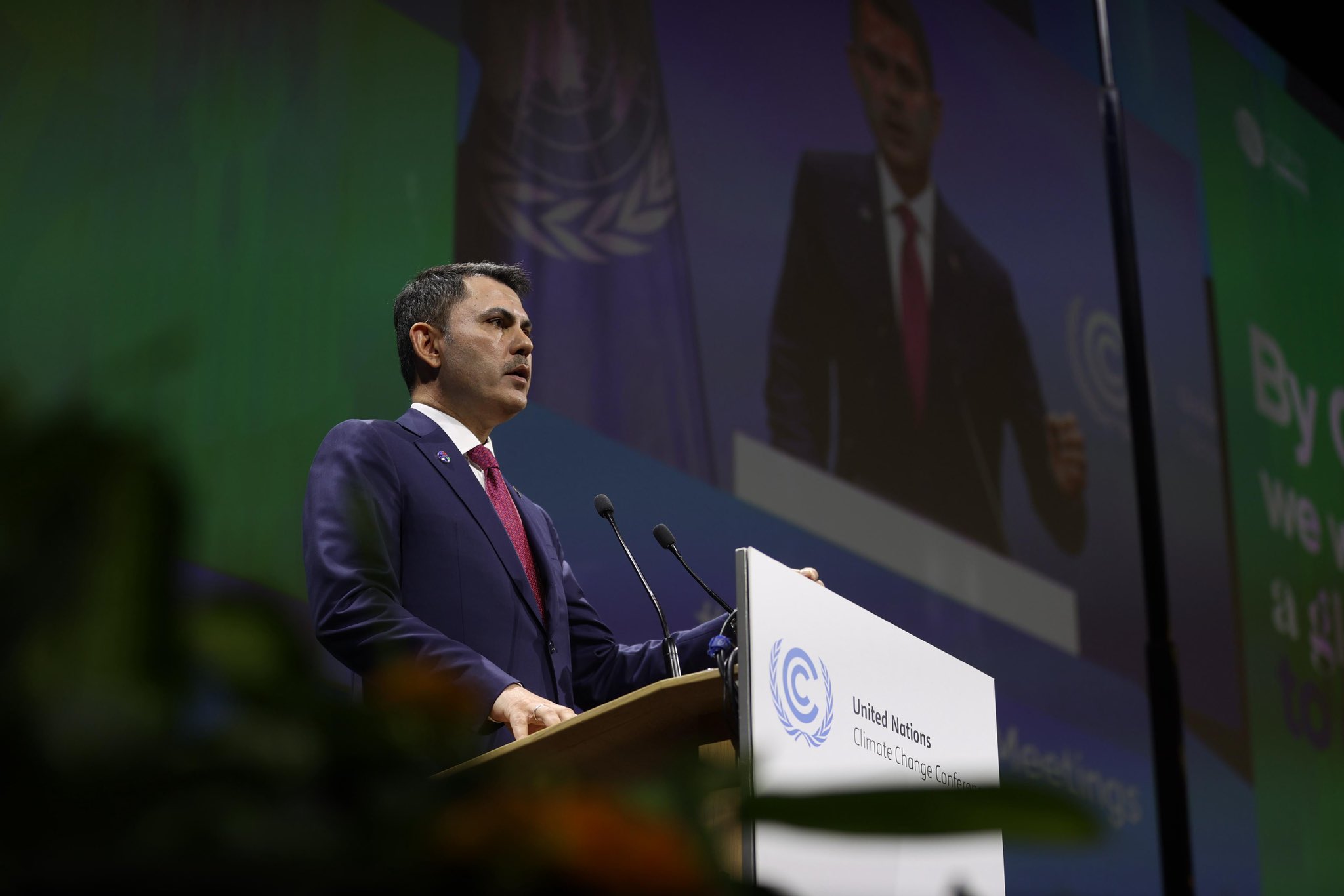
Noting that the core philosophy of COP31 is to accelerate implementation, Minister Kurum stated, “Today, the world is not merely waiting for new decisions. What the world wants is to see past decisions put into practice. Let us act instead of waiting. Let us turn intent into implementation. Let us translate pledges into concrete results. Let us transform our differences into a collective power for solutions. In Antalya, let us not just talk about the future—let us shape it together. In his address at the Bonn Climate Change Conference in Germany, COP31 President-Designate and Minister of Environment, Urbanization and Climate Change Murat Kurum emphasized that the COP31 Presidency has operated with a transparent and fair approach throughout the year, engaging in consultations and dialogue with all stakeholders. Recalling that the COP31 process is built upon three core values—dialogue, consensus, and action—Minister Kurum noted that Türkiye is shaping its vision around the concept of the COP of the Future.”
“WE FOCUSED ON AREAS WHERE COP31 CAN LEAVE A LASTING LEGACY”
Expressing their desire to transform commitments into concrete actions and those actions into measurable results throughout this process, Minister Kurum stated, “The COP31 Action Agenda aims to strengthen partnerships, develop practical solutions, contribute to implementation, and leave a lasting legacy. “In this context, we have identified 10 priority themes under the COP31 Action Agenda. In defining these themes, we did not simply pick headings; instead, we focused squarely on the world’s most pressing needs, the implementation challenges countries face on the ground, and the areas where COP31 can leave a lasting legacy.”
MINISTER KURUM OUTLINES THE 10 PRIORITY AREAS OF THE COP31 ACTION AGENDA
Minister Kurum outlined the 10 priority areas of the Action Agenda as follows: “To support the transition to a circular economy, we have prioritized Zero Waste approaches and methane abatement. Waste reduction is no longer just about environmental management; it is now one of the fields where climate action can deliver the fastest results. The path to a just and robust transition hinges on access to secure energy. Therefore, we have put clean energy and electrification on the agenda to deliver sustainable and secure energy for all. Recognizing that transforming our food systems is critical—particularly for developing nations and those facing severe barriers to food access—we have made food security and sustainable agriculture a priority theme to support our farmers. Indeed, the direct impact of the climate crisis on our dinner tables, agricultural production, and rural life means this issue can no longer be deferred. We have also placed green industrialization on our agenda to enhance sustainable competitiveness and hit our climate targets. It is our firm belief that we cannot achieve lasting results if production, trade, and employment are left out of this transformation.”
CLIMATE-FRIENDLY RESILIENT CITIES AND YOUTH
Noting that oceans and seas have been addressed as a distinct pillar to safeguard coastal and marine ecosystems, Minister Kurum emphasized, “We have once again underscored that our seas stand at the very heart of climate balance, food security, and the livelihoods of millions of people. Pointing out that they have prioritized climate-friendly resilient cities to establish safe living spaces for all, Minister Kurum noted, “We all know that the impacts of climate change are felt most visibly in our cities, our neighborhoods, and the daily lives of our people. Turning to another priority focus, Minister Kurum underlined the role of youth, adding, “To harness the energy, passion, and creativity of young people in the most powerful way, we have placed youth engagement at the center of our Action Agenda. We have made it clear that young people will be the driving force behind this process. This is because we firmly believe that youth should not merely be treated as the beneficiaries of the future, but must be our active solution partners today.”
“OUR GOAL IS TO SUPPORT HEALTH INFRASTRUCTURES THAT ANTICIPATE CLIMATE-INDUCED SHOCKS”
Stressing that ‘Dynamic and Resilient Health Systems’ form another crucial pillar, Minister Kurum expanded on the vision: “Taking into account the impacts of the climate crisis on human health, public services, and societal resilience, we have put dynamic and resilient health systems on our agenda. Our goal is to support health infrastructures that anticipate, adapt to, and rapidly recover from climate-induced shocks. Furthermore, we will promote cross-sectoral joint actions to build stronger synergies between climate change, biodiversity, and land degradation. We will also roll out an additional support system to strengthen the implementation of Nationally Determined Contributions (NDCs) and translate pledges into concrete outcomes. The core philosophy of COP31 is clear: it is not about generating headings, but about accelerating implementation; it is not about declaring intent, but about delivering results. We want to make the impacts of climate action felt across our cities, farmlands, homes, industries, energy networks, schools, hospitals, and everyday human lives.”
“WE WILL SUPPORT JOINT INITIATIVES UNDER 10 PRIORITY THEMES”
Minister Kurum pointed out that Türkiye will manage the COP31 process with the same perspective it applied to the "Construction Mobilization of the Century" launched in the wake of the Kahramanmaraş earthquakes: “In 2023, Türkiye endured two catastrophic earthquakes on the exact same day. Following these disasters, dubbed the 'Disaster of the Century,' we maintained a culture of consultation across all sectors and focused directly on our targets. Driven by the strong political will of our Honorable President, alongside the coordination and intensive efforts of our Ministry, we built 455,000 housing units in a short span of two years, reviving our 11 affected provinces. Just as we pursued a multi-layered, rapid, and result-oriented strategy during the post-earthquake reconstruction, we are moving forward with the exact same mindset and determination in the COP31 process. We have overseen an uninterrupted process that brings stakeholders from various sectors together through face-to-face consultations, thematic working groups, international partnerships, and an open digital platform. We systematically integrated feedback from both national and international stakeholders into the development process of the COP31 Action Agenda. Moving forward, we will continue to work shoulder-to-shoulder with our international partners. As the COP31 Presidency, we will support joint initiatives under the 10 priority themes by providing resources, visibility, and political leverage.”
TARGETS OF THE COP31 ACTION AGENDA
Unveiling the 6 global implementation targets of the COP31 Action Agenda during his presentation, Minister Kurum invited all parties and the international community to unite around these objectives. Minister Kurum noted that electrification stands out as the first of these targets: “One clear theme consistently took center stage in all our meetings: Electrification. Electrification serves as a cornerstone that complements renewable energy and energy efficiency to keep the 1.5-degree target within reach. It is also one of the most vital keys to decarbonization. Today, electricity demand is surging dramatically. However, grid deficiencies, financing gaps, policy misalignments, and high upfront investment costs continue to slow down progress in electrification. Despite these challenges, by putting forward a collective global will to accelerate electrification, we aim to achieve a 35 percent electrification rate by 2035. The '35 percent by 2035' target will be a core priority for our COP31 Presidency. In the period leading up to COP31 in Antalya, we will work tirelessly to forge a powerful global coalition to deliver this goal.”
ZERO WASTE MOVEMENT AND METHANE ABATEMENT
Secondly, highlighting the Zero Waste Movement launched under the auspices of First Lady Emine Erdoğan alongside methane abatement, Minister Kurum noted, “Through this initiative, we intend to elevate Zero Waste to a higher level within climate policy. Methane abatement offers one of the fastest, most actionable opportunities to slow down global warming. The waste sector is responsible for approximately 20 percent of human-induced methane emissions.We have proven, scalable solutions at our disposal, which present a major opportunity to curb methane emissions, particularly those arising from human-generated waste. We call upon all parties to adopt the target of halving the growth rate of waste generation by 2035.”
RESILIENT CITIES AND GREEN TRANSITION IN INDUSTRY
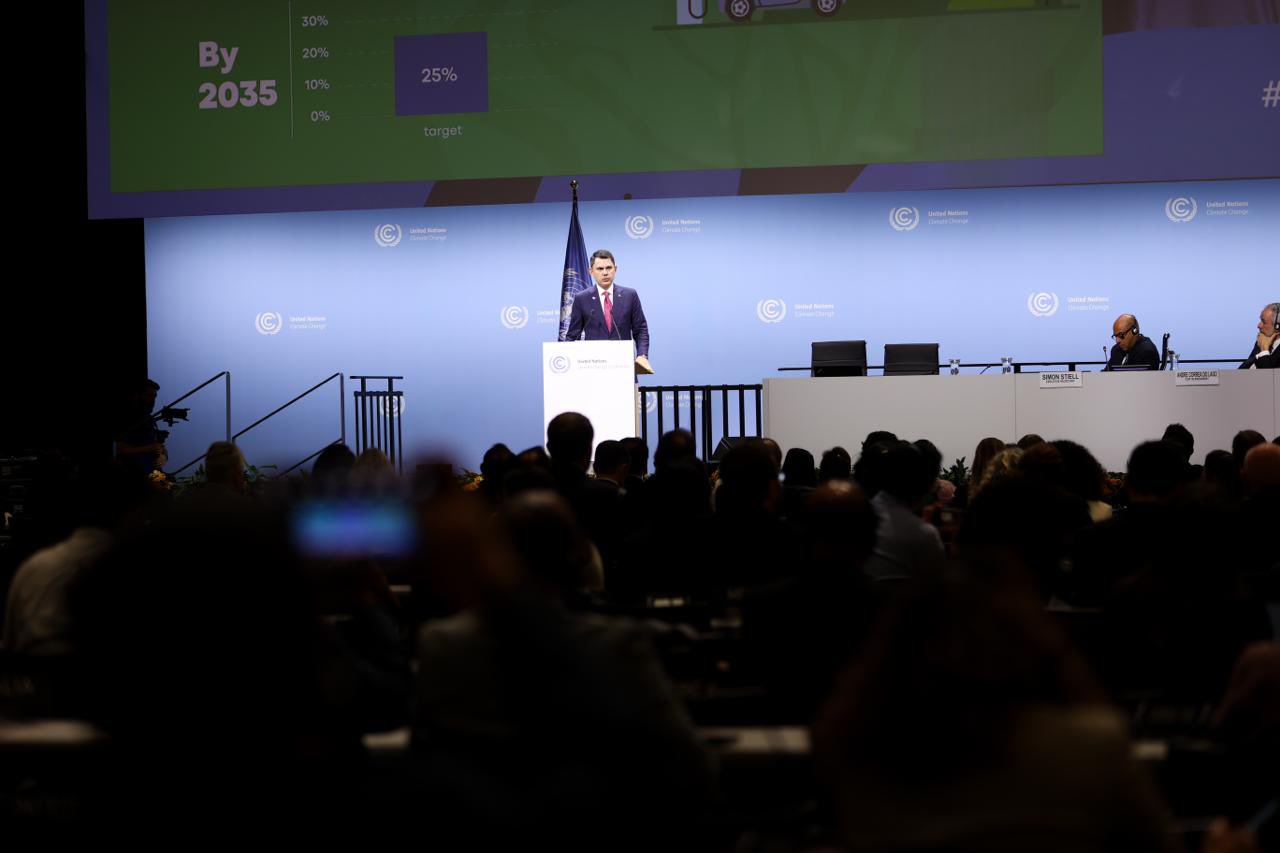
Regarding the Action Agenda’s target on ‘resilient cities,’ Minister Kurum made the following remarks: “Resilient Cities is a pillar our Action Agenda treats with great emphasis. This topic has numerous dimensions. However, at this stage, I would particularly like to share our emission reduction target for buildings. Cutting building emissions and boosting energy efficiency is critical to the climate resilience of our cities. In this context, we wish to present for the parties’ consideration the target of reducing energy use intensity in the building sector by at least 25 percent by 2035. Turning fourthly to green industrial transition, Minister Kurum added, “For a green transition in industry, ensuring the circular material use rate in the production and manufacturing sectors reaches at least 15 percent by 2035 will be a major milestone. This target will deliver a powerful contribution to both emission reductions and resource conservation.”
“A ROBUST CLIMATE AWARENESS MUST BE FOSTERED ACROSS SOCIETY BY 2035”
Fifthly, expanding on the concept of ‘Awareness across All Sectors,’ Minister Kurum explained, “We do not treat the fight against waste, food security, and climate awareness as separate issues; rather, we view them as a collective transformation that must extend to all segments of society. Today, millions of people worldwide face food insecurity. The climate crisis directly impacts our dinner tables, water resources, agricultural production, rural life, and the livelihood security of future generations. Therefore, we must bridge the disconnect between food, water, and climate, establishing a more resilient, efficient, and equitable system. Within this framework, we will champion an approach that cuts waste, utilizes resources efficiently, and reinforces climate consciousness across every field—from agriculture to industry, education to social life, and public services to the business world. We place immense value on informing youth, farmers, producers, workers, and society as a whole about climate-resilient practices. To this end, we aim to integrate climate change into educational curricula by 2030, supported by non-formal educational activities, to foster robust awareness across the general public by 2035.”
CLIMATE IMPLEMENTATION BRIDGE
Pointing out the significance of the sixth and final pillar, the "Climate Implementation Bridge," Minister Kurum noted, “In putting all these targets into practice, we will adopt an inclusive approach that respects the varying circumstances and priorities of individual nations. To support the delivery of these targets, we will work in close cooperation with all countries, with a particular focus on developing economies. We will help strengthen access to technical assistance, capacity-building activities, and financial support mechanisms. The new mechanism we have defined as the Climate Implementation Bridge aims to fill precisely this gap. The Climate Implementation Bridge is designed to strengthen the alignment between climate targets and economic and development policies, particularly in developing and least developed countries. This mechanism will contribute to fostering an investment-ready environment.”
“THE CLIMATE IMPLEMENTATION BRIDGE IS NOT A NEW FUND, BUT A COMPLEMENTARY INITIATIVE”
Underlining that the Climate Implementation Bridge will support forging a stronger link between NDCs and economic policies, Minister Kurum expanded on the vision: “It will assist countries in turning their priorities into investable project portfolios. Furthermore, it will assume a facilitating role to ensure appropriate financing solutions and enable private capital to contribute on a much larger scale. I want to emphasize strongly that the Climate Implementation Bridge is not a new fund. It is not a new financing mechanism. Nor is it an alternative to existing initiatives. On the contrary, it is a complementary initiative that supports the current climate finance and implementation ecosystem, reinforces partnerships among actors, and focuses squarely on implementation. Our objective is to bridge the gap between climate targets and real-world investments. It is to ensure that finance reaches the ground faster, more effectively, and with a greater focus on results.”
“IN THE COMING MONTHS, WE AIM TO ADVANCE OUR WORK ACROSS ALL 10 PRIORITY THEMES”
Emphasizing that they are resolutely managing the preparatory process for COP31 to be hosted in Antalya, Minister Kurum concluded: “In the coming weeks and months, we aim to advance our work across all 10 priority themes and beyond. We wish to transform our efforts under COP31 and the Global Climate Action Agenda into a shared success. To achieve this, as the COP31 Presidency, we require the support of each and every one of you. Today, the world is not merely waiting for new decisions. What the world wants is to see past decisions put into practice. Because nature is weary, and humanity is exhausted. Droughts are now reaching our dinner tables; floods wash away a lifetime of labor overnight; wildfires consume not just trees, but memories, homes, and hopes for the future. Together, we must act faster for children who lack access to clean water, for farmers who entrust their future to the soil, for families who lose their homes and hopes to disasters, for the children who pay the heaviest price despite bearing no responsibility for emissions, and for the generations who will inherit this world after us.”
“WE MET AND LISTENED IN BONN, WE WILL MEET AGAIN IN ANTALYA”
At the conclusion of his address, Minister Kurum extended a call to action by quoting the revered Sufi mystic Mevlana Jalaluddin Rumi: “Yesterday has gone with yesterday, my dear; now it is time to say new things, to do new things!” Now is the time to do new things. Let us act instead of waiting. Let us turn intent into implementation. Let us translate pledges into concrete results. Let us transform our differences into a collective power for solutions.
In Antalya, let us not just talk about the future—let us shape it together."
Invoking the call of Yunus Emre, one of Anatolia’s spiritual masters, who said, “Come, let us get to know one another, let us make things easy,” Minister Kurum added: “We met and listened in Bonn, and we will meet again in Antalya. Together, we will carry climate action from words to implementation, and from implementation to results. We will shape the future together.”
TRILATERAL PRESS CONFERENCE
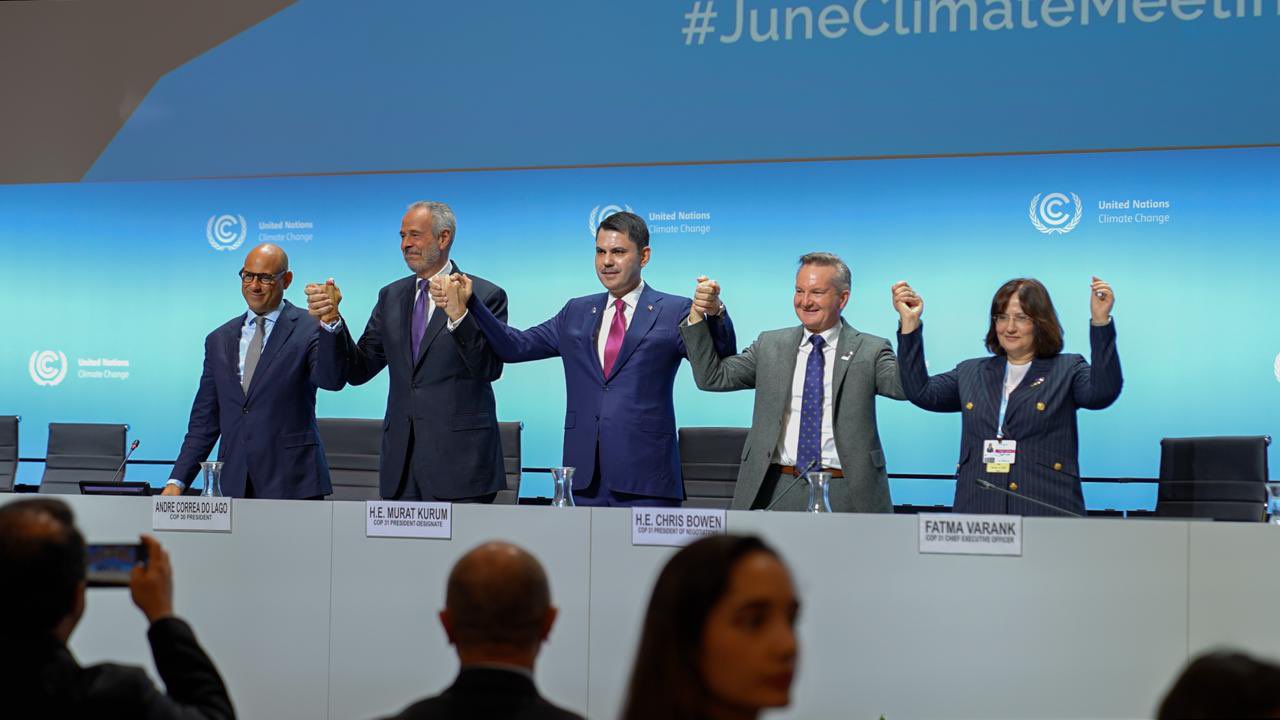
During the program, Simon Stiell, Executive Secretary of the UN Framework Convention on Climate Change (UNFCCC), and Chris Bowen, Australia’s Minister for Climate Change and Energy, also delivered remarks.
Following the speeches, COP31 President-Designate Kurum, UNFCCC Executive Secretary Stiell, and Australian Minister Bowen held a trilateral press conference to answer questions from members of the press.