


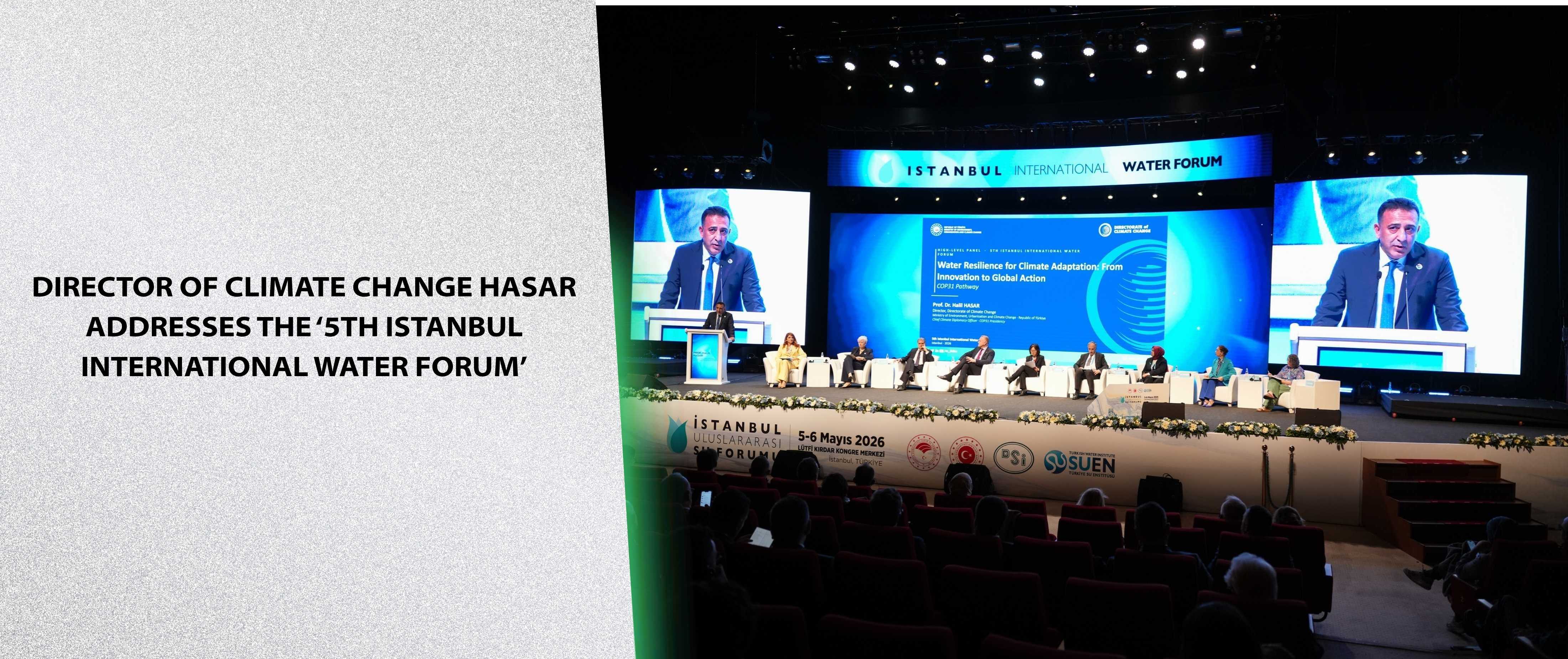
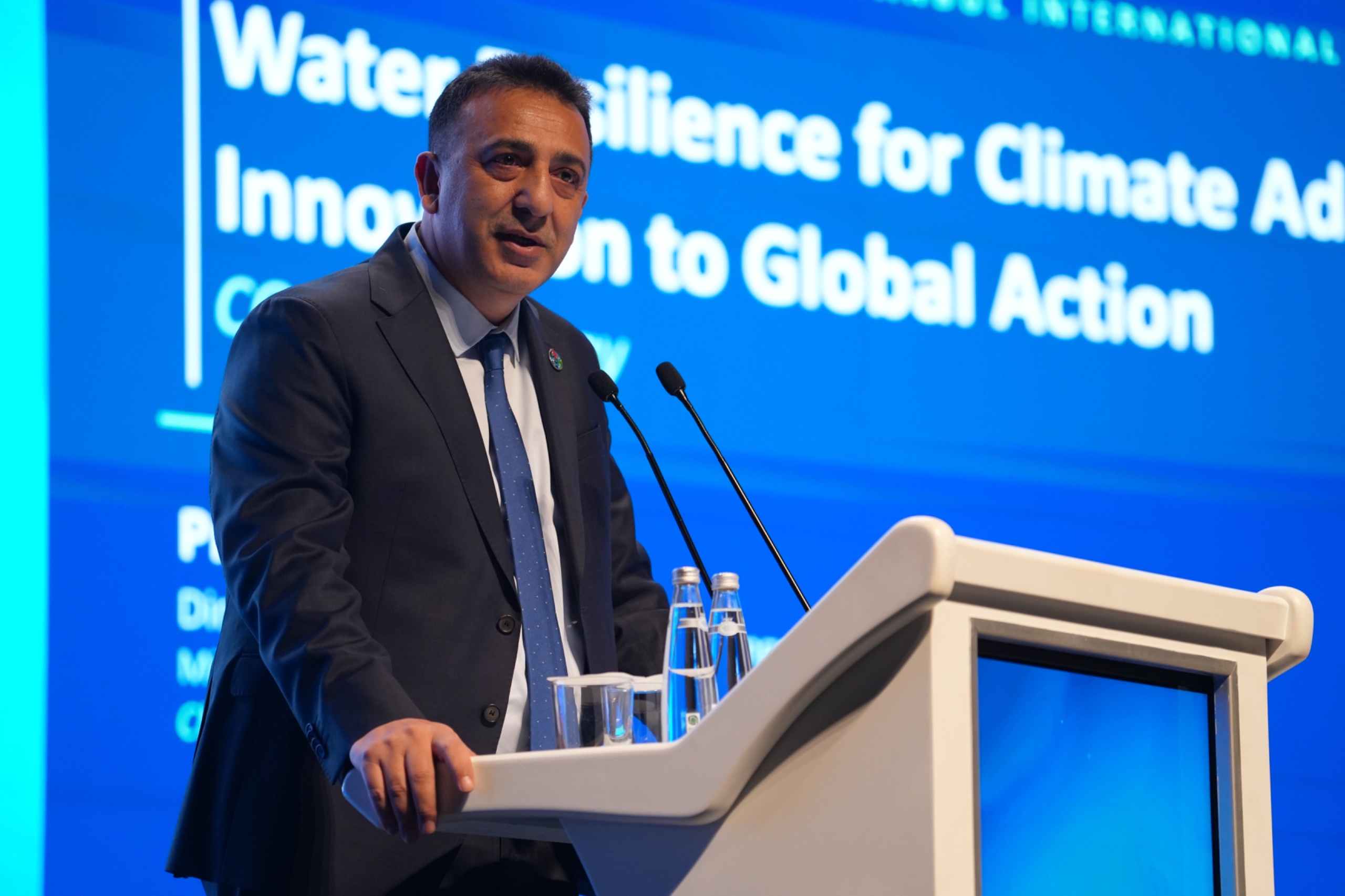
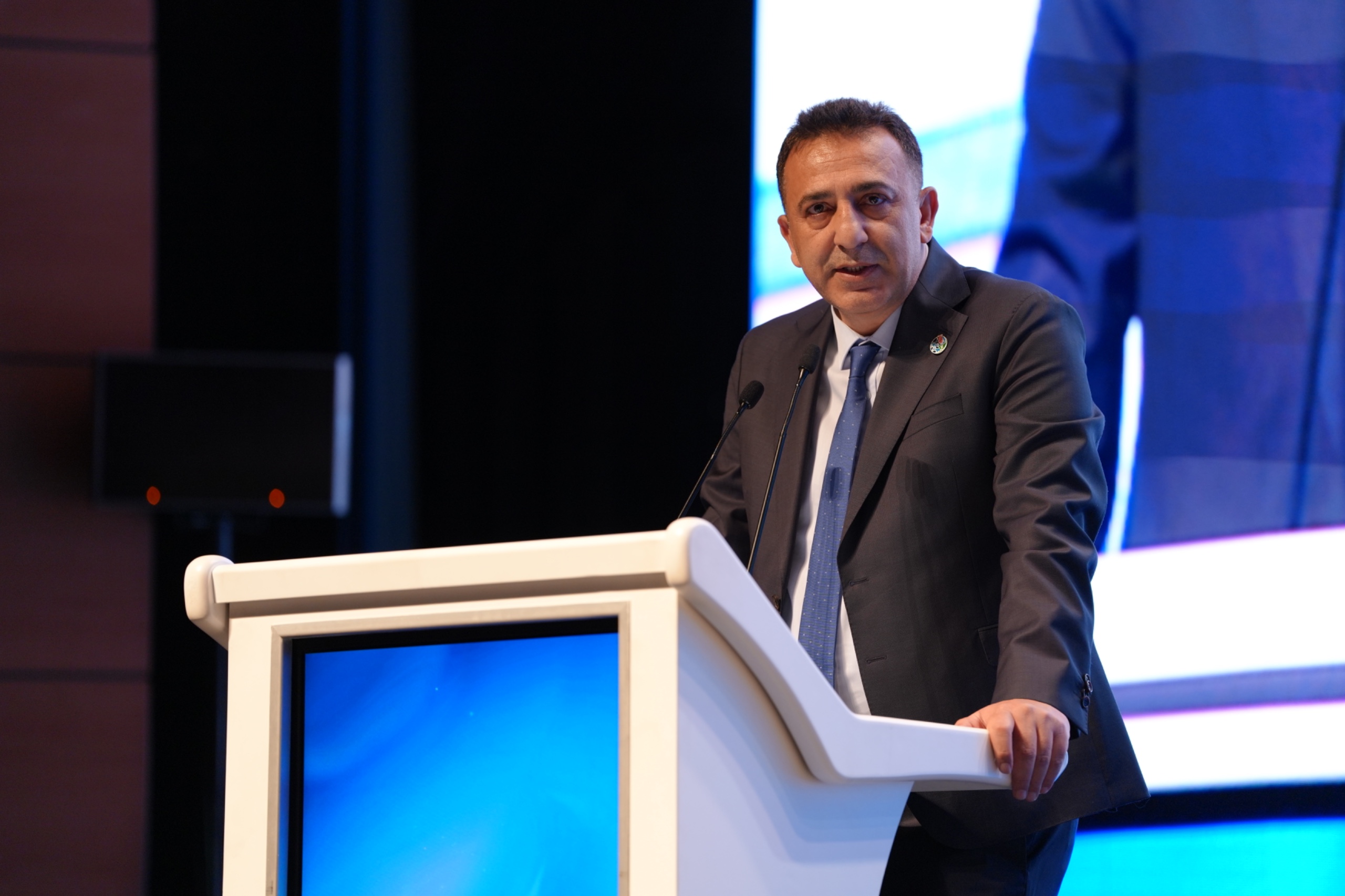
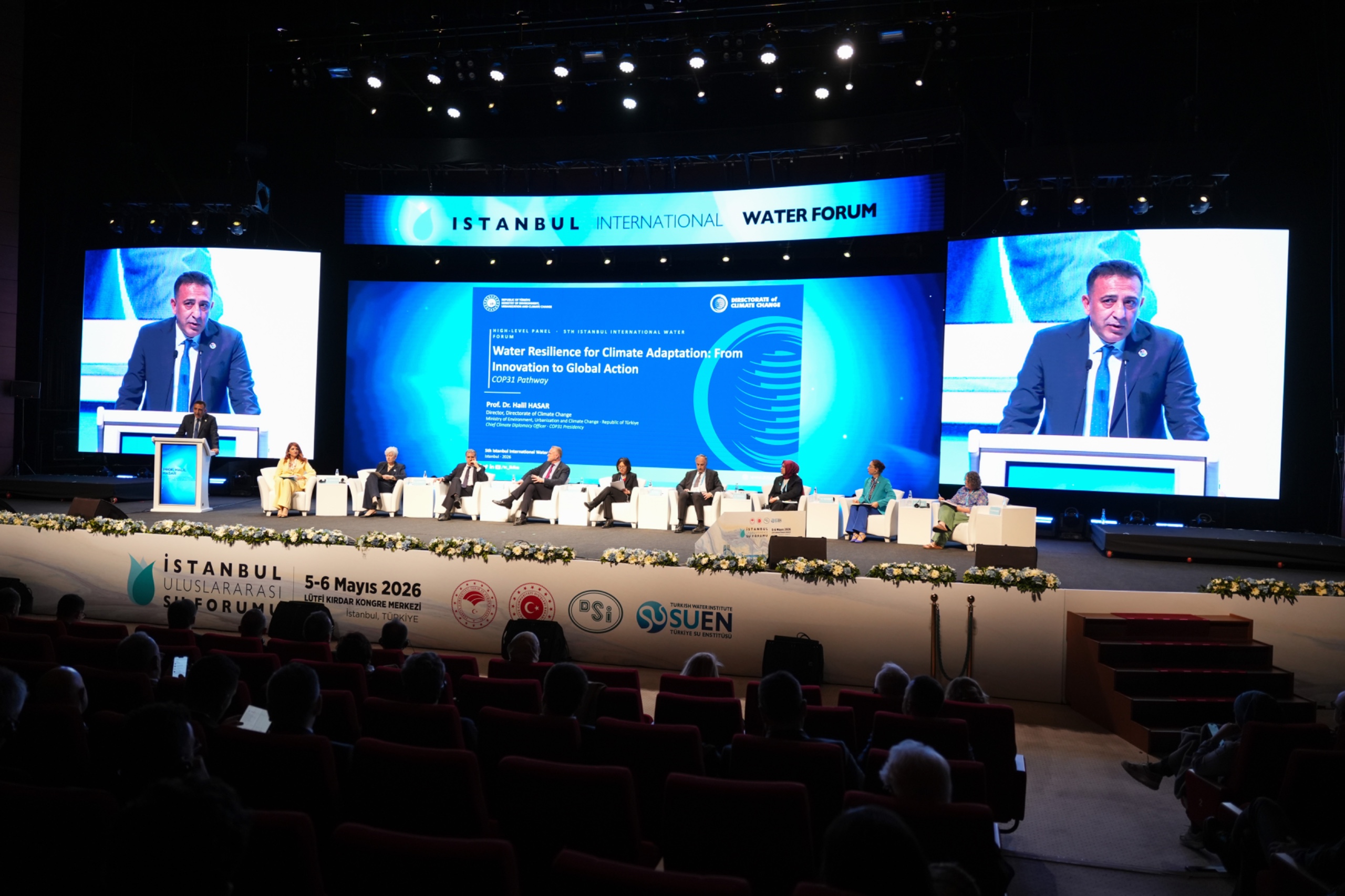
The Director of Climate Change, Prof. Halil Hasar, attended the 5th Istanbul International Water Forum.
05 May 2026
The Director of Climate Change, Prof. Halil Hasar, attended the 5th Istanbul International Water Forum.
Organized this year under the theme “Strengthening Water Resilience: Innovation to Action,” the forum serves as a high-level platform for developing sustainable water management strategies in response to the global climate crisis.
Hosted by the Ministry of Agriculture and Forestry, the event is recognized as one of Türkiye’s most prestigious water management summits. It drew an international audience including ministerial delegations and representatives from key organizations such as the UN, OECD, OIC, and the World Bank.
Delivering a keynote on the opening day, Director Hasar underscored that water remains the most tangible manifestation of the climate crisis. He noted that COP31, which Türkiye is set to host this November, represents a historic opportunity to catalyze action in this field.
Asserting that the climate crisis has transitioned from a projected risk to an immediate reality—one that is profoundly felt through our most vital resource, water—Director Hasar highlighted several critical points:
Water: The Tangible Face of the Climate Crisis
Climate change is no longer a future threat; it has become the defining challenge of our era. This reality is nowhere more evident than in the destabilization of our ancient and life-sustaining water systems. With 2024 officially recorded as the hottest year on record, climate change is both accelerating and intensifying. According to World Meteorological Organization (WMO) data, global average temperatures are nearing 1.5°C above pre-industrial levels, signaling a rapidly widening adaptation gap between climate impacts and our current response capacities. Specifically, disruptions in the hydrological cycle are rendering precipitation patterns increasingly volatile, leading to more frequent and severe prolonged droughts.
“Nearly 40% of the Global Population Lives in Water-Stressed Regions”
UN reports indicate that approximately 40% of the world’s population already resides in water-stressed regions. This finding suggests that over 700 million people around the world are at severe risk for water scarcity. Consequently, water must be viewed not merely as a natural resource, but as a strategic security and resilience priority at the heart of the global climate agenda.
“COP31 Will Represent a Milestone as the ‘COP of Implementation’”
COP31, to be hosted by Türkiye this year, will serve as far more than a mere negotiation platform. It is set to represent a milestone as the “COP of Implementation,” strengthening the vital link between policies and ground-level realities, and between commitments and tangible outcomes. The significance of COP31 lies in its capacity to shape the future as a summit where promises are translated into action, needs find practical solutions, and effective measures are decisively delivered. Furthermore, one of our primary objectives is for COP31 to be remembered as a “bridge-building” summit—one that builds trust, deepens partnerships, and unites countries with diverse priorities around shared goals. Consequently, the summit in Antalya will function not merely as a venue for decision-making, but as a global platform for transformation where decisions generate real and measurable impact.
“It is time to move from commitment to implementation, and from rhetoric to action”
Increasing droughts, devastating floods, degrading ecosystems, and cascading multi-dimensional risks are profoundly affecting every sector—from food security and energy systems to public health and economic stability. This reality necessitates that throughout the COP31 process, water is treated not just as a sectoral issue, but as a strategic priority at the very heart of climate adaptation. Current adaptation efforts remain insufficient. The financing gap is widening, implementation capacity remains limited, and significant misalignments persist between policy frameworks and realities on the ground. COP31 must serve as the turning point capable of altering this trajectory. It is time to move from commitment to implementation, and from rhetoric to action. In this context, Türkiye’s COP31 vision offers a strategic approach. This perspective ensures that climate action is not confined to negotiation processes; instead, it centers on implementation, investment, and concrete results. This holistic approach, spanning energy, nature, agriculture, cities, and social development, powerfully reflects the multi-sectoral nature of adaptation.
“Water is not merely a single heading on the action agenda; it is the strategic backbone that interconnects all priorities”
The Zero Waste approach is fundamentally built upon wastewater management and reuse. Similarly, Food Security is inextricably linked to water, as agriculture accounts for approximately 70% of global freshwater consumption. Building Climate-Resilient Cities necessitates effective urban water management, while the implementation mechanism must incorporate water-based adaptation investments. In the same vein, youth and education initiatives must carry water literacy to future generations. Furthermore, Green Industrialization depends on industrial water efficiency, and the Clean Energy Transition relies on the critical energy-water nexus. Finally, the Rio Synergy integrates the management of water, land, and biodiversity. Therefore, water is not merely a single heading on the action agenda; it is the strategic backbone that interconnects all priorities. The “Water First” approach places adaptation at the very heart of global resilience.
“COP31 presents a historic opportunity”
I would like to emphasize that COP31 presents a historic opportunity. Success must be measured not only by the commitments made but by the solutions delivered. We must act collectively for more resilient societies, stronger systems, and a more secure future. The vision we present today points toward a new understanding of global climate governance—one where water is centralized, adaptation is strengthened, and scientific evidence guides decision-making processes. It is my sincere hope that COP31 will be remembered not as an ordinary conference, but as a historic turning point that delivers tangible outcomes, builds trust, and reinforces global resilience. The outcomes of the International Istanbul Water Forum, held in anticipation of the triennial World Water Forum, will contribute significantly to the UN Water Conference later this year in December, the 11th World Water Forum in 2027, and the 20th IWRA World Water Congress, which will also be hosted in Istanbul in 2027.