


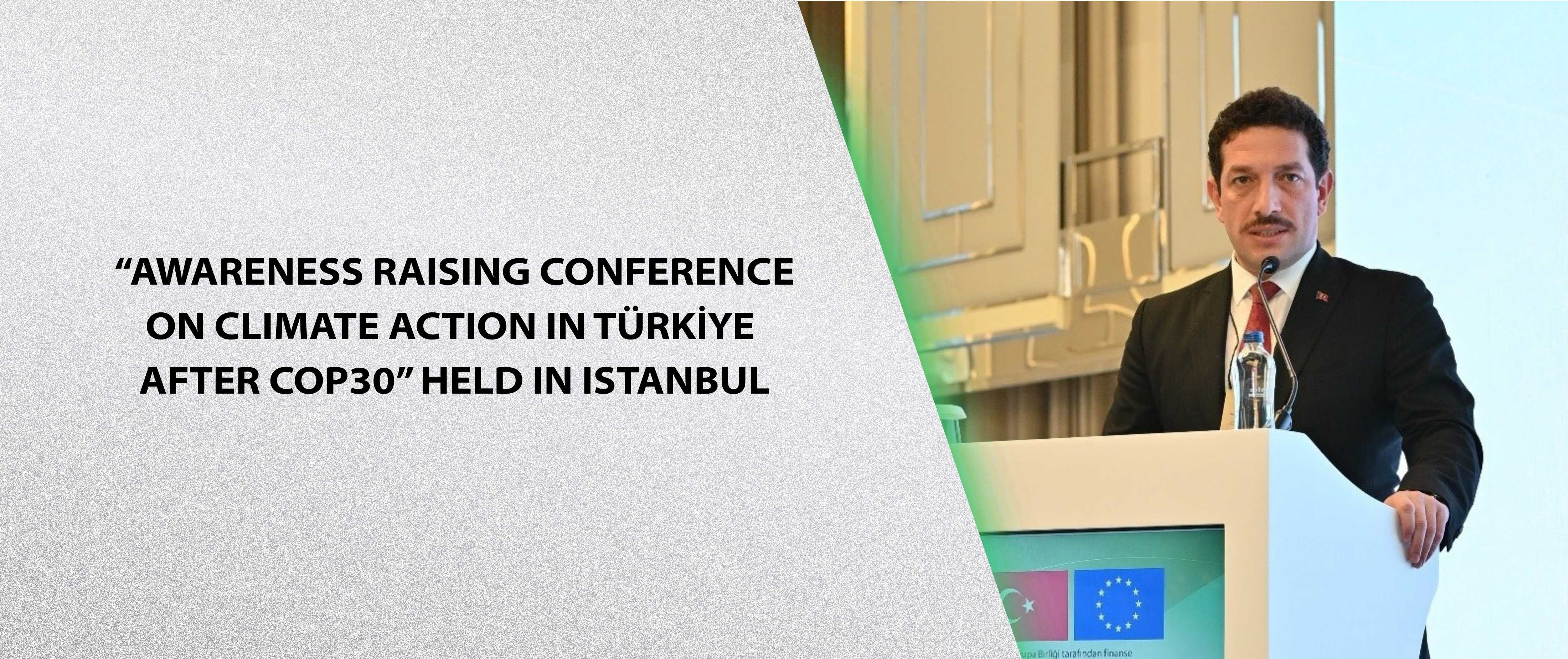
“Awareness Raising Conference on Climate Action in Türkiye After COP30” Held in Istanbul.

15 December 2025
“Awareness Raising Conference on Climate Action in Türkiye After COP30” Held in Istanbul.
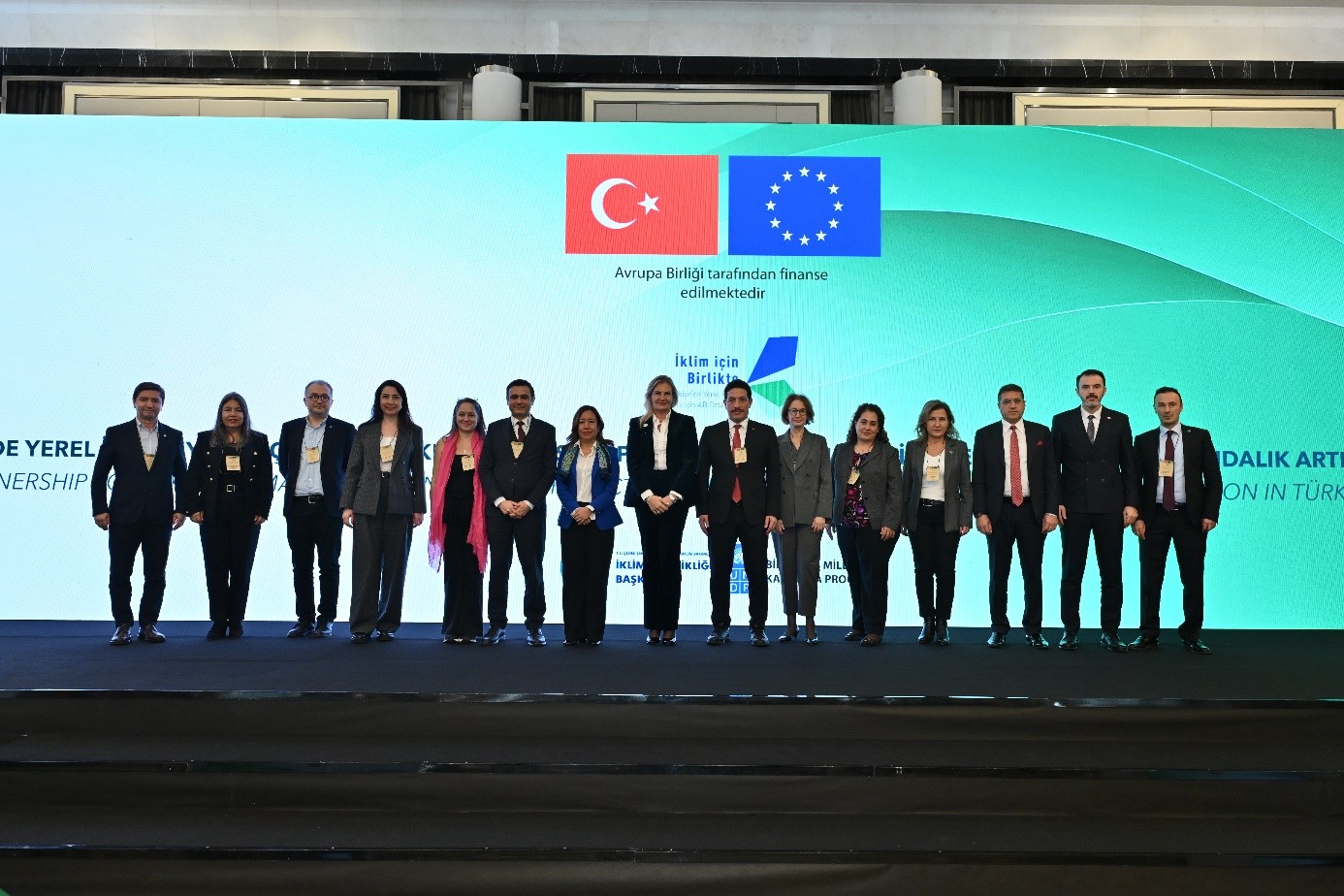
Implemented by the United Nations Development Programme (UNDP) Türkiye Office and financed by the European Union, with the Ministry of Environment, Urbanization and Climate Change as the beneficiary, the “Awareness Raising Conference on Climate Action in Türkiye After COP30” took place in Istanbul.
The event, which was organized within the scope of the “EU Partnership for Local Climate Action in Türkiye Project, brought together a broad range of participants from public institutions, international organizations, academia, the private sector, and civil society, where the implications of COP30 outcomes for national climate policies and the preparation process for COP31 were discussed.
Speaking at the opening session, Deputy Director of Climate Change Orhan Solak underlined that climate crisis is no longer a matter of future projections, but has become a concrete and pressing reality for Türkiye, manifesting itself in extreme heat, drought, sudden and intense rainfall, water stress, forest fires, and growing disaster risks.
Referring to data from the World Meteorological Organization, Solak recalled that global average temperature increase is approaching dangerous thresholds and that 2024 was recorded as the hottest year in history, noting that records are being broken not only in temperatures but across multiple climate indicators.
Evaluating COP30 outcomes, Solak stated that negotiations in Belém played a decisive role in shaping discussions on climate finance, adaptation, just transition, gender equality, and the climate–trade nexus.
“Decisions can no longer remain at the level of intent and must be grounded in science-based, measurable implementation frameworks” said Solak emphasizing that COP30 clearly exposed both the financing needs of developing countries and the existing gaps in implementation capacity.
Describing the adoption of the long-awaited Global Goal on Adaptation (GGA) indicator list as a “historic step,” Solak explained that the framework, consisting of approximately 60 indicators, covers finance, technology transfer, capacity building, and social vulnerabilities.
While acknowledging uncertainties regarding the integration of these indicators into national reporting systems, he stressed that the review scheduled for 2027 will be of critical importance.
Solak also noted that the decision taken at COP30 to establish a Just Transition Mechanism provides an important foundation, and that accelerating the implementation of Nationally Determined Contributions is among the key priorities identified in order to keep the 1.5 °C target within reach.
In this context, he recalled the launch of the Belém Mission and the Global Accelerating Implementation Actions.
Addressing climate–trade relations, Solak indicated that COP30 decisions include the launch of three separate dialogue processes on carbon border adjustment mechanisms and trade-related measures, with these processes to be assessed at a high-level review in 2028.
Summarizing COP30 from Türkiye’s perspective, Solak emphasized that climate change cannot be viewed solely as an environmental issue, but rather as a comprehensive policy domain spanning development, water management, urban planning, infrastructure, social policies, and public health. He highlighted that adaptation policy has now become one of the central pillars of climate policy.
Stating that COP31, to be hosted by Türkiye, will mark a turning point where processes initiated at COP30 are translated into concrete outcomes, Solak outlined three core priorities: harmonizing adaptation indicators with national systems, making climate finance more transparent and accessible, and implementing just transition policies at the local level with due consideration for vulnerable groups.
Solak added that Türkiye places the principle of “leaving no one behind” at the center of the COP31 process, noting that the conference plays a vital role in disseminating this approach across all segments of society.
The opening session was attended by UNDP Türkiye Resident Representative Monica Merino, Head of the Financial Cooperation at the EU Delegation to Türkiye Maria Luisa Wyganowski, as well as academics and representatives of civil society organizations.