


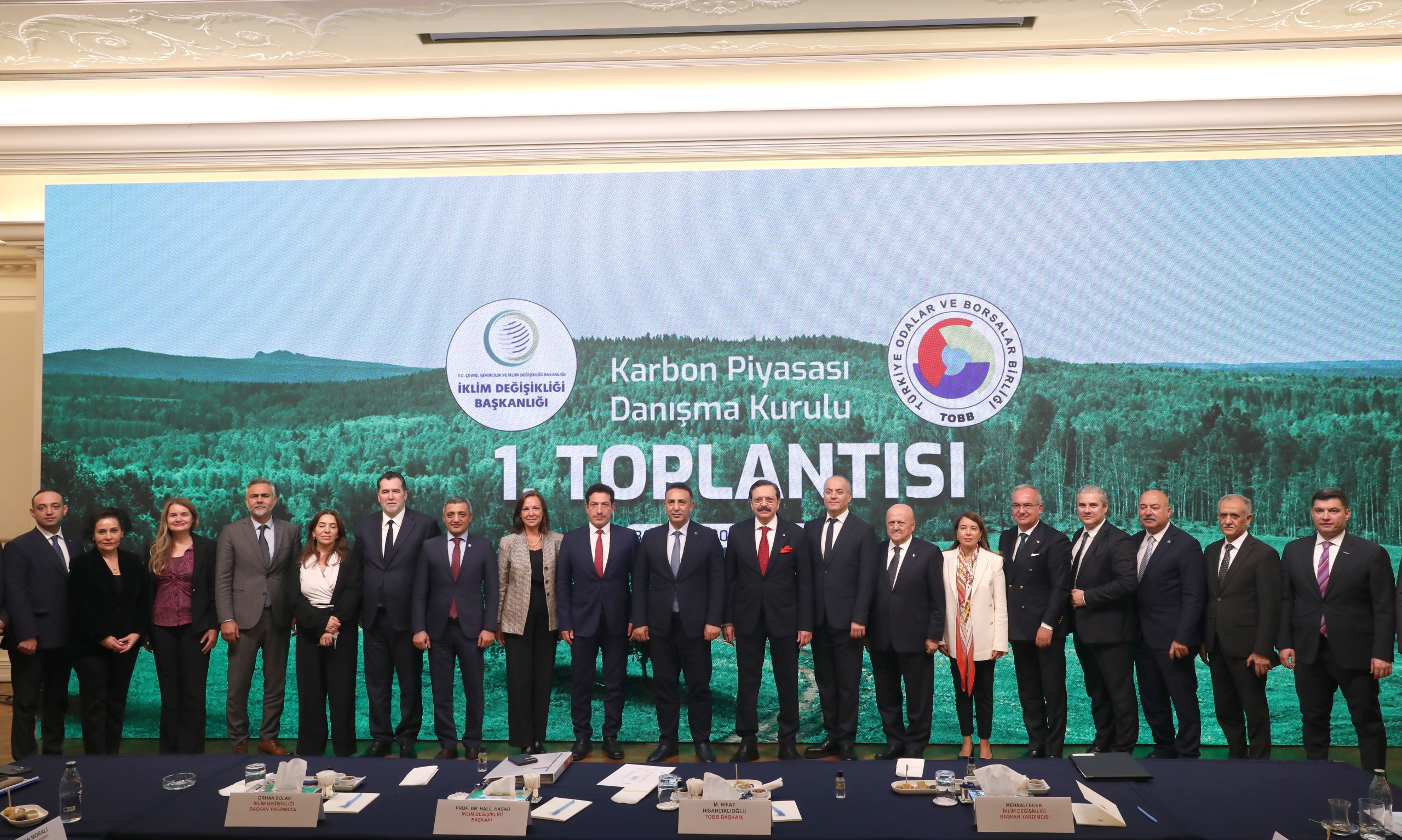
The Carbon Market Advisory Board held its first meeting in Ankara.
31 October 2025
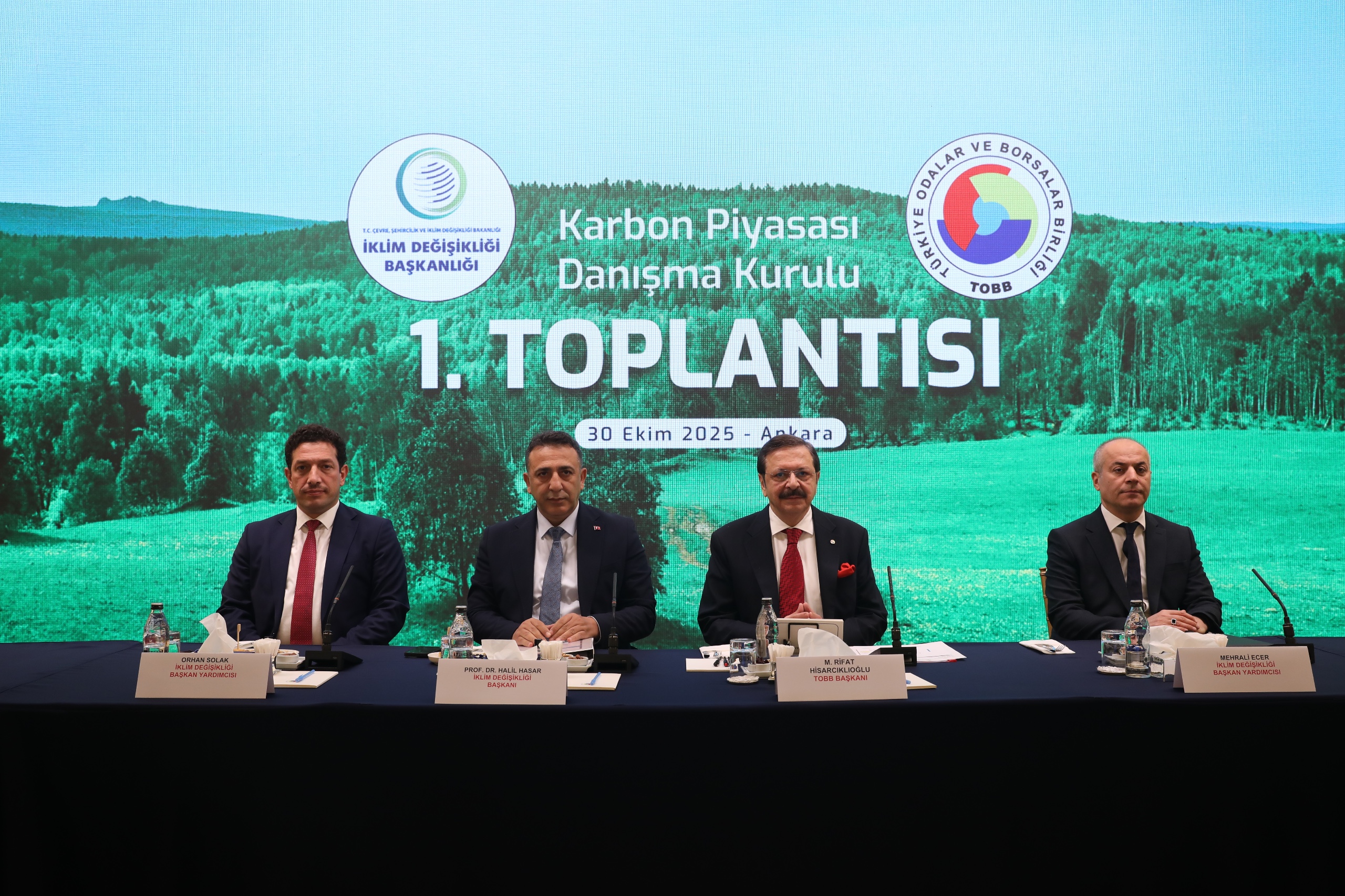
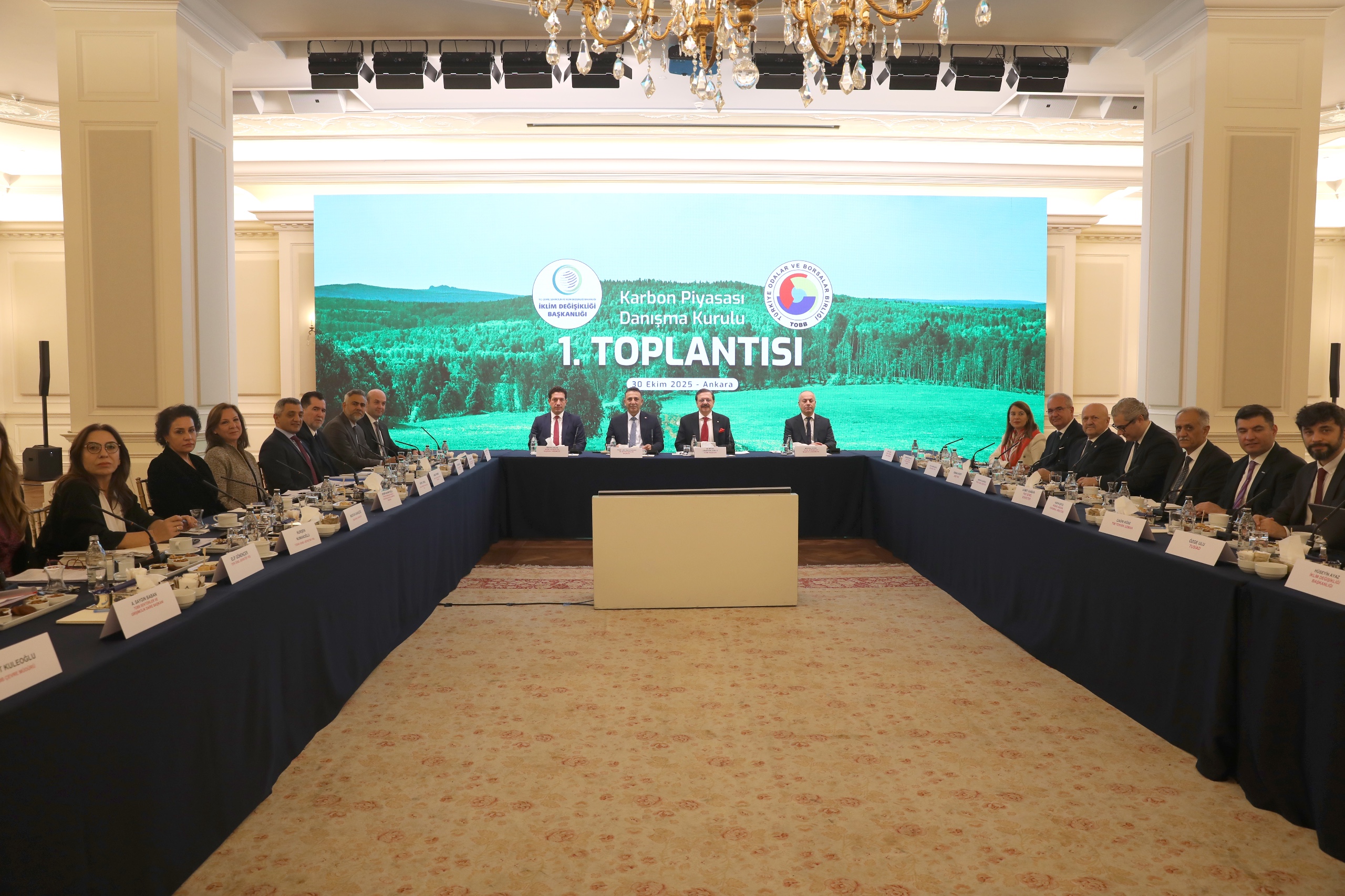
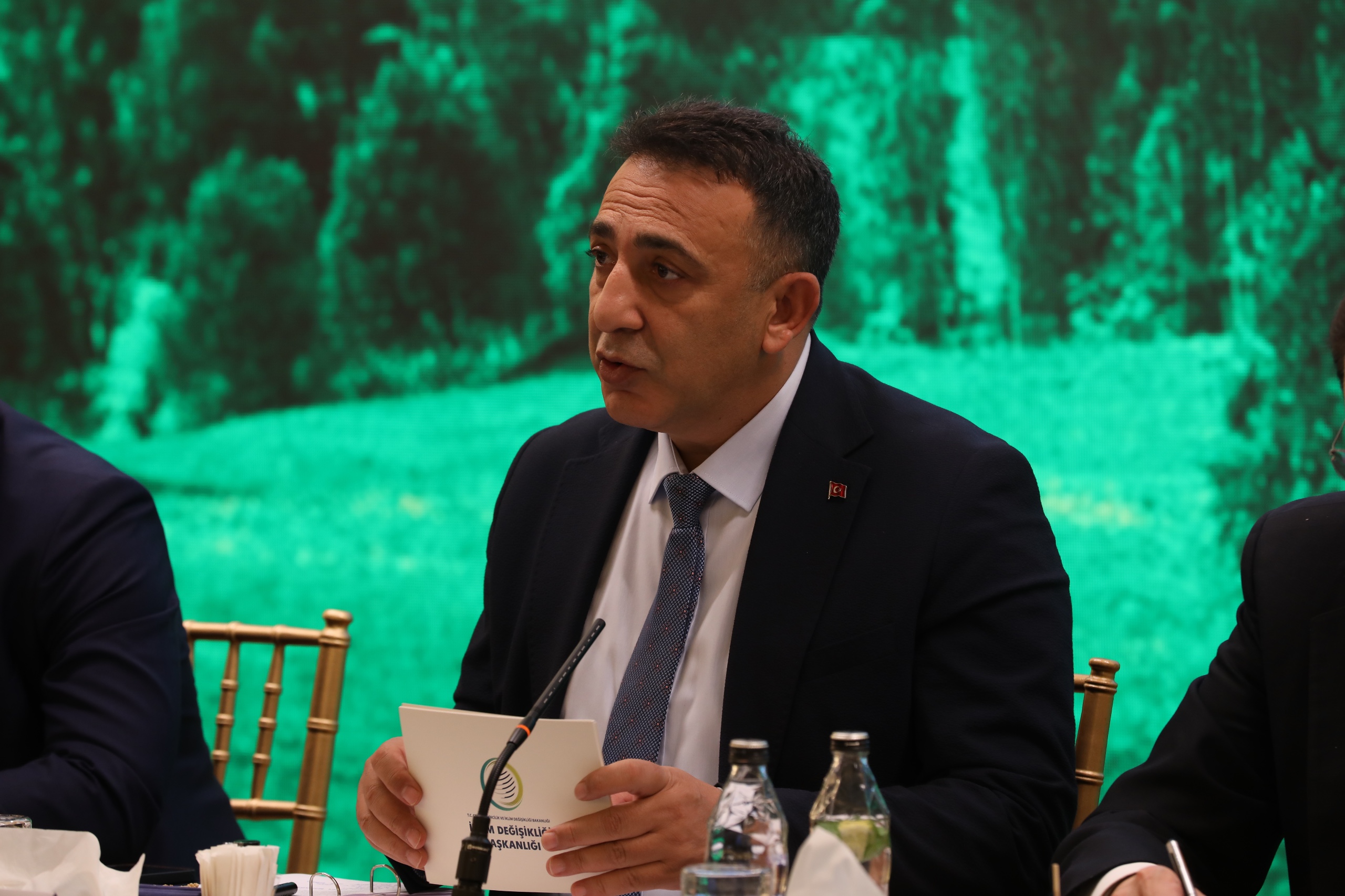
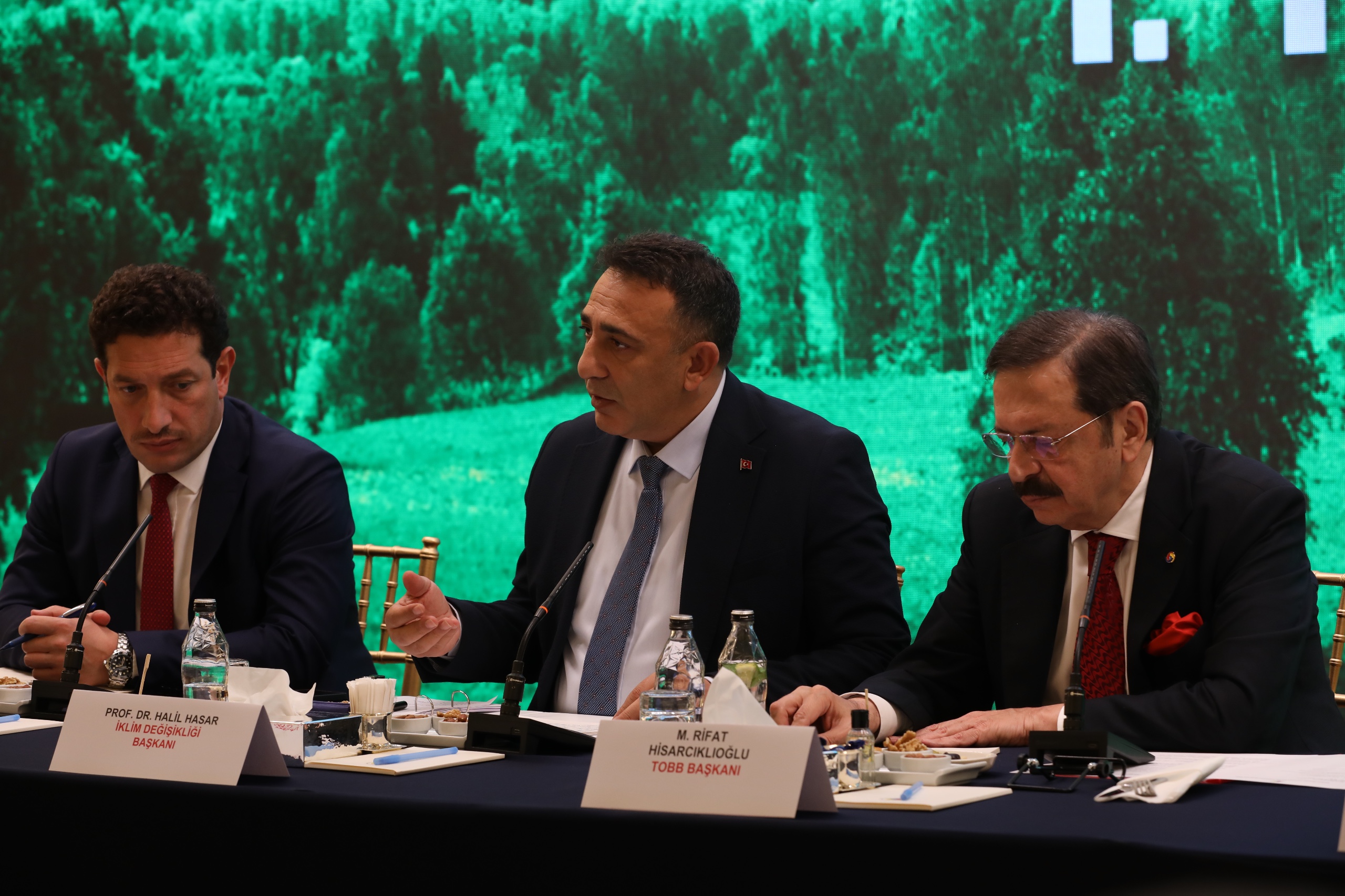
The Carbon Market Advisory Board held its first meeting in Ankara. The meeting, hosted at TOBB, was attended by Director of Climate Change Prof. Halil Hasar and TOBB President Rifat Hisarcıklıoğlu.
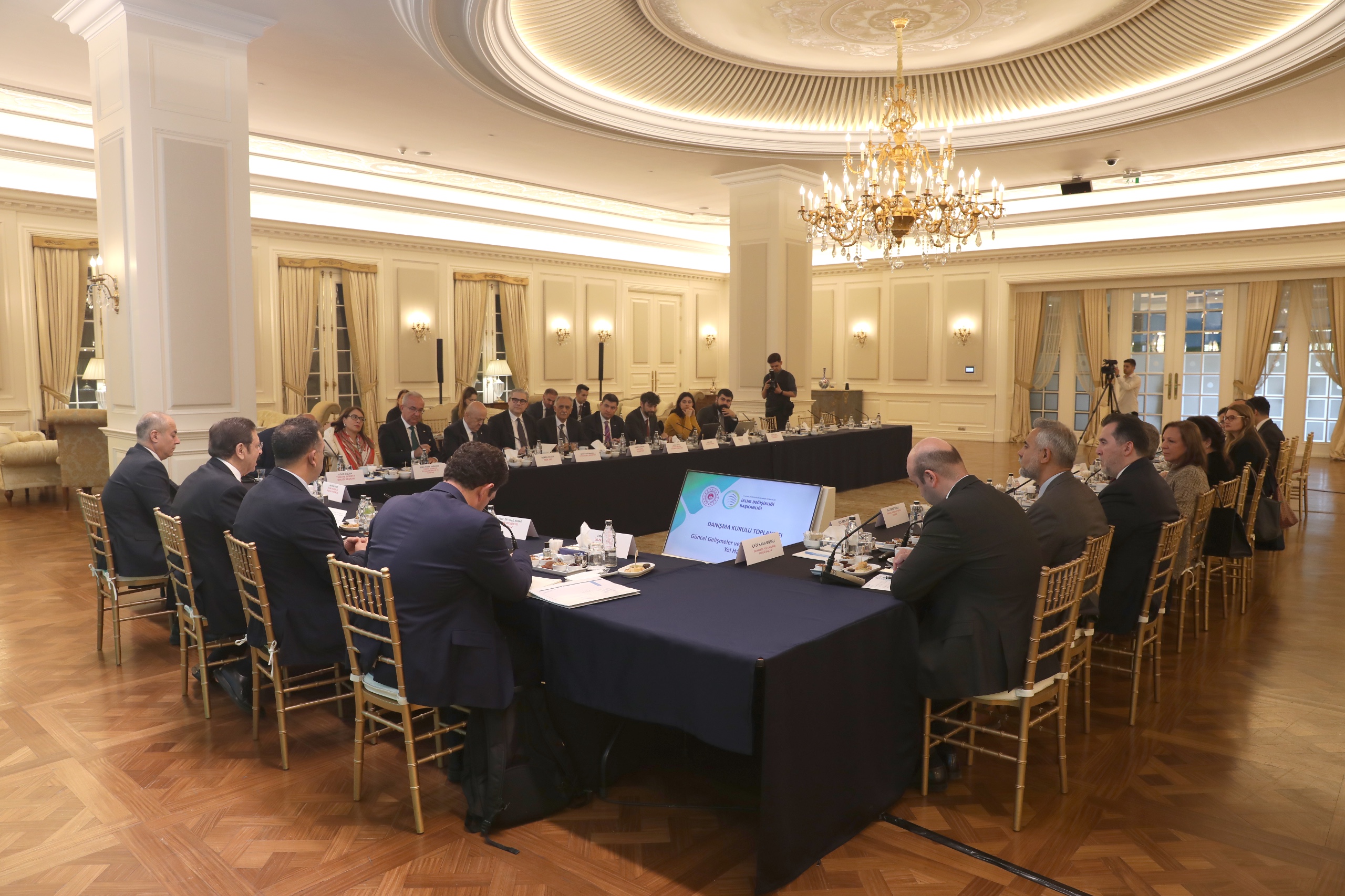
Established pursuant to the Climate Law and chaired by the President of TOBB, the Advisory Board was formed to adopt consultative decisions on the Emissions Trading System and international carbon markets. Delivering the opening remarks, Director of Climate Change Hasar expressed his strong belief that the public and private sectors would work hand in hand to take decisive steps for Türkiye’s future, underlining that the Advisory Board serves as a robust bridge between public authorities and the business community.
Noting his satisfaction with seeing implementation-oriented meetings take shape following the entry into force of the Climate Law, Hasar emphasized that the Climate Law provides carbon markets with a solid legal foundation. "At this point, the Advisory Board is one of the most important bodies established under the Climate Law,” said Hasar.
“It is not merely a platform for policy discussions, but a shared space where solutions are produced. Every assessment made here is crucial for the maturation of the system, for conveying field-level challenges to the headquarters, and for institutionalizing collective wisdom.”
Stressing that Türkiye has been going through a critical phase in climate change mitigation and green transition, Director Hasar made the following points in his remarks:
“Türkiye Has Taken a Historic Step in Combating Climate Change and Green Transition”
Our country is at a critical crossroads in combating climate change and advancing the green transition. Following the enactment of the Climate Law, Türkiye taken a historic step in climate action and green transition. Climate action is no longer only an environmental necessity, but also a legal obligation requiring concrete measures. These measures primarily include the reduction of greenhouse gas emissions, compliance with ETS obligations, active participation in carbon markets, reporting, and the preparation of adaptation plans.
“Businesses Investing in Innovation and Efficiency Will Emerge Stronger”
Referring to the pilot phase planned for the Türkiye Emissions Trading System, Hasar noted that the system will contribute to reducing greenhouse gas emissions, safeguarding Türkiye’s economic interests against the EU’s Carbon Border Adjustment Mechanism, and strengthening the country’s green transition strategy.
He underlined that businesses investing in innovative technologies, improving efficiency, and integrating carbon management into their operations will emerge stronger through this process.
“We Aim to Establish a Fair ETS Model Tailored to National Circumstances”
Efforts aimed at establishing, implementing, and further improving the ETS aligned with Türkiye’s 2053 Net Zero target are progressing rapidly. Legislative preparations for the core components of the system are ongoing. And the secondary regulations governing the operation of the ETS are nearing completion. In designing the system,we have closely examined international best practices, particularly the EU Emissions Trading System (EU ETS). Drawing lessons from the EU ETS’s early challenges, Türkiye aims to develop a more flexible and fair model adapted to national conditions.
Türkiye’s ETS will focus on reducing emissions intensity rather than achieving absolute emission reductions, which is the case for the EU. As you know, the targets we have included in our Nationally Determined Contribution do not include an absolute reduction commitment. Our objective is to encourage low-emission production without constraining output. This approach allows the cap to be adjusted in parallel with production growth. In this way, emissions reductions can be promoted without putting pressure on industrial production.
“We will collectively deliver the Türkiye Emissions Trading System, an innovative and market-based framework”
On the path toward the Net Zero Emissions target, we will collectively deliver the Türkiye Emissions Trading System, an innovative and market-based framework, by making the most efficient use of our country’s potential. Free allocation lies at the heart of this system. Fairness is therefore essential. Ensuring fairness requires comparison. Under the benchmark-based approach, free allocations are determined according to the emissions intensity of specific product groups.
“The consultations we are holding here today will lay the foundations of the future carbon market.”
When the public and private sectors, academia, and civil society join forces, we will not only manage this transition but also turn it into a significant opportunity.
Chairing the meeting, TOBB President Rifat Hisarcıklıoğlu described the meeting as a cornerstone of Türkiye’s green transition. “The Green Deal process is Türkiye’s new development strategy,” he said.
Emphasizing that ETS revenues in Türkiye should also be used to support the private sector’s adaptation to the green transition, President Hisarcıklıoğlu said, “Channeling revenues toward the private sector’s transformation investments, along with simplified and digital reporting and verification processes, would turn the process from a mere compliance obligation into a new framework for competitiveness.
Companies that adapt early will be preferred in global value chains, gain advantages as suppliers, and strengthen the position of Türkiye-origin products.
Just as we have previously turned early understanding of the rules into opportunity, today we can also make the carbon market the backbone of our industry’s green, efficient, and technology-driven investments, marking a new industrial leap.”
The decisions adopted at the meeting will be submitted by the Directorate of Climate Change to the Carbon Market Board.